



Moria – Through the Doors of Durin: A Review of The One Ring Expansion
Review of the Moria – Through the Doors of Durin expansion for The One Ring RPG: mechanics, combat, running the game in the depths of Khazad-dûm, and recommendations for GMs and players.
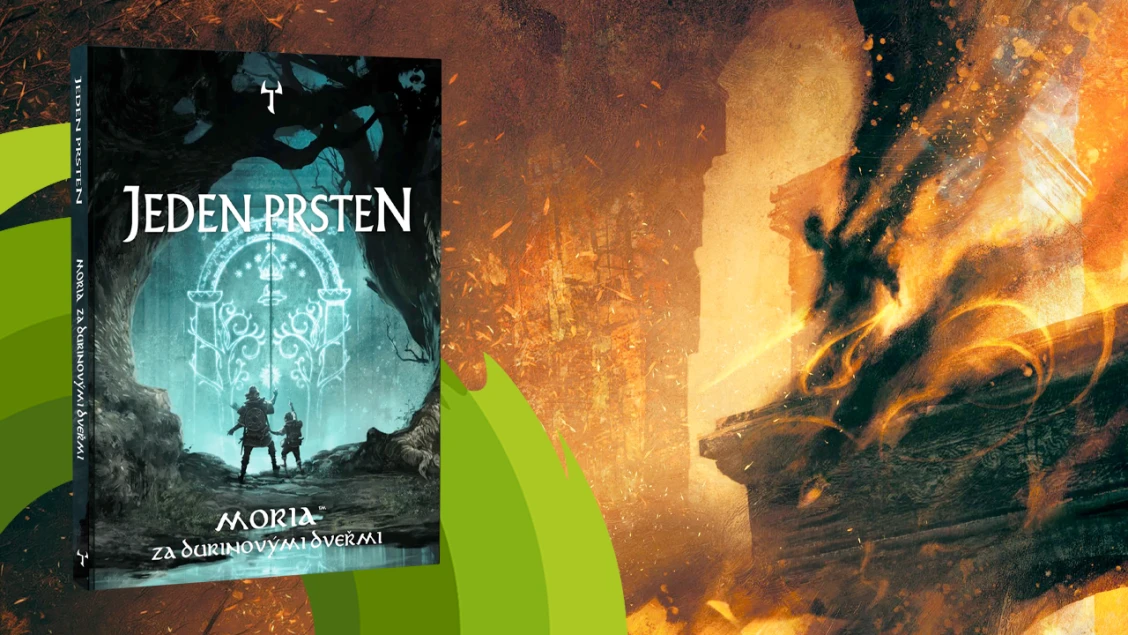
If you love Tolkien and his world, you surely know the term RPG - Role Playing Game The One Ring. In this article, we’ll focus on the expansion for The One Ring RPG titled Moria – Through the Doors of Durin.
First off, it’s important to mention that Moria is just an expansion of the stories and rules, so you need to own and be familiar with the core rulebook The One Ring.

Introducing The One Ring RPG
Dive into the world of Middle-earth with The One Ring RPG. Explore, fight, and experience epic adventures inspired by Tolkien's work! full article…
Non-fiction journalism 20. 11. 2024 Karel Krajča 6 minA Quick Introduction to Moria
The Moria expansion manual has 225 pages and might feel like a standalone book, as its length is very similar to the core rulebook. However, the size of the book just proves that the creators at Free League Publishing have outdone themselves again and have plenty to offer.
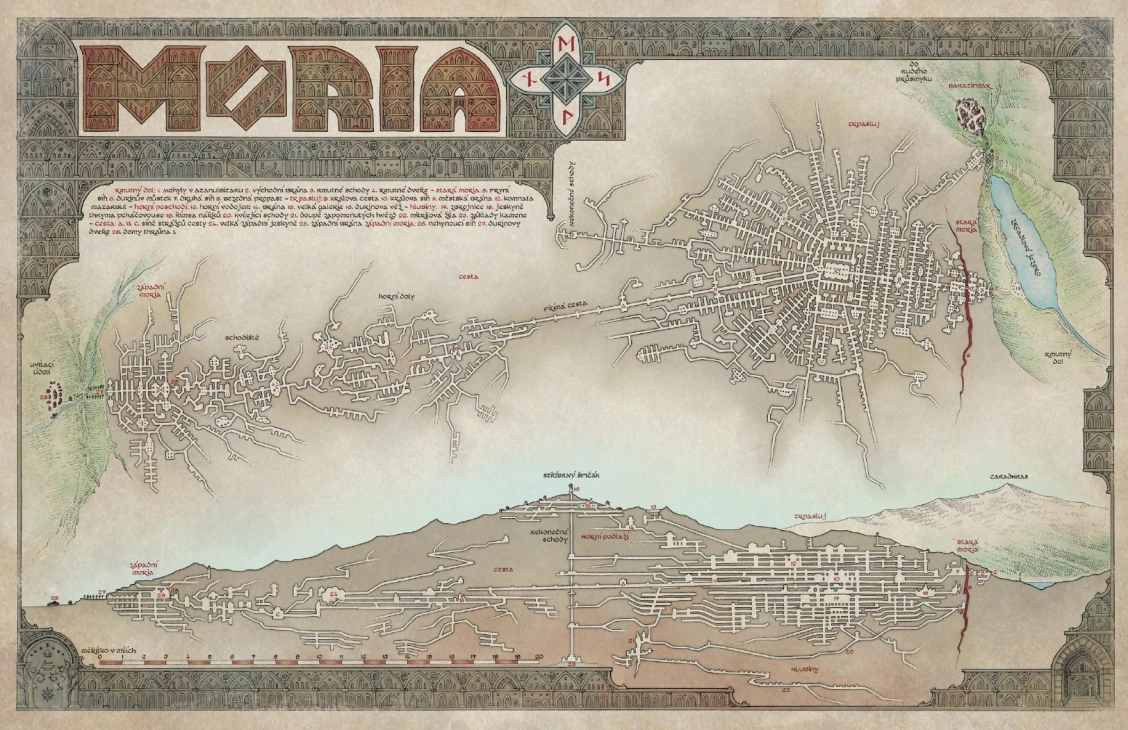
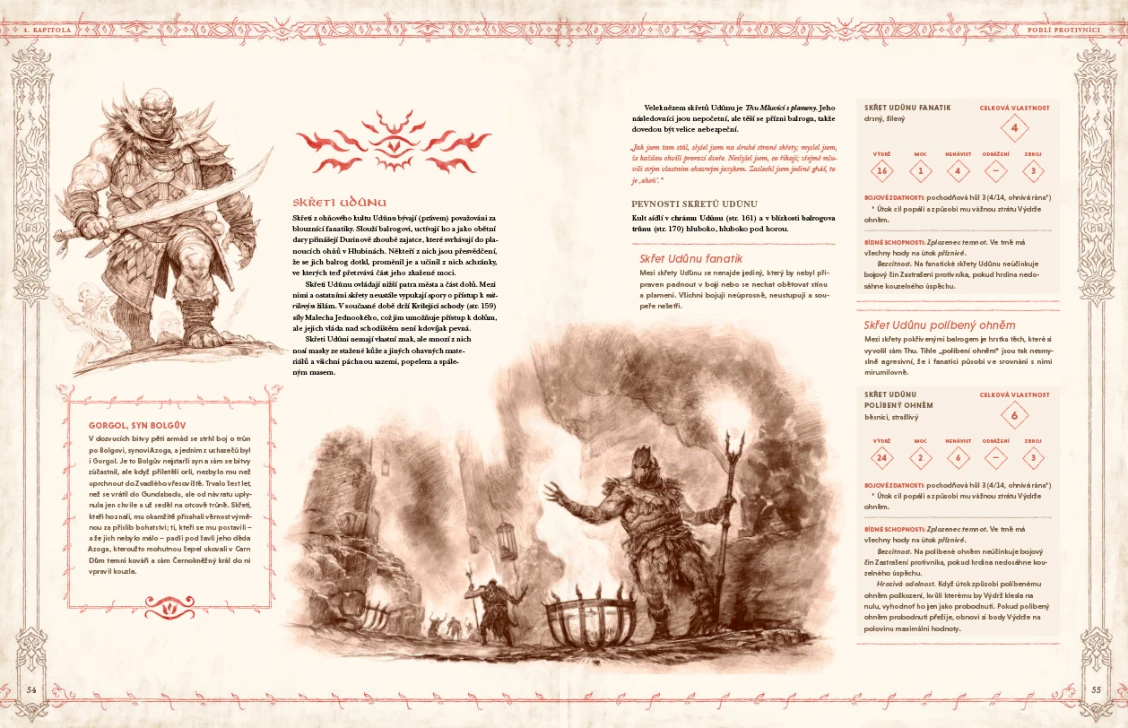
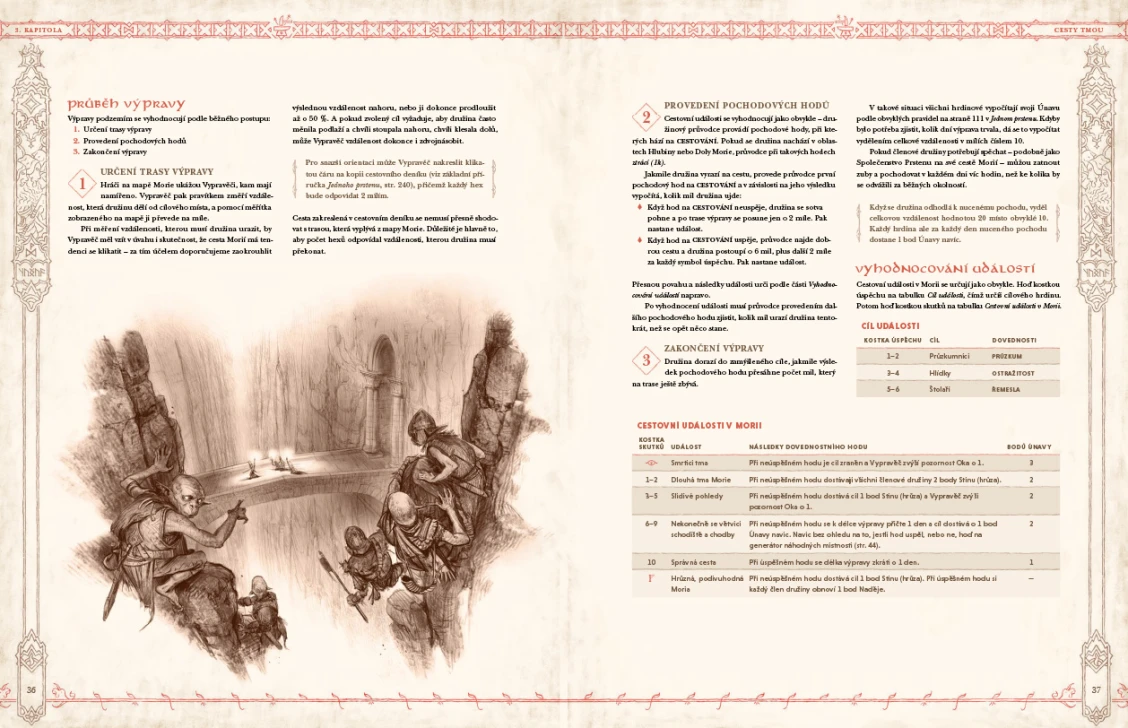
Moria is fully packed with the history of Middle-earth, and of course, the history of Moria itself. It offers original texts from the books or quotes from the films, and just like The One Ring, it is beautifully illustrated. Upon my first flip through the book, I was struck by the complete map of Moria, the excellently crafted roll tables, and, of course, the images of the individual halls and creatures of the entire dwarven kingdom. The book itself doesn't just serve as a foundation for RPG players, but also as a source of images of the mountain itself, the rooms that await you, and all the pitfalls found within. You definitely don't need to worry about being disappointed.
Let’s look at the book from the perspective of a GM who has spent about 50 hours reading The One Ring rules and about 35 hours (and counting) reading Moria, and has already set off with their party to explore the kingdom under the mountain. I’ll focus on a general description for now, and soon, once we finish our first campaign and entry into Khazad-dûm, I’ll add an article about our gameplay experience.
Basic Mechanics and Dating
The One Ring game uses a D12 and D6 dice system; no other dice are needed. The D12 die has a maximum of 10, plus an 11 representing the Eye of Sauron and a 12 representing the Gandalf rune. If a player rolls an 11 – the Eye of Sauron – the die counts as a failure (numerically 0). If a player rolls a 12 – the Gandalf rune – it counts as a 10 and a success. If the GM wants to and can navigate the game well, the book encourages them to use the symbols in reverse for monsters and characters played against the group: the Eye of Sauron is a success for monsters, and Gandalf is a failure.
On the D6 dice, you check if you rolled the maximum value of 6. If the roll succeeds and there is a 6, it counts as an extra success, allowing the player to gain more information or improve their attempt. Of course, you can use regular dice, but if you plan to buy this game and play for a long time, I would definitely recommend the original The One Ring dice, which feature success symbols above the number 6, and the D12 features the aforementioned Gandalf and Sauron symbols instead of 11 and 12.
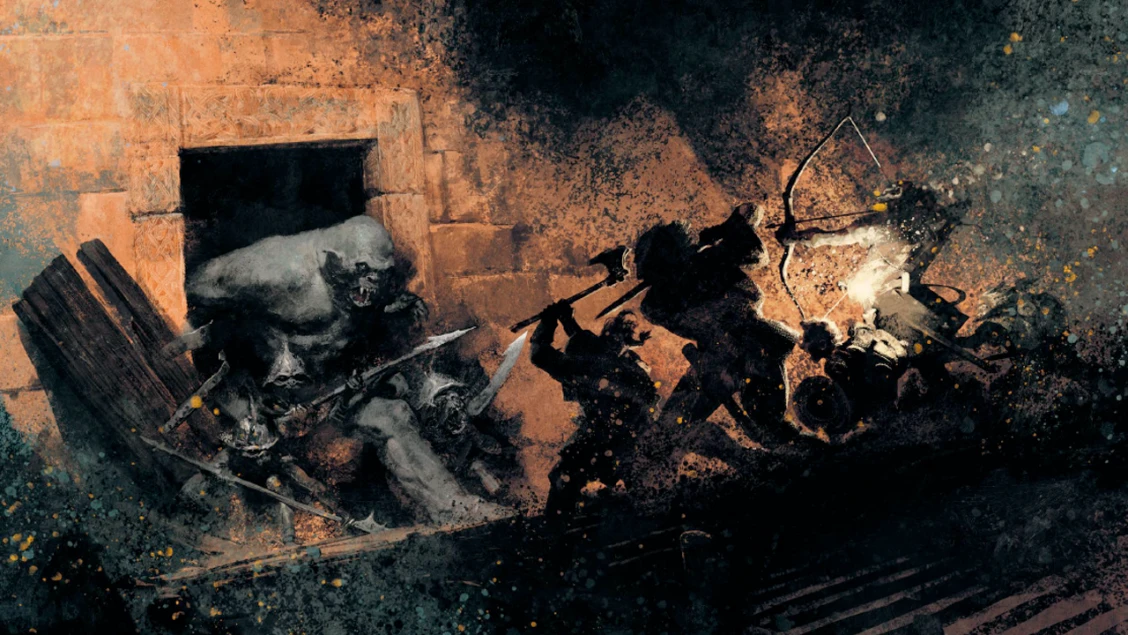
Besides the Eye of Sauron mechanic and its attention, Moria, like the core rulebook, includes the Shadow mechanic. The Eye of Sauron is classically about the attention the group might draw through their decisions or by letting a scout escape. The maximum for the Eye of Sauron is 14; if this threshold is exceeded, Sauron places a curse on them or sends orcs (depending on what fits the GM's story better).
The Shadow mechanic is similar, but it plays more with the individual's psyche. The group can gradually gain Shadow points, and their characters' mental state worsens. They stop believing that anything good is left in Moria and lose hope of returning. If the Shadow value exceeds your current HOPE value, a penalty is triggered that should significantly damage the whole group mentally, but a special event can also be triggered – as the tables show, if the GM rolls the die after exceeding the limit, a creature of fire and shadow might even appear.
The entire game describes events in the year 2965 of the Third Age, which is the period after the killing of the dragon Smaug in Erebor, exactly 24 years before Balin leads the expedition to Moria. It’s a way to fit the whole story into the timeline, but of course, it’s fantasy, and you can adjust it as you see fit.
Other Mechanics
Just like in the core rulebook, the GM determines the situation the group is in before combat begins and whether a direct confrontation will even occur. If combat starts and enemies are not near the group, the GM can allow VOLLEYS (one or two depending on distance) before combat begins, and both heroes and enemies can fire – provided they have ranged weapons.
Before combat starts, each player chooses a stance, from the front line to archers in the back (for beginner players and GMs, I recommend drawing lines on the side, writing down defensive/offensive, and placing figures or names there). Each position, or STANCE, has its advantages and disadvantages, but mainly it determines the order of players and monsters as a replacement for classic Initiative rolls.
In the combat phase, there is one main action, and it is entirely up to the GM whether they allow a secondary action like re-equipping, etc. Main actions (e.g., Attack) include the combat stance, and each combat stance has its own combat task that can replace the main action. For example, in the front line, you have Intimidating Shout, which, if successful, can remove Hate points from enemies, but you lose the ability to attack. Monsters use Hate points to do something special; for example, an orc archer can use a Hate point to attack with a poisoned arrow.
How to Run the Game and What the Moria Book Contains
Most of this book consists of descriptions of individual rooms in Moria. This gives you, as the GM, the advantage that you don't have to invent the rooms and their contents yourself, and the book itself recommends what problems or troubles you can place in these rooms. It is very good for beginner GMs to help build the atmosphere without worrying about forgetting something.
Moria can be very merciless toward a group of adventurers, and every unwanted noise can mean their doom. Within the campaign, the adventurers meet, and based on the map of Moria, they decide which part they want to head to, what they hope to find there, and what their reason for entering Moria is. They can also learn what they will find and what is happening there by listening to NPCs at meeting points, while the GM can tell them either the truth or lies based on the dice. They might learn terrible things, but also something that could make their stay in the mountain easier.
When running the game, you must also think about distance and the rich story in every room, if possible. The halls of Moria are huge, and even if you draw a 5x5 room on grid paper, your description should still give players the impression that they are in halls that have no end, with ceilings so high that even Durin's Bane can fight here without a single problem.
As I mentioned, the stories or situations the group should solve should be rich and interesting. You can also invent various side quests for them that will encourage conversation and force characters to use their individual abilities.
Before starting the actual exploration of Moria, my party and I held a session zero because, as a GM, I wanted the group to try out combat, dice mechanics, and some rolls for their roles (leader, guard, miner/hunter, scout). During session zero, we found that if one were to just fight and walk through rooms without discovering and finding out what happened there, it would turn into a very simple DUNGEON CRAWL, which isn't exactly engaging for role-play players, though it might suit some.
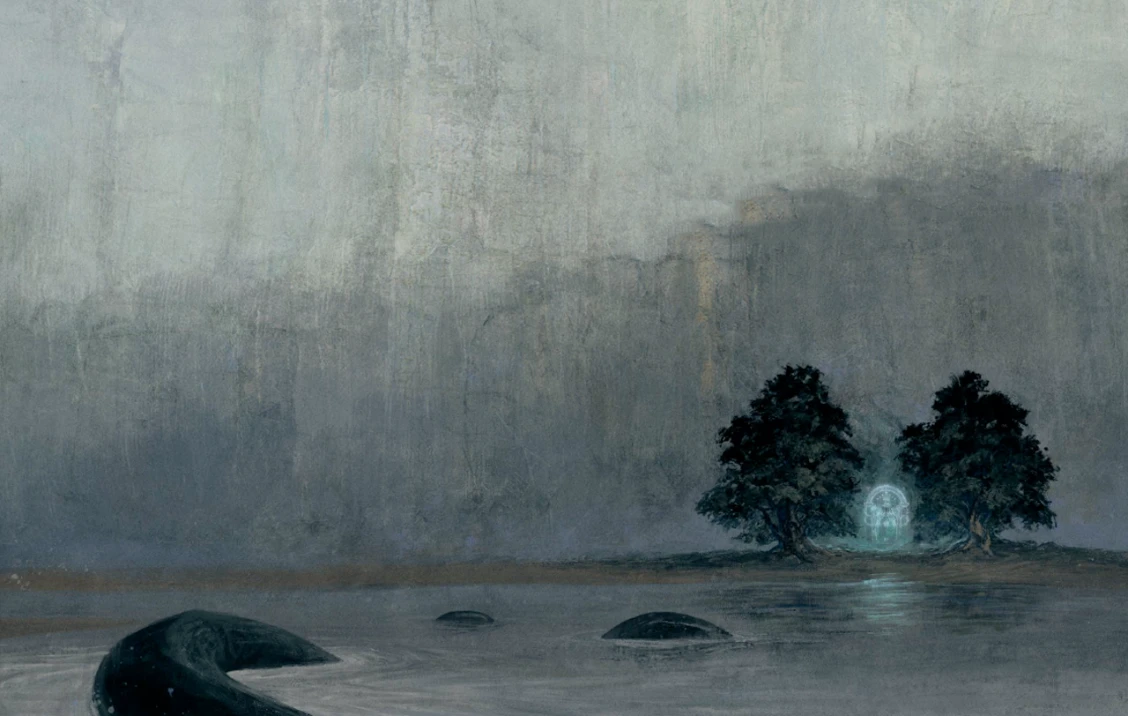
As mentioned, if you want to maintain the RPG aspect, you need to have not just one thing in each room, but perhaps several smaller objects that can trigger mechanics later. These mechanics can easily be your own inventions, but don't be afraid to use the book for inspiration, as it contains very nice ideas from the creators on what could appear or get out of control, and they have invented a large number of them for each room. You can easily apply all of them and see what your adventurers notice.
Treasures in Moria
Regarding rewards, treasure, and items players can find, Moria focuses primarily on the treasures of the mountain. Treasures of unimaginable value are hidden in the mountain, but they are certainly not just lying around in the corridors, and the group must exert great effort to find any treasure. Or have a bit of luck with the dice rolls.
Every item found in Moria, whether it has magical roots or is a piece of famous armor, can significantly change the pace and approach of a player. Here, I would like to mention that in the original book, one would take significant finds to cities to find out what they actually are, unless it was an item the group was specifically sent for. Only in a city or village would someone tell them more about the item, and thus they would find out whose it was and what it could do (an example is Hobbiton and Radostin, where players could determine the value and significance of artifacts).
If you play the Moria expansion together with The One Ring core rulebook, you will likely allow players to go back to the surface. If you are playing only the Moria expansion and want to spend all your time in Moria, in my view, it is very good not to tell them directly what the armor does or who its wearer was, unless they roll on skills like Song or Story, where they might hear something like that. Of course, if it is a weapon or armor, you tell them the numerical values, but if the armor has some super property or is cursed (the GM either determines this themselves or uses an item from the rules), I find it more interesting to incorporate the discovery of the effect into the story.
Of course, it is up to every Master how they handle these items, and I don't think there is a wrong way. However, keep in mind that the upper levels of Moria, unless they find a cache, are picked clean by orcs and other adventurers who have already passed through Moria, and therefore your adventurers should only discover treasures or interesting things in the lower levels.
Recommendations
For players who have already purchased the first The One Ring book, this is a very pleasant expansion to the game and an opportunity to expand your stories. For people who stumbled here because they played the computer game Return to Moria and would like to switch to RPG – don't hesitate; everything you've seen from the game will only help you with your imagination in the RPG fantasy world. For people who are just about to start with these books – I would start gradually. First, try The One Ring Starter Set and gradually move on to Moria or intersperse it. Definitely don't start with an expedition to Moria when buying both books so that you can properly grasp the game's mechanics.

Continuation and Acknowledgments
At the beginning, I stated that we are still playing the campaign and Moria and will continue to do so until the end of the year. Subsequently, I will create a blog post and short videos about our journey through the mountain, where I will focus more on the details of the game and write a more detailed description of the individual principles and pitfalls I have prepared for the heroes.
In conclusion, I would like to thank imago and Karel Krajča for the opportunity to dive into Moria and write this article. And most importantly, a huge thank you goes to my gaming party, who accompany me through all the RPG books, and even though they don't want to be publicized, I will at least list their heroes who are facing Khazad-dûm:
Eilif, daughter of Egil (Bardings), Burim the Piercer (Dwarves of Durin's Folk), Piko Hoe (Hobbit), Elenar of Lindon (Elves of Lindon), and the Ranger Mironion Hawkeye.

Dominik Gál
Author profile and more articles
Board games, reading, PC gaming, and TV shows are my daily escape from reality. I spend my free time with friends playing board games, jumping into multiplayer PC games in the evening, or just chilling solo with a book by Kotleta.
You might also like
Solo RPG: How to play a roleplaying game on your own
What is a solo RPG and how to start on your own? Want to play a solo RPG but don't have a party? Grab a rulebook, dice, and an oracle. full article...
8. 10. 2026 Jiří Reiter 13 min
Mytago Publishing Newsletter #37
Discover the latest from Mytago Publishing! We're releasing an expansion for The Witcher RPG, a campaign for Pirate Borg, and another installment of Fighting Fantasy. Find out what's in store for you this year. full article...
20. 8. 2026 Jiří Reiter 5 min
A Brief History of Dice
Did you know that dice have accompanied humanity for over 5,000 years? Take a look at their history from the first throwsticks to modern collector sets. full article...
13. 8. 2026 Karel Krajča 6 min