


Solo RPG: How to play tabletop roleplaying games alone
What is a solo RPG and how to start playing alone? Want to play a solo RPG but don't have a party? Grab a rulebook, dice, and an oracle.
What do you find in the article?
- What is a solo RPG
- Solo, co-op, and guided play
- Why play alone
- What you need for your first session
- How to run your first session
- Types of solo games
- Games built for solo mode
- GM emulator for other games
- Journaling and short rituals
- Where to start
- Ironsworn and Starforged
- Czech news from Mytago
- Common mistakes
- FAQ
- Conclusion
Want to play a solo RPG but don't have a party? Grab a rulebook, some dice, and an oracle. You play both the character and the world, yet the story can still surprise you just as much as it would at a table with friends. Only this time, the table is all yours.
Classic tabletop RPGs often require finding a free slot for a whole group of friends and a GM who has the time and energy to sit behind the DM screen. Solo mode doesn't require that waiting time. Yet, it’s still an RPG in every sense: character, decisions, consequences. Just without coordinating five different calendars.
What is a solo RPG
A solo RPG is a tabletop roleplaying game for one player. You aren't sitting at a table with a GM and a party waiting for you to make a move. You control the character, you ask questions about the world, and you record what actually happens. That last part is what makes solo play different from just reading a book.
It’s not about "playing against yourself," as people often imagine when they first hear about solo RPGs. It’s about the system being able to surprise you. If you know how a scene will end because you are both the player and the narrator, you're just left with a diary and the occasional dice roll. A solid solo setup relies on three pillars: a character with a clear goal, a tool for asking questions, and a way to generate consequences that will break your plans without hesitation. That tool is usually an oracle, a random event table, or a scene prompt: a mechanic that gives you an answer without you knowing it beforehand.
In English, it's called solo TTRPG or solo play, sometimes solo journaling if the focus is more on writing than on dice. The term "solo RPG" has become the standard in Czech as well; descriptive terms like "sólové RPG" are rare, appearing mostly in reviews and on forums.


Solo, co-op, and guided play
Solo play isn't the only way to play without the classic player + GM setup. In practice, there are three approaches:
- Solo: One player who manages both the character and the world around them.
- GM-less co-op: Multiple players share the world and procedures, but no one plays a traditional narrator.
- Guided play: A GM remains at the table, but uses solo tools (oracles, generators) whenever they need inspiration on the fly.
Some games, like Ironsworn, support all three modes within the same ruleset. That’s an advantage you’ll appreciate the moment you finally find a free slot and the desire to expand the game into a small party. You don't have to switch systems, just the mode of the same one.
Why play alone
The most common reason is purely practical: you and your friends can't agree on a free evening, let alone several hours of gaming… A solo session, on the other hand, can take just 40 minutes and fits between dinner and bedtime without needing to arrange anything in advance. You don't have to wait for a group date, find a replacement for a sick player, or adjust the pace to the slowest person at the table.
Other reasons are more about the game than organization. You want to test a new system before bringing it to the table with a group that doesn't like lengthy rule explanations on the fly. Or maybe you enjoy writing a character journal for its own sake. Some people look for a darker, more personal tone that a regular group might reject as too depressing for a Friday night. Others enjoy quietly creating maps, factions, and relationships in the world without other players waiting impatiently.
Solo RPG is definitely not a replacement for playing with a group. It has a different rhythm and serves more as a supplement to social RPG gaming. Some evenings belong to the party at the table. Others belong only to you, your dice, and an open notebook.
What you need for your first session
You’ll be surprised by how little you need:
- A rulebook designed for solo play, or a standard system supplemented with a GM emulator
- Dice according to the game's rules (often just a few d10s or a standard d20 set)
- A character sheet and a short, specific goal (a vow, a debt, a mystery, an approaching deadline)
- A place for notes, whether it's a notebook, a computer document, or a set of index cards
- An oracle: yes/no tables, a random encounter generator, scene prompts
You don't necessarily need a virtual tabletop. It only helps if the game relies heavily on maps and precise positioning. Otherwise, a regular table, a pencil, and the desire to sit with yourself for a while are enough. Most experienced solo players eventually build their own combination of tools, like a cheat sheet with favorite tables alongside the classic rulebook.
How to run your first session
Start simple: one character, one problem, one location. Leave the entire kingdom mapped out for a hundred sessions for later, once you know how the oracle "speaks" to you.
- Give the character a specific pressure, not a general mission. A vow, a debt, the disappearance of a loved one, an approaching deadline. Without pressure, the scene will dissolve into aimless wandering.
- Ask narrow and specific questions. Don't ask, "What happens next?" because no oracle can give a meaningful answer to such a broad question. Ask instead: "Does the guard notice me?" or "Is the trap still active?"
- Roll the dice only when the result will actually change the plan. The oracle should push the scene forward, not replace your own judgment where the answer is obvious.
- Write down short notes instead of long narratives. NPCs, threats, unresolved leads, countdowns, vows: a few lines for each item is plenty.
- Let failure rewrite the scene instead of ignoring it. The best solo evenings happen exactly when the system tells you no, and you have to improvise.
If you don't know where the scene should go after an hour of play, feel free to end on a cliffhanger. You'll start the next session by reading your own notes, not by inventing a whole new world from scratch.


Types of solo games
Games built for solo mode
They have oracles, progress tracks, and scene procedures right in the rulebook, so you don't have to tweak anything yourself. In the international scene, players most often reach for Ironsworn, The Wretched, or smaller journaling games on itch.io.
In the Czech Republic, upcoming titles from [link type="Page" id="" label="Mytago publishing house"] are heading in this direction. We write more about this below in the Czech news from Mytago section.
If you prefer minimalist rules over bulky manuals, reach for systems from the Into the Odd family. Ironsworn isn't directly part of them, but it's close in spirit. You can find a detailed [link type="Page" id="" label="overview of games from the Mark of The Odd family"] on our blog.
GM emulator for other games
Want to play a solo Fallout, Alien, or your own homebrew fantasy world? Use a general GM emulator like Mythic. Ask simple yes/no questions and leave room for random twists you wouldn't have thought of yourself. Keep the first evening intentionally simple: one mission, one location. Only after you learn the rhythm of how the oracle "responds" should you expand the campaign.
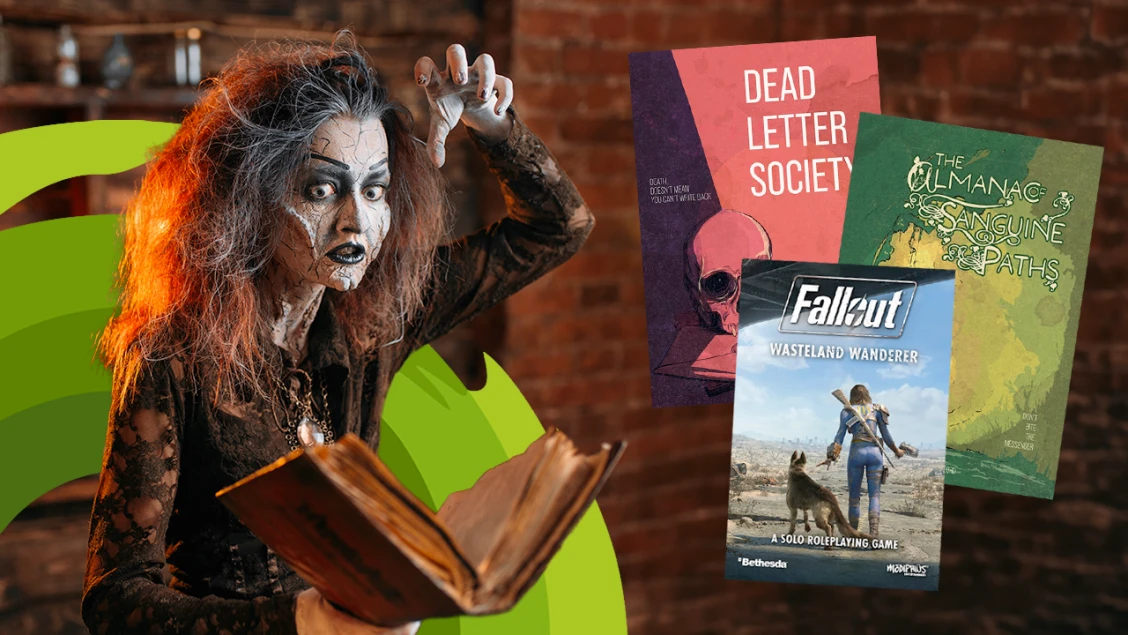
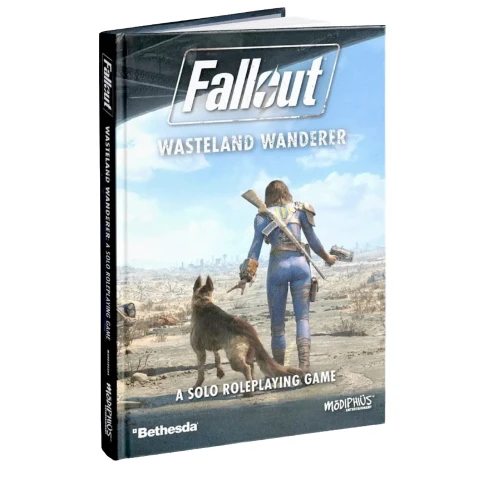
For Fallout RPG, you don't even have to rely on a general emulator. A standalone solo rulebook has been released: Fallout: A Solo Roleplaying Game - Wasteland Wanderer. It adapts the rules for GM-less play, allowing you to generate your own Vault and character.
Similarly, you'll find smaller, genre-specific titles that don't need an emulator at all. The Almanac of Sanguine Paths is an atmospheric journaling game about a werewolf entangled in a mysterious society. Dead Letter Society applies the same letter-writing principle to six different settings, from Victorian London to the distant future. Both were written by Rori Montford and both can be played solo or with two players.
Journaling and short rituals
Some solo games are more of a writing ritual supplemented by dice than a game in the traditional sense. A strong starting situation, clear time pressure, a few fixed moves. And you're done, easily in one evening. This format is perfect for moments when you don't feel like managing a whole world, but you do want to write a few pages of a journal.
Where to start
Ironsworn and Starforged
Want a promising fantasy quest and an open world that builds itself based on your decisions? Reach for Ironsworn by Shawn Tomkin. The original fantasy version was released as pay-what-you-want, and the author still offers it for free download on his website Tomkin Press and on itch.io. You can try it without spending any money.
Here at imago, in the Ironsworn category, you'll find the sci-fi branch Ironsworn: Starforged, which takes the same system into a universe full of debris, factions, and abandoned ships.
Both games account for solo mode from the first page of the rules and are among the most famous titles in the entire genre.
Czech news from Mytago
Mytago publishing house is preparing two solo titles, and both fit perfectly into this genre.
Obrova pouť (Paweł Kicman, Czech 2026) is a solo fantasy game about hope and the burden carried by a community. Království Uvaluut was destroyed by the Cataclysm. You are a Guardian accompanying one of the last giants across a scorched landscape. You play hex-based exploration, a day/night cycle, and gradually build a relationship with the giant. There are four types of giants, each with different needs, so the game changes with every playthrough. The translation is handled by Petra Grunwaldová, edited by Jiří Zahradníček. You can find the game directly on the Mytago website.
Astroprisma (Crescent Chimera) is a retro-futuristic sci-fi solo RPG where you explore a hex map of an entire star system. You tune your ship, hack alien systems, and choose sides between factions competing for the system. The world mixes cyberpunk aesthetics with a desolate post-collapse universe. While the game can handle a small group, its core remains solo exploration powered by an oracle and fixed procedures. Mytago is working on the Czech release, but the exact date (as of 2026-09-29) is still being finalized.
Two different moods, one common principle: You play alone, but the world still answers you.
You can find other tabletop RPGs in the fantasy RPG and sci-fi RPG categories.
Common mistakes
Starting too big. An empire mapped out on an A3 sheet will tire you out before you finish the first scene because you can't keep up with managing the factions you invented. Start with one village and one specific problem to solve. Once you solve it, the world will naturally grow on its own, based on where the consequences of your decisions lead you.
Rolling dice for absolutely everything. The oracle should add pressure and uncertainty to the scene, not decide things that are obvious from context, like whether the character is breathing. Asking about every little thing slows down the game with unnecessary rolls and makes you lose the thread of the story in a sea of tables.
Writing a whole novel instead of notes. A few specific lines will survive more game nights than three pages of beautiful prose that you won't read next time anyway. Notes should serve as a quick memory aid for the next session, not as a literary performance.
Forcing a group game into solo mode at all costs. Does the system require hidden information between players and a carefully balanced party of roles? Then reach for a game built for solo play first, and only then, if it's not enough, add a general emulator. Forcibly converting a party-based system into a solo one usually ends in frustration with rules that simply weren't designed for one player.
FAQ
Do I need a GM for a solo RPG?
No. Solo games and GM emulators replace the GM with procedures and oracles that answer questions about the world. You can have a GM for guided play, but it's not necessary for pure solo play.
Is a solo RPG the same as a gamebook?
No. A gamebook has a branching text written in advance by the author, and you just choose from the prepared options. In a solo RPG, you roll dice, ask an oracle, and build the story yourself as you go. Mytago publishes both, but they are two different genres.
How much time does the first session take?
30 to 60 minutes is plenty to try it out: one scene, one clear goal, short notes. Save the long campaign for later, once you know this format suits you.
Are Czech titles enough, or do I need English?
Solo RPGs are just starting to appear in Czech: Obrova pouť and Astroprisma are on their way. For English titles, the selection is much wider, especially with Ironsworn and the entire journaling scene. Start with the language in which you find it easy to write your own notes, because for solo play, writing is just as important as rolling dice.
Conclusion
Solo RPG is a tabletop roleplaying game without waiting for five people to be free at once. A character, an oracle, a narrowly defined start, and a willingness to let the system say no sometimes. When you want a party, you'll take this experience straight to the table. When you want peace, just grab your notebook and dice.
Follow the news from Mytago and our selection of RPGs at imago. When Obrova pouť and Astroprisma hit the shelves, you'll know exactly what you're getting into.

Jiří Reiter
Author profile and more articles
Věčně punkový podnikatel, průzkumník slepých uliček, samouk, geek, fantasák, otec čtyř dětí.
You might also like
Mytago Publishing Newsletter #37
Discover the latest from Mytago Publishing! We're releasing an expansion for The Witcher RPG, a campaign for Pirate Borg, and another installment of Fighting Fantasy. Find out what's in store for you this year. full article...
20. 8. 2026 Jiří Reiter 5 min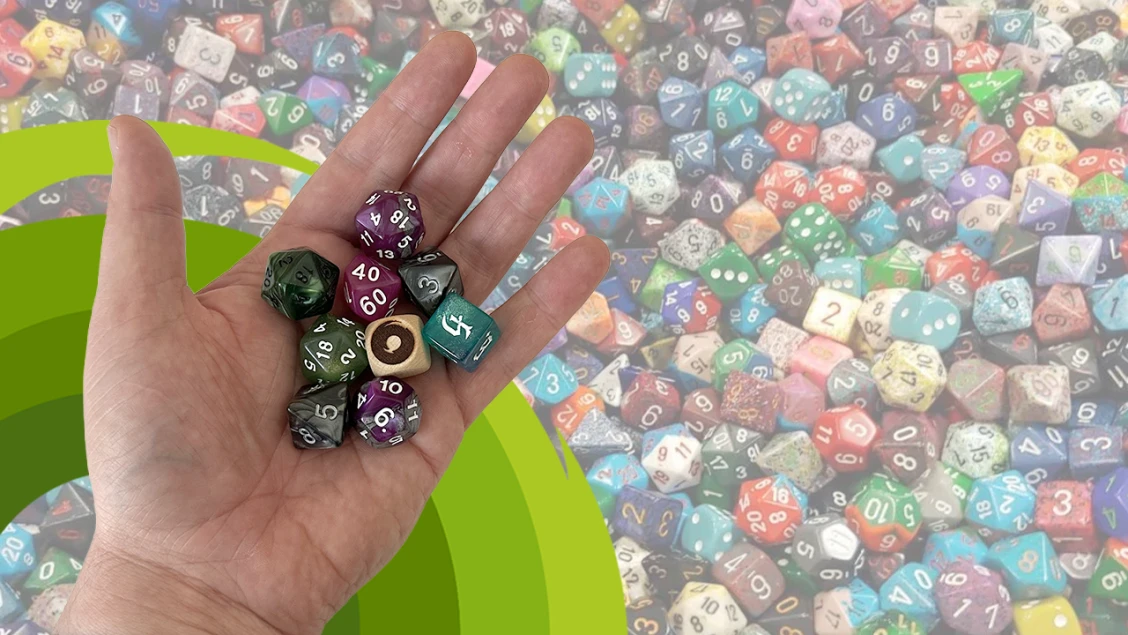
A Brief History of Dice
Did you know that dice have accompanied humanity for over 5,000 years? Take a look at their history from the first throwsticks to modern collector sets. full article...
13. 8. 2026 Karel Krajča 6 min
An Overview of Mark of the Odd RPGs
Are you drawn to minimalist RPGs? We've prepared a comprehensive overview of games built on the Into the Odd system. Find your favorite genre! full article...
10. 7. 2026 Jiří Reiter 21 min