


The Lord of the Rings and Middle-earth: Map, Timeline, and Where to Start
Not sure where to start with J. R. R. Tolkien? This guide shows you the reading order for the books and the viewing order for the films – from The Hobbit to The Lord of the Rings. It will also help you navigate the map of Middle-earth.
Where to start?
If you want to take the reading path, step into Middle-earth with The Hobbit. It’s a great introduction to the story, and its lighthearted style makes it perfect for younger readers. Once you’ve finished your journey there and back again, you can dive into The Lord of the Rings trilogy.
Only then should you reach for any other literature from this universe. We recommend reading The Silmarillion last, as it is more demanding in its form.
The viewing path is a bit different – we definitely recommend starting with the successful The Lord of the Rings film trilogy. Watch the film version of The Hobbit only afterwards as a visually rich prequel.
You can watch the The Rings of Power series practically anytime. It takes place in a much older era of Middle-earth and is a loosely inspired take on this world, not a faithful adaptation of Tolkien's work. Therefore, we recommend saving the series for last.
Map of Middle-earth
The home of the hobbits, the Shire, lies in the peaceful northwest of the continent. From there, the heroes set out on their journey eastward to Rivendell. Beyond the Misty Mountains to the northeast lie Mirkwood and the Lonely Mountain.
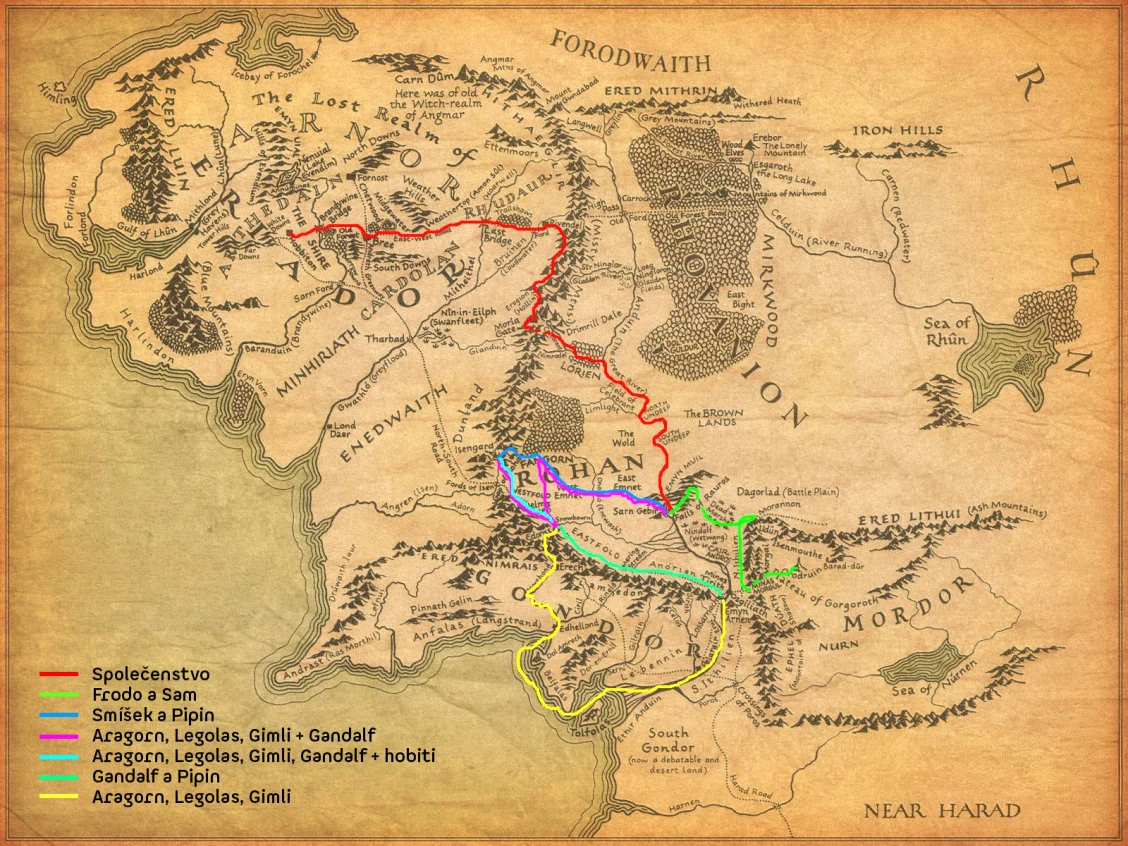
Men inhabit the powerful kingdoms of Rohan and Gondor directly to the south. Right next to Gondor in the southeast, you will find the menacing Mordor with Mount Doom. This is where the main quest from the books leads.


The map for the first 1954 edition was drawn by Tolkien's son, Christopher, based on his father's detailed sketches. That is why the locations of the individual kingdoms fit together so naturally.
Book Timeline
First, read the core four in the order they were published and intended to be read. Then, feel free to reach for the optional supplementary literature. Study the remaining books in any order you like.
- The Hobbit (1937): This entry-level book originally functions as a fairy tale for children.
- The Fellowship of the Ring (1954): The first part of the famous Lord of the Rings trilogy.
- The Two Towers (1954): This second part continues directly from the events of the first volume.
- The Return of the King (1955): The third part brings the epic story of the trilogy to a complete close.
The following supplementary books were published entirely after the author's death. They were carefully compiled by his son, Christopher, from his father's notes. The list is complemented by The History of Middle-earth series for dedicated researchers.
- The Silmarillion (1977): The text details the mythology and history of Middle-earth from the creation of the world.
- Unfinished Tales (1980): These fragments and shorter texts supplement events from the main books.
- The Children of Húrin (2007): The book presents a complete story from the First Age, long before The Hobbit.
- Beren and Lúthien (2017): Read another thrilling story from the ancient First Age.
- The Fall of Gondolin (2018): Presents the last of the great book stories of the First Age.
- The History of Middle-earth: This extensive series analyzes the development of the original texts in detail.
Timeline of Events
The chronology of Middle-earth is based on a precise calendar created by the author himself. Frodo's journey from Bag End to Mount Doom took a total of 185 days. During this quest, he walked approximately 1,800 kilometers through challenging terrain.
The members of the Fellowship spent only three months on their shared journey from Rivendell. The individual events follow each other logically.
Year 2941 of the Third Age (The Hobbit)
April 26: Gandalf and the dwarves arrive at Bilbo's home in Bag End.
July 19: Bilbo acquires the One Ring in Gollum's cave.
November 23: The Battle of the Five Armies breaks out at the Lonely Mountain.
Year 3018 of the Third Age (The Lord of the Rings)
April 12: Gandalf arrives in the Shire and explains the truth about the Ring to Frodo.
September 23: Frodo leaves Bag End and sets out on his journey.
October 25: The Council of Elrond decides to destroy the Ring.
December 25: The Fellowship of the Ring sets out from Rivendell.
Year 3019 of the Third Age (The Lord of the Rings)
January 15: Gandalf falls into the abyss in the Mines of Moria.
February 26: The Fellowship breaks up at the falls of Amon Hen.
March 3: Men win the Battle of Helm's Deep.
March 15: The Battle of the Pelennor Fields takes place.
March 25: Frodo destroys the One Ring in Mount Doom.
November 3: The hobbits win the Battle of Bywater and liberate the Shire.
Year 3021 of the Third Age
September 29: The Ring-bearers sail from the Grey Havens to Valinor.
Film and Series Timeline
For newcomers, we recommend watching the films in this order:
- The Lord of the Rings (2001 to 2003): This film trilogy by Peter Jackson is the ideal starting point.
- The Hobbit (2012 to 2014): Peter Jackson expanded one book into three long films here.
You can add the following optional titles to your schedule at any time. They depict a different era and do not directly follow the main trilogy. However, they will provide you with broader context.
- The War of the Rohirrim (2024): This animated film details the ancient history of the kingdom of Rohan.
- The Rings of Power (2022 onwards): This series depicts events thousands of years before the main film trilogy.
- The Rings of Power: The premiere of the third season of the series will be on Prime Video on November 11, 2026.
Filmmakers are also constantly preparing brand-new projects. The following title is yet to be released in theaters. The story takes place between The Hobbit and The Lord of the Rings.
- The Hunt for Gollum (2027): This highly anticipated film is directed by Andy Serkis and produced by Peter Jackson.


Frequently Asked Questions
Do I have to read The Silmarillion before The Lord of the Rings? Definitely do not read The Silmarillion before The Lord of the Rings. Choose the much more accessible The Hobbit as your first book instead.
Are the films enough for Middle-earth? The films by Peter Jackson provide a great foundation for understanding the events. However, the books contain many more details and characters, some of which do not appear in the films at all.
In what order should I watch The Rings of Power and the film trilogy? First, watch the highly successful The Lord of the Rings trilogy. Then, feel free to save The Rings of Power series for later.