


EVA Foam for Beginners 2
A guide to making props from EVA foam: shaping, sealing pores, priming, and painting. Tips on materials and step-by-step procedures.

What do you find in the article?
In the first part of our series on working with EVA foam, we explained what EVA foam actually is, what variants exist, and how to cut and glue it. In this article, you'll learn how to sand and fill EVA foam, what priming is, and how to paint it.
So, the foam is cut and glued—what now? Your foam prop is in its raw state, unpainted, and only halfway to completion.
Filling and Sanding
The next step is to smooth out any seams that shouldn't be visible and fill or sand down uneven surfaces. Various tools are useful here, and I have the best experience with the aforementioned Clayfoam or a filler called Kwik Seal—it's essentially a flexible, single-component, water-based sealant, very similar to bathroom caulk.
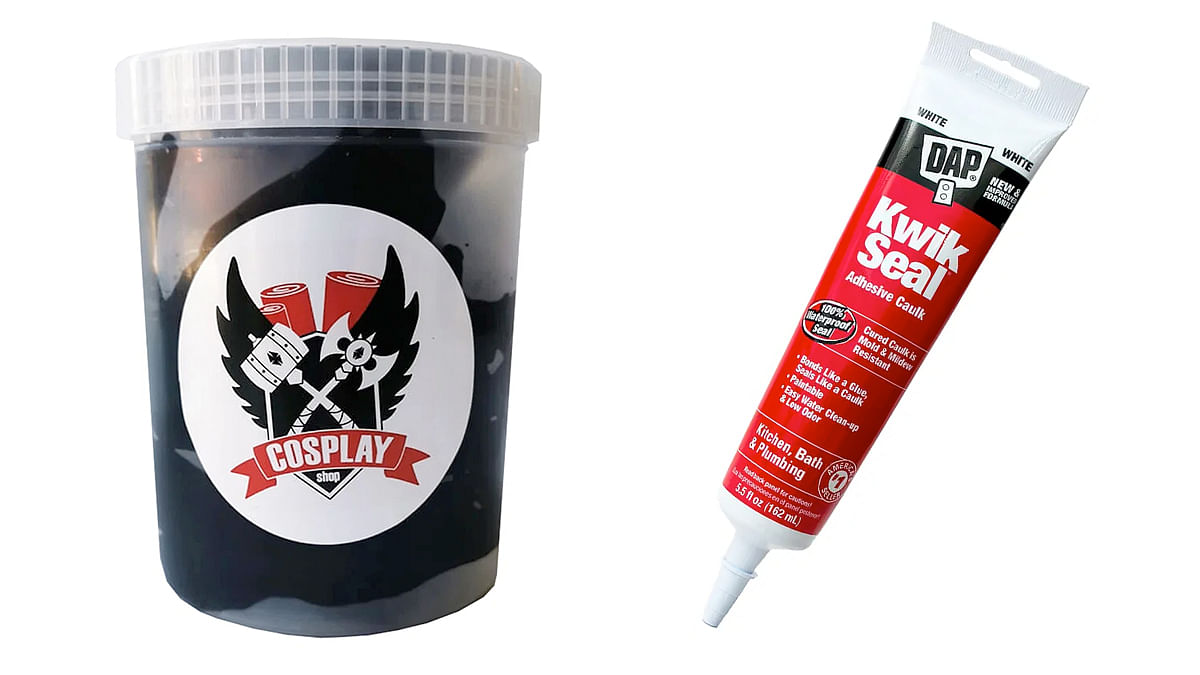
I recently worked on a foam sword from Final Fantasy VII, Cloud's Buster Sword. I'd like to use various images from the creation process to better describe the procedures and products I used.
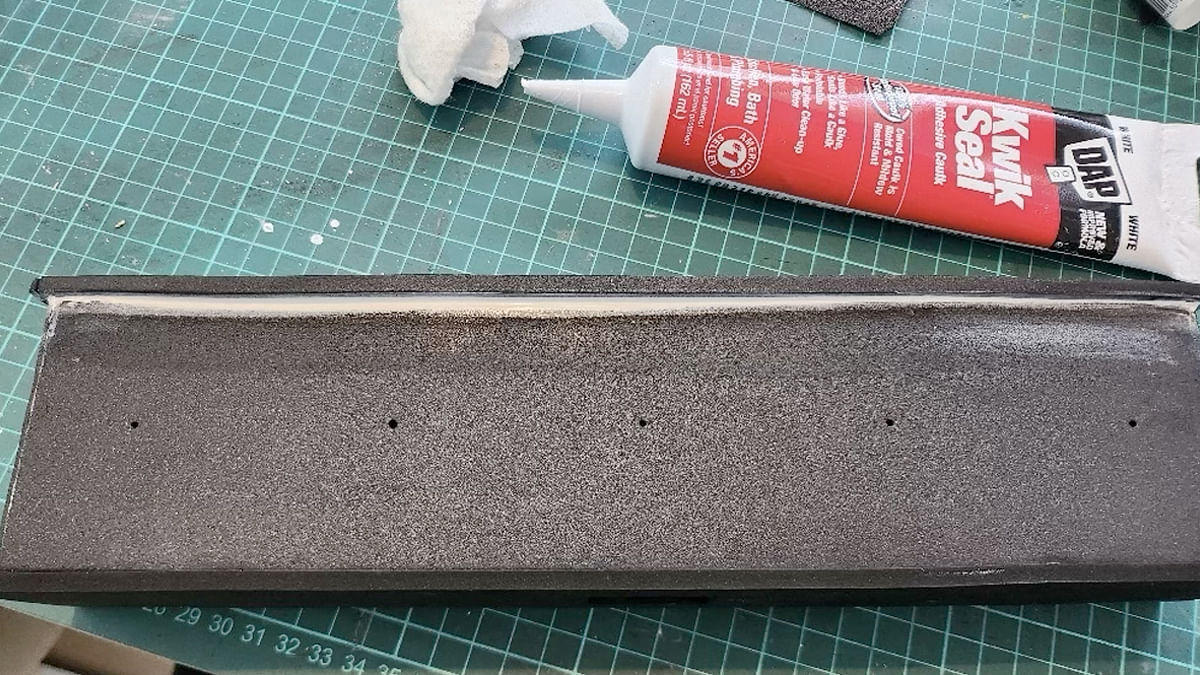
In this case, I used Kwik Seal to smooth the transitions between two layers when making the crossguard for the Buster Sword. You can simply apply Kwik Seal to the desired spot and wipe it smooth with a wet cloth or a dampened finger. The recommended waiting time before further work is 2 hours, though it naturally depends on the amount and surface area covered.
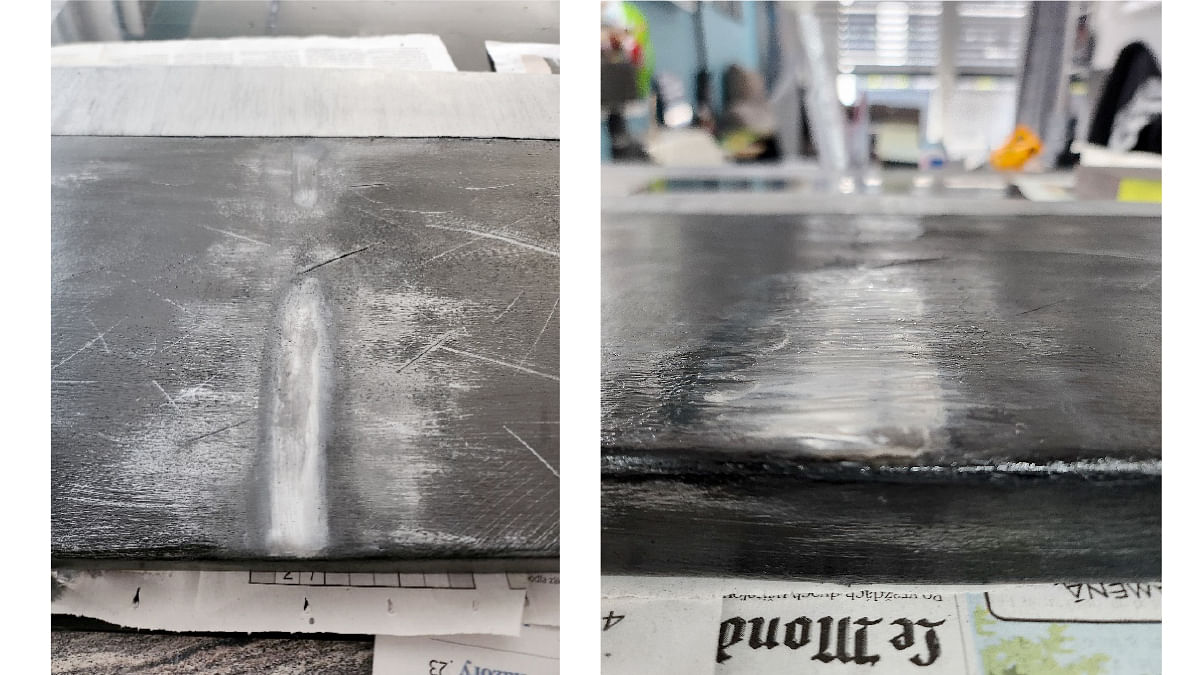
I also used Kwik Seal to smooth out uneven surfaces on the sword itself, which I sanded with a fine sponge after it dried. You can also sand it with a rotary tool if it has a fine sanding attachment. Very coarse sponges or heads tend to tear Kwik Seal off. Personally, I've grown very fond of Kwik Seal and wouldn't use anything else on foam.
A very important step when working with foam is sealing the pores. Once all seams and uneven surfaces are filled and sanded, even the foam that didn't need such adjustments must have its pores sealed. If you skip this, the pores will make the foam look pitted, rough, and uneven. Such a texture might be desirable, but in most cases, when I'm making weapons, armor, and similar items, I want to imitate materials that are smooth (e.g., metal). Therefore, I want to create the best possible imitation of that material—you can easily seal the pores using a heat gun. Just heat the entire foam surface gradually, slowly, and on a low setting, then let it cool. You can see the pores closing with the naked eye, and the difference between sealed and unsealed foam is noticeable even to the touch.
Priming
What is it and why is it important? To achieve a nice effect when painting and to ensure all the different layers of paint adhere to the foam prop, it's important to prime correctly. This involves applying a protective layer between the foam and the paint. Different primers have different properties, and for foam props, both protective qualities and paint adhesion are crucial.
There are various types of primers and application methods. The most common and easily accessible is Plasti Dip. Commercially, it's used for vehicle bodies, wheels, etc. When applied correctly, it creates a rubbery, colored layer that protects against scratches. How can I use it for making foam props? It serves a protective function and enables paint adhesion.
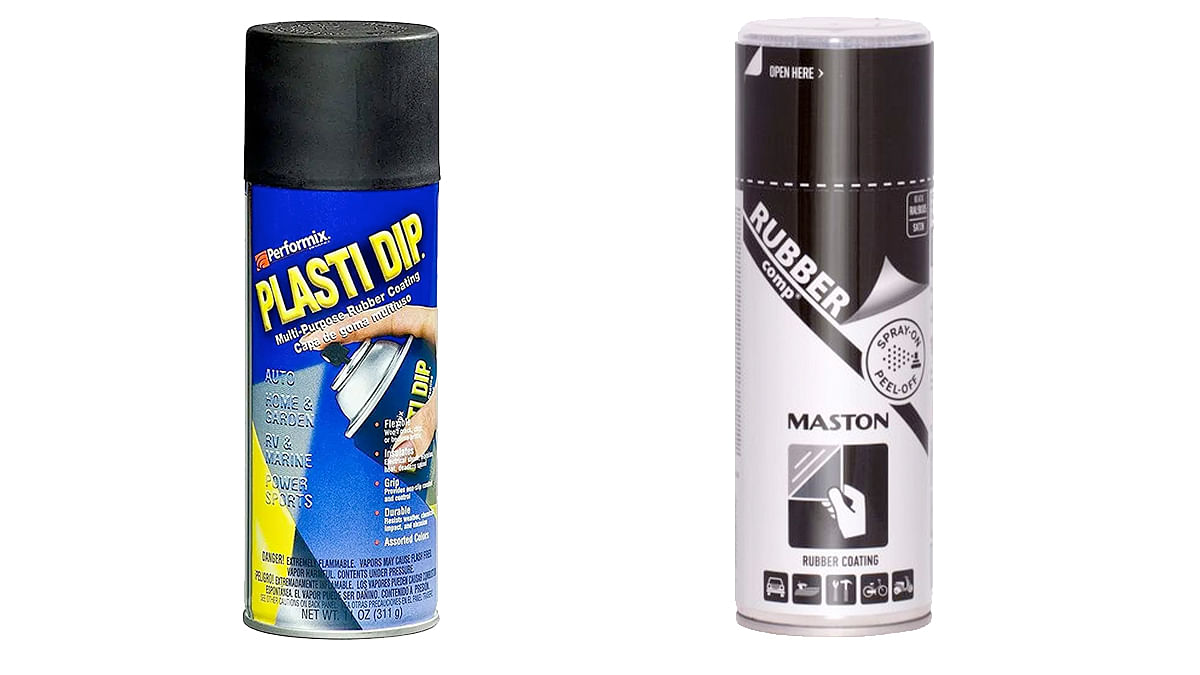
Plasti Dip itself is literally rubber in a spray can, so the layer on the foam prop will be just as flexible as the EVA foam itself, so I don't have to worry about it cracking (which can happen when using, for example, spray filler for 3D prints). Plasti Dip is a brand, but here in the Czech Republic and Slovakia, the brand Maston is also available, offering Rubbercomp spray. The difference is not just in price and availability, but also in surface texture—Plasti Dip is smoother and more uniform, while Rubbercomp by Maston is bumpier but covers larger defects or surface irregularities. In both cases, these are sprays, so it's very important to work with them outdoors or in well-ventilated areas. Both are highly toxic! They contain poisonous chemicals, so it's important to use protection—a respirator, goggles, and gloves.
Another alternative to primers are non-toxic primers, such as Flexbond. It's a water-based primer that resembles paper glue in consistency. You can apply it with a brush or an airbrush. As mentioned above, it's non-toxic, so I can work with it at home in the living room. Generally, it's recommended to apply at least three layers (I personally do four or five) and let each layer dry thoroughly. Recommended drying time: 3 hours.
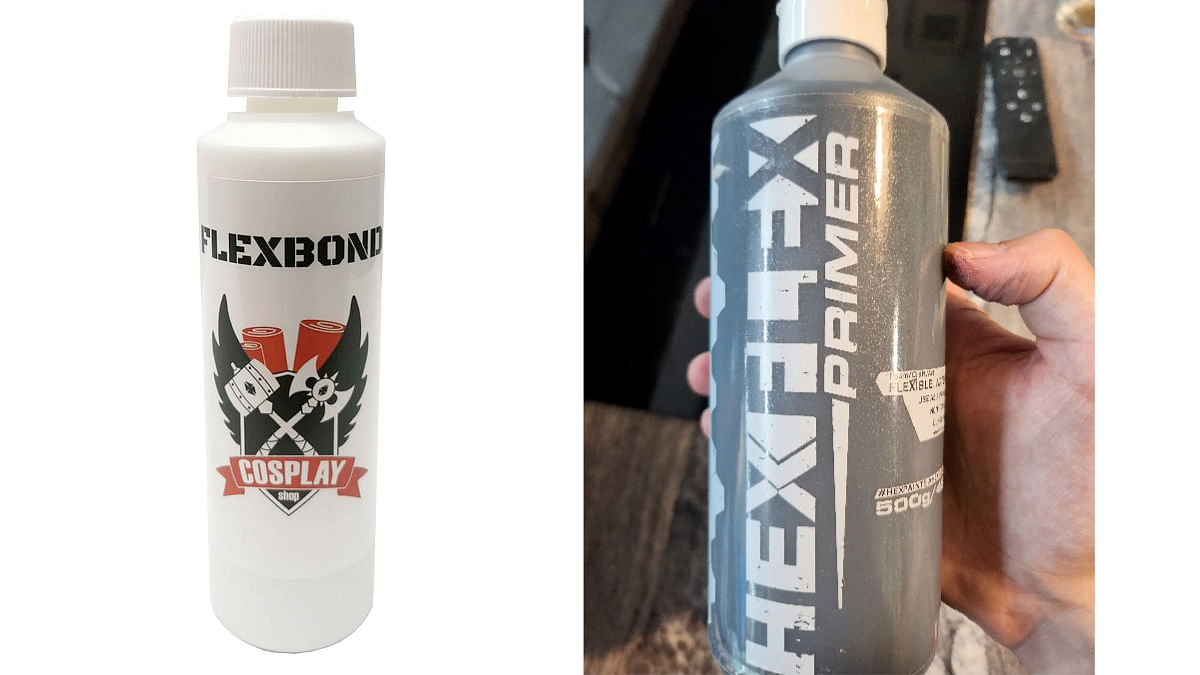
In this case, too, there are alternatives from various manufacturers. For example, Poly Props offers Hexflex primer, which can also be applied by brush or airbrush. The difference between Flexbond and Hexflex is again in the texture—Flexbond provides a smoother and firmer surface, while Hexflex is grainier but more flexible. The choice depends on the desired effect.
However, toxic primers are not suitable for large areas—for example, I would need two to three cans for a foam sword, while non-toxic primers have a larger volume that might suffice for an entire suit of armor.
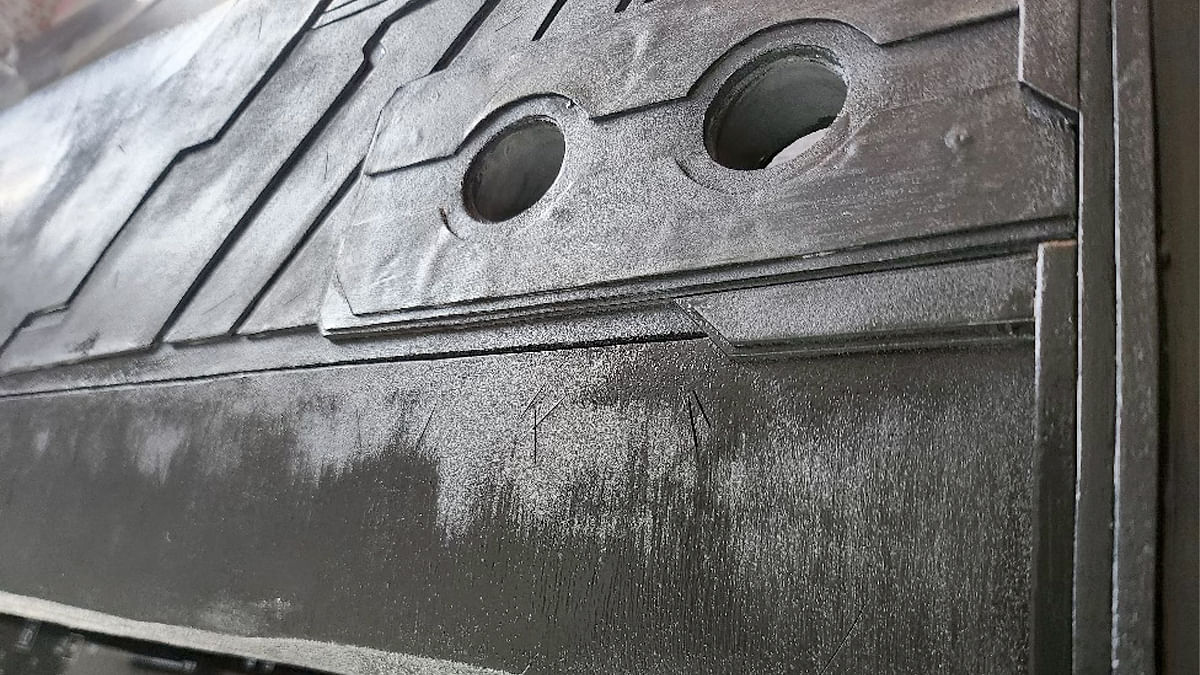
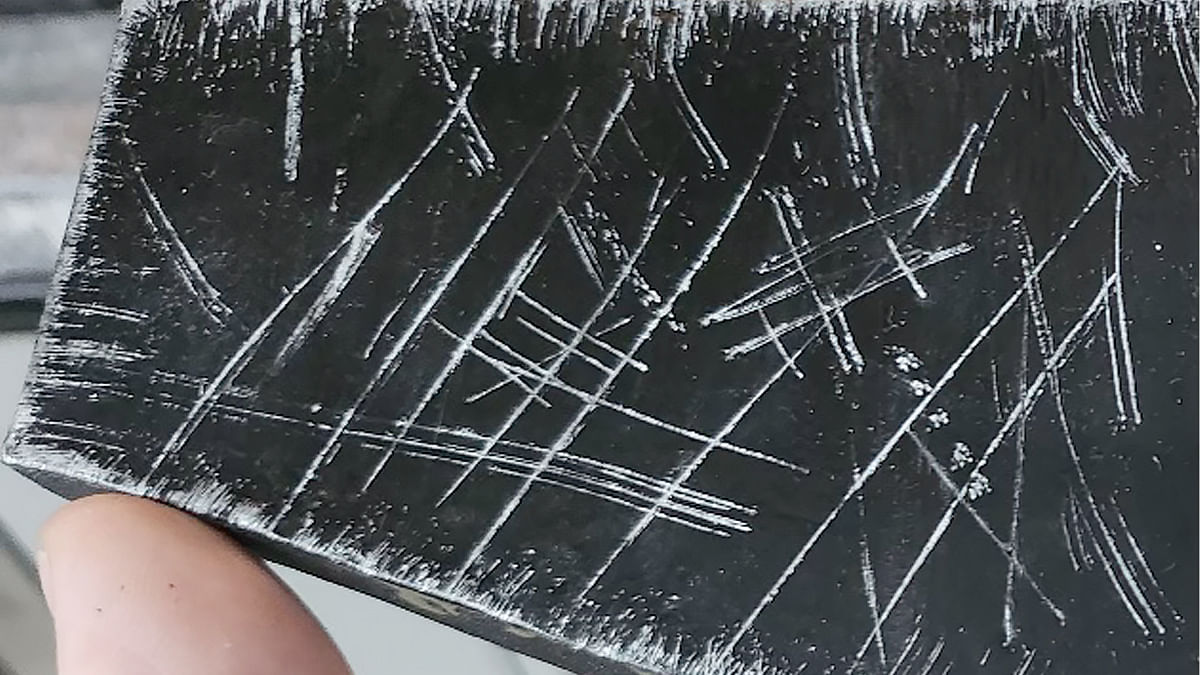
When applying primer with a brush, you can also create texture that you would otherwise have to create by sanding or painting. For example, with the aforementioned Buster Sword, I needed to create sanding marks on the blade, and coarse layers of primer and a stiff brush helped me achieve that.
Painting
My foam prop is primed and I've let it dry for at least 24 hours. Next comes painting. There are several ways to proceed—by hand with a brush, with an airbrush, or using sprays.
If I don't have an airbrush, it's important to get quality brushes. For large areas, the cheaper ones from a regular hobby store will suffice, but for details and smaller areas, I recommend using quality modeling or makeup brushes (I've been using makeup brushes for a long time).
If I decide to use spray paints, I recommend not mixing brands of paints and primers. Different brands have different hardness and drying properties, which can lead to undesirable reactions like running or endless tackiness of the paint, which can ruin the entire project.
When painting, it's important to think about the effect I want to achieve. For example, the Buster Sword has distinct signs of wear (so-called weathering), represented by deep scratches. It would be easiest to just paint those scratches on at the end, right?
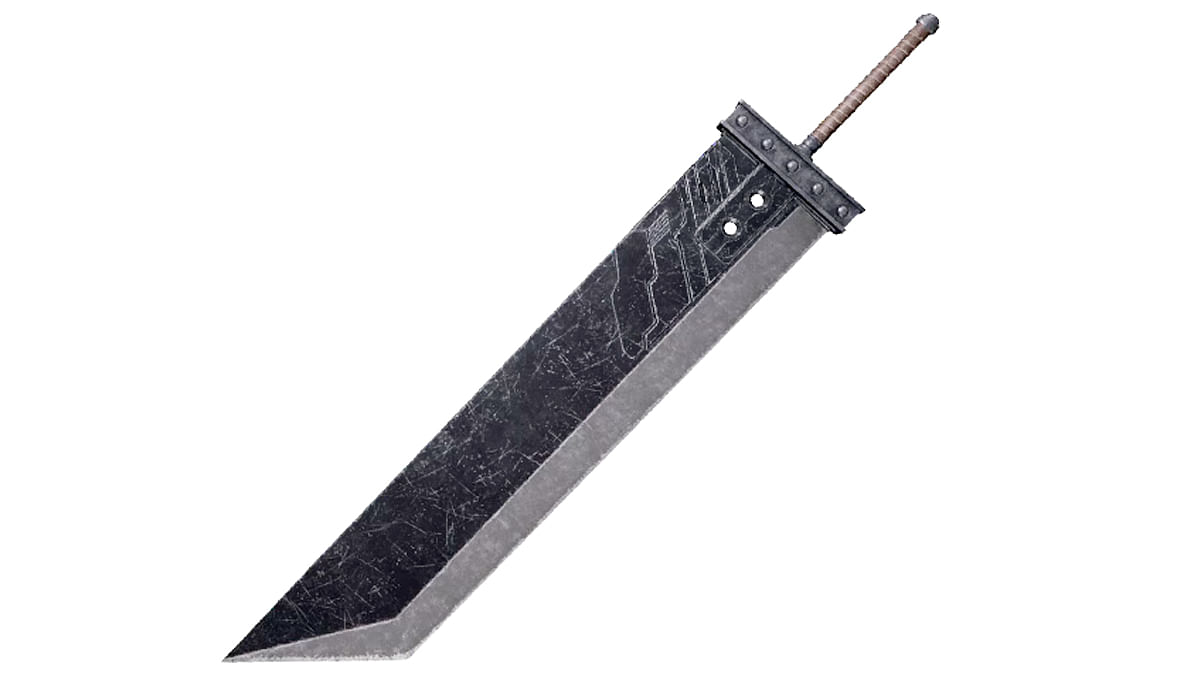
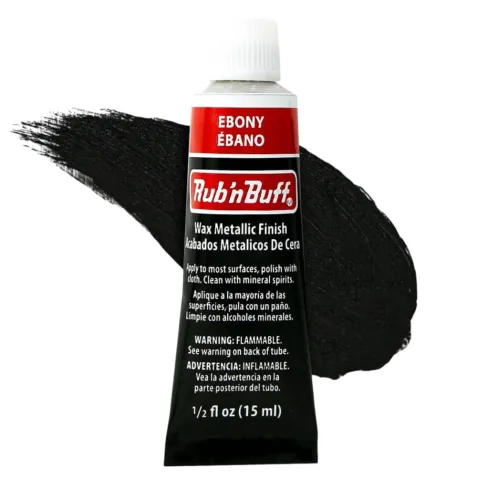
But that's not the case. To make the scratches look believable and realistic, I first covered the entire sword with metallic wax paint—these paints are best applied with a sponge or a soft cloth.
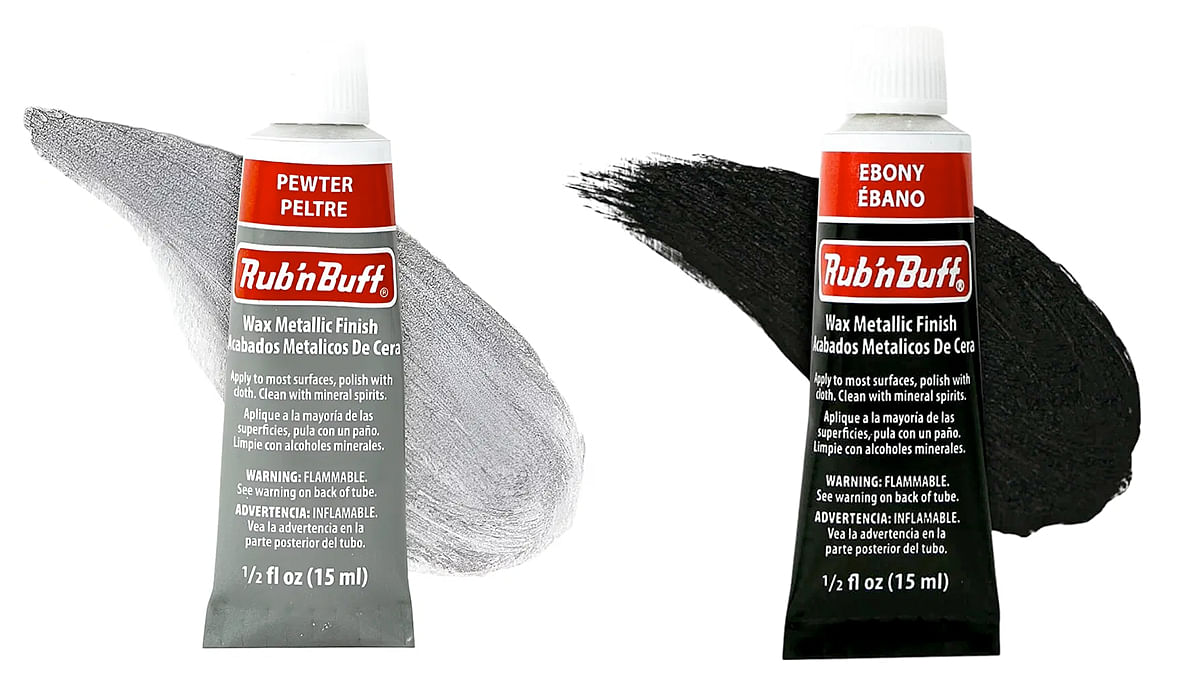
You have to imagine that the paint I'm applying to the primed prop is the "base" and is meant to represent the material the prop is "supposedly" made of. In this case, it was classic metal. Very little of this paint is needed to cover such a large area because it spreads very well.
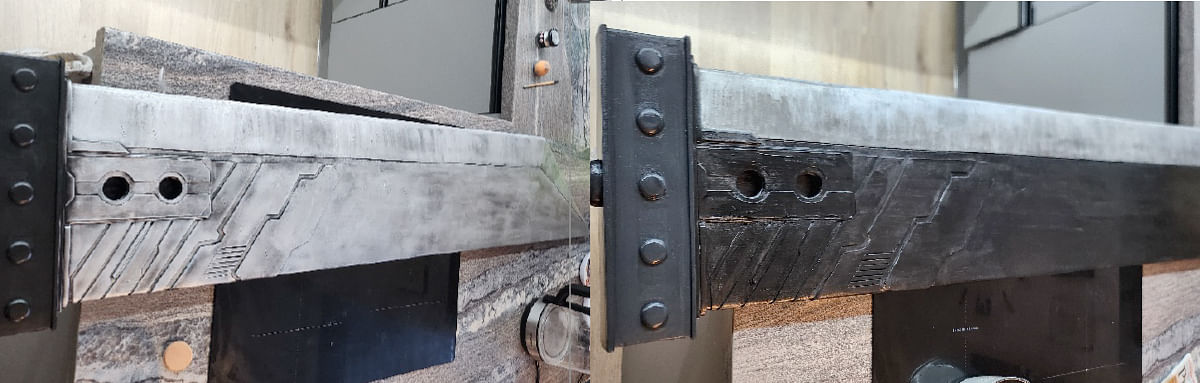
After that, I applied black acrylic paint over the metallic silver, and after it dried, I created scratches with a pin as needed. You can see the final effect below.
Summary
Following the right procedures is the key to a professional result. Filling and sanding removes irregularities, sealing the pores gives the surface strength and smoothness, priming improves paint adhesion and protects the material, and painting adds the final look and details. Quality materials and tools will save you a lot of work. Also, don't forget about protective gear, which will take care of your health and safety when working with toxic products.
Creating foam props requires patience, but the result is worth it. A precisely crafted prop will be the perfect addition to your cosplay or LARP and will withstand intense use.
authors: Rys and Tor’Kaya
Tor’Kaya
Autor článků na imago.cz


You might also like

Star Wars lightsabers and their replicas
The lightsaber, the legendary weapon from the Star Wars film series. Many consider it one of the main reasons for the popularity of this universe. Want one too? We'll help you choose the right lightsaber. full article...
Non-fiction journalism 27. 7. 2026 Karel Krajča 4 min
Vampire: Step-by-Step to an Immortal Look
A quick guide on how to transform into an elegant vampire in twenty minutes—makeup, colors, details, and fangs for the perfect Halloween look. full article...
Tips and guides 27. 10. 2025 Eva Lassler 4 min
Fantastická Ostrava 2025 Festival: A World Beyond Reality
The biggest fantasy event in North Moravia celebrates its sixth edition! Thousands of fans, international stars, and a program packed to the brim. full article...
Non-fiction journalism 3. 6. 2025 Karel Krajča 4 min