


Prague: Horror and Mystery
Everyone knows the saying about the City of a Hundred Spires. But both local and foreign creators have long known—and depicted—a darker, more mysterious side to Prague. It's enough to make you afraid to visit the city.

Everyone knows the saying about the City of a Hundred Spires. But both local and foreign creators have long known—and depicted—a darker, more mysterious side to Prague. For many foreigners, the Czech Republic is synonymous with Prague; it is often the only place they visit, or at least the only one they talk about. This is reflected in international horror references. While Prague doesn't appear constantly, it shows up in various forms often enough to warrant a short article.
In John Carpenter's western horror Vampires (1998), a group of vampire hunters tracks Jan Válek, a Prague priest from the distant Middle Ages. The Catholic Church once tried to burn him at the stake, but failed, and he returned as a bloodthirsty, vengeful vampire. Válek is a tough, ruthless, and cruel opponent who hides in the sand and dirt—coffins seem to be a thing of the past at the turn of the millennium—alongside his cohort of vampire minions. He doesn't spare his victims, literally tearing them apart with his bare hands (and that's for real!). He is a demonic, gritty, and charismatic villain. Carpenter ignores certain vampire clichés in his story, creating his own rather original vampire genesis.
Prague entered the world of international horror as early as 1891, when American writer Francis Marion Crawford published the occult horror novel The Witch of Prague. The entire story takes place in Prague and tells of a bewitching sorceress named Unorna, who uses both her personal charm and actual magic to make any man fall in love with her. One day, however, Unorna falls in love with a man called the Wanderer, who is traveling the world in search of his lost love, Beatrice.
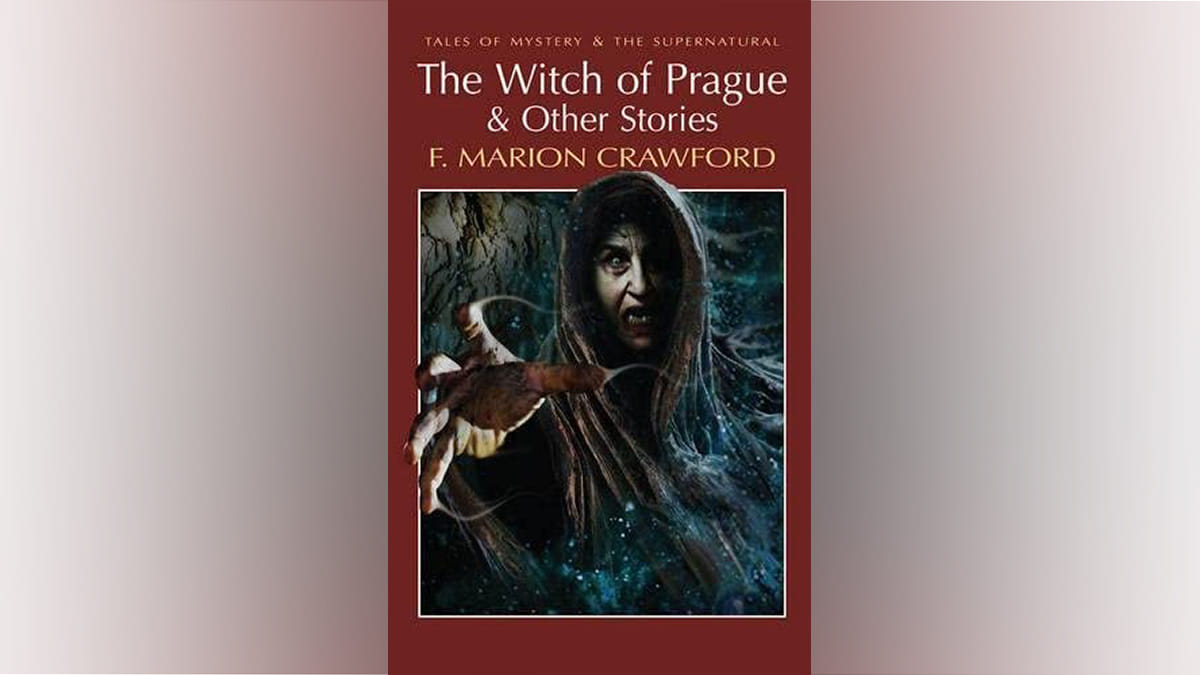
The titular Prague witch is quite a piece of work. She conspires with a mad dwarf named Kyjorek Arabian, with whom she keeps a centenarian in a hypnotic sleep. Through experiments on him, she tries to stop aging and discover the secret to eternal youth—specifically by using blood transfusions from a young person.
Unorna tries to hypnotize the Wanderer, suggesting that Beatrice doesn't exist and that she is the only one he should love. Crawford, who was born in Italy, studied in America, and traveled the world, reportedly spent time in Prague gathering material for his work before writing the novel. The book was first translated into Czech in 1912, and again 18 years later. Even before its Czech release, the novel caught the attention of locals. In 1892, the magazine Lumír wrote: "As a novel, The Witch of Prague would probably not interest our readers, as it is all based on hypnotism and suggestion, but there are places where one can see how a foreigner views us and in what light he sees Prague."
A truly unique piece is the classic giallo Short Night of Glass Dolls (1971), originally titled Malastrana, a co-production between Italy, Germany, and Yugoslavia. It tells the story of American journalist Gregory Moore, who is admitted to a Prague hospital without signs of life and declared dead by doctors. Moore is not dead, however; he has fallen into a cataleptic state. While waiting for an autopsy, he retrospectively recalls the events of the last night, trying to answer basic questions like where his girlfriend disappeared to or who wants to kill him and why.
Wrapped in genre conventions and "necessities" (nudity, murders of young women), the viewer gets not only a look at Prague and its corners but also a period-accurate, albeit slightly exaggerated, depiction of the atmosphere of socialist Czechoslovakia. Beyond spotting Prague landmarks, the viewer can enjoy a score by Ennio Morricone or catch a glimpse of future Bond girl Barbara Bach.
We even encounter references to Prague and the Czech Republic in the series Buffy the Vampire Slayer (1997). In the second episode of the third season, "School Hard," the vampires Spike and Drusilla talk about Prague. Drusilla laments that she misses it, while Spike reminds her that she almost died there thanks to a stupid mob. Buffy doesn't just favor Prague, though. In the fifth season, the monks guarding the Key speak Czech extensively and clearly. In the seventh episode of the seventh season, "Conversations with Dead People," Buffy's former classmate Holden reminds her that she once let him copy a term paper on Václav Havel (the fee for using the name was not paid). In the original, it is pronounced "Vaklaf Ável."
And one important piece of advice: don't rob centuries-old corpses in Prague. Not even when Munich is looming and the Nazi occupation of Prague is just around the corner. The protagonist of a short story by the practically unknown author Stephen Gregor finds this out the hard way after bringing home an old, expensive souvenir from a robbery in Prague. Because then, the Lord of Prague will pay you a visit. An unpleasant visit. This classic English ghost story originally appeared in a post-war magazine and is technically the only existing information about both the author and the story itself. In Czech translation, the story appeared in Jan Zábrana's anthology Lupiči mrtvol (Body Snatchers).
As you can see, Prague has an invaluable charm. And we certainly haven't exhausted all the ways it has contributed to international horror. It attracts not only lovestruck students (The Student of Prague) but also bloodthirsty vampires (Blade II). Witches, victims, and murderers. The walls of its houses are soaked in centuries of dark legends, and the eerie references from books follow your every step in many an alleyway. It's enough to make you afraid to visit the city.
author Honza Vojtíšek
the article was originally published in the independent horror magazine Howard
Honza Vojtíšek
Autor článků na imago.cz
You might also like

Fear of the Unknown: How Lovecraft Changed Horror Literature
Discover the fear of the unknown and the world of H. P. Lovecraft. How cosmic horror influenced literature and modern culture. Dive into the secrets of the Cthulhu Mythos. full article...
Non-fiction journalism 20. 8. 2025 Petr Eller 7 min
The History of Doom: From Pixelated Hell to The Dark Ages
Doom as a cultural phenomenon: how a game full of demons, brutality, and mods survived for decades and conquered everything from fridges to calculators. full article...
Non-fiction journalism 10. 6. 2025 Karel Krajča 8 min
International Day of Creepy Kids
Discover the scariest kids from movies and books. Classics and modern horror films that show that even innocence can be deadly. full article...
Non-fiction journalism 27. 5. 2025 Karel Krajča 8 min