


Fear of the Unknown: How Lovecraft Changed Horror Literature
Discover the fear of the unknown and the world of H. P. Lovecraft. How cosmic horror influenced literature and modern culture. Dive into the secrets of the Cthulhu Mythos.

"The oldest and strongest emotion of mankind is fear, and the oldest and strongest kind of fear is fear of the unknown."
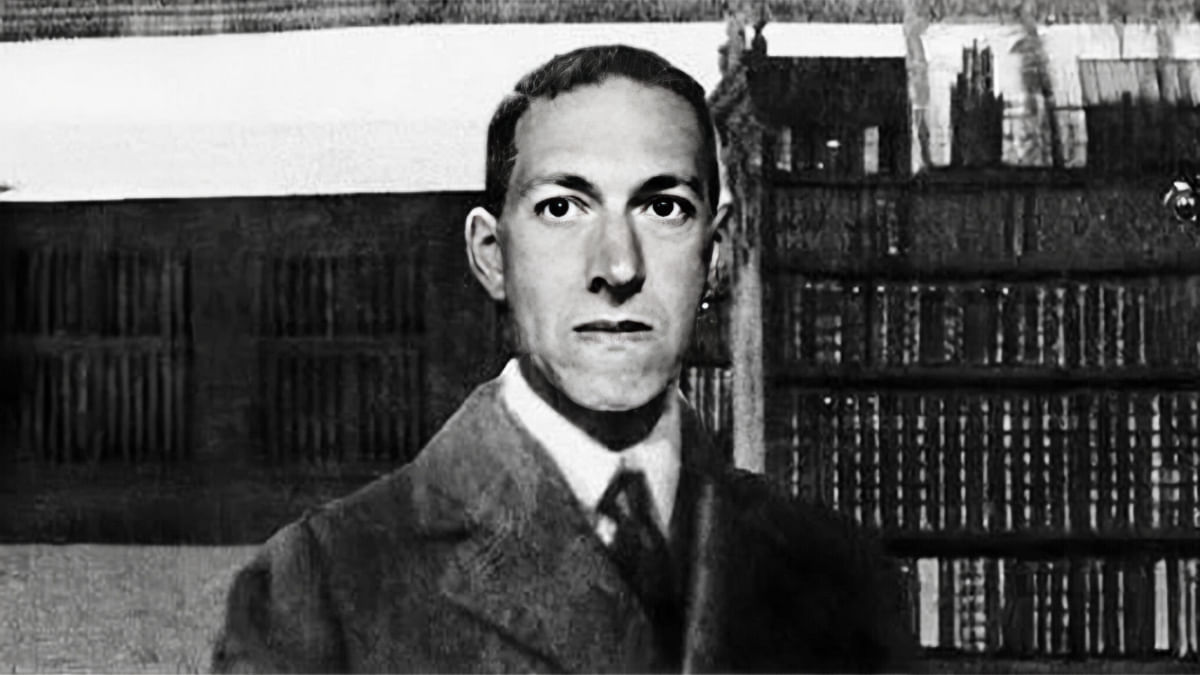
Disturbing secrets of bloodlines, mysterious books filled with forbidden knowledge, and horrors so indescribable that the mere thought of them drives a person to madness… These elements have become a standard part of many modern horror stories, yet a single author is largely responsible for their popularization. Howard Phillips Lovecraft, whose name has become synonymous with a unique kind of horror that has captivated many.
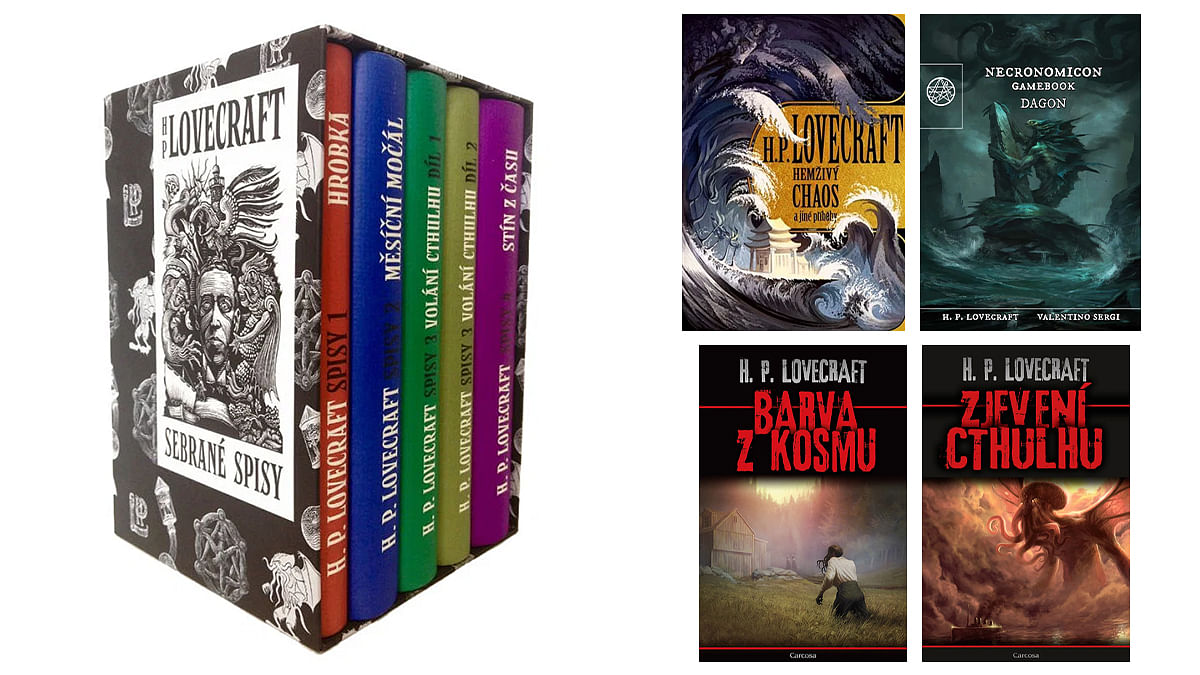
Celebrate a birthday with H. P. Lovecraft! 🥳 This year, specifically on August 20, 2025, Howard would have celebrated his 135th birthday. It is nothing compared to the Great Old Ones, yet the time elapsed since his birth still commands well-deserved admiration when we realize that his horror world continues to inspire us to this day. If you want to commemorate his legacy with something tangible, you can take advantage of our selection of board games, books and RPGs, or decorate your secret Cthulhu cultist altar with some cute tentacle merch.
The Life and Inspiration of H. P. Lovecraft
Born in 1890 in Providence, the capital of Rhode Island in the United States, Howard Phillips Lovecraft grew up as a great admirer of gothic horror stories by Edgar Allan Poe or Robert Chambers. But by the time Lovecraft began writing himself, the long shadow of the First World War had been cast over this art form. Humanity had been exposed to real terror, and fantastic fiction lost its appeal.
Scientific Elements in Lovecraft's Stories
Lovecraft therefore sought to find a new kind of horror. One that would stem from the scientific progress of his time. For this reason, his stories are accompanied by scientific elements that give them a disturbing credibility. In the work The Colour Out of Space, a strange meteorite lands near a farm and turns the place into a terrifying nightmare. In other cases, he uses scientific methodology as a form of storytelling. For example, in At the Mountains of Madness, individual segments of the narrative are presented as reports from an Antarctic expedition that discovers things in the ice-covered plains that should have remained buried forever. Ultimately, even mathematics served Lovecraft as a source of horror, where impossible geometric configurations destroy the minds of all who merely look upon them (The Dreams in the Witch House).
Much like the greatest discoveries of that time—subatomic particles and X-rays—the forces in Lovecraft's stories are powerful, but often invisible and indescribable. Instead of recognizable monsters, graphic violence, or shocking scenes, the power of "Lovecraftian horror" lies in what is not directly depicted but left to the dark depths of our imagination.
Lovecraft created dozens of short stories, novellas, and poems, often set in a shared fictional continuum with recurring characters, places, and mythologies. At first glance, it may seem that everything is set against the backdrop of New England in the USA; however, beneath the surface of this seemingly ordinary reality hide dark rulers for whom the inhabitants of planet Earth are completely insignificant.
The Great Old Ones: Dark Rulers on the Edge of Reality
Lovecraft's "Great Old Ones" are not just ordinary deities (after all, god is only a limited human concept), but primordial forces lurking on the edge of our known reality. For example, Yog-Sothoth, "who foams as a foul slime in the nuclear chaos beyond the farthest reaches of space and time," is described as a being composed of countless glowing spheres. It is an extraterrestrial and supernatural entity that exists outside the ordinary universe and time. Yog-Sothoth is omniscient and omnipresent, and therefore key to rituals and spells that open the gate to forbidden knowledge and interdimensional travel.
Another example are the mysterious beings with heads resembling starfish, with cylindrical bodies covered in wings and ending in tentacles. Known as the "Elder Things," they were one of the first intelligent races on Earth and created many technologies and biological creatures. Their creativity exceeded their own existence through the creation of amorphous, gelatinous beings with many eyes that served as laborers and slaves. However, over time, these huge, adaptable, and incredibly dangerous "Shoggoths" rebelled against their creators and contributed to the fall of the first civilization.
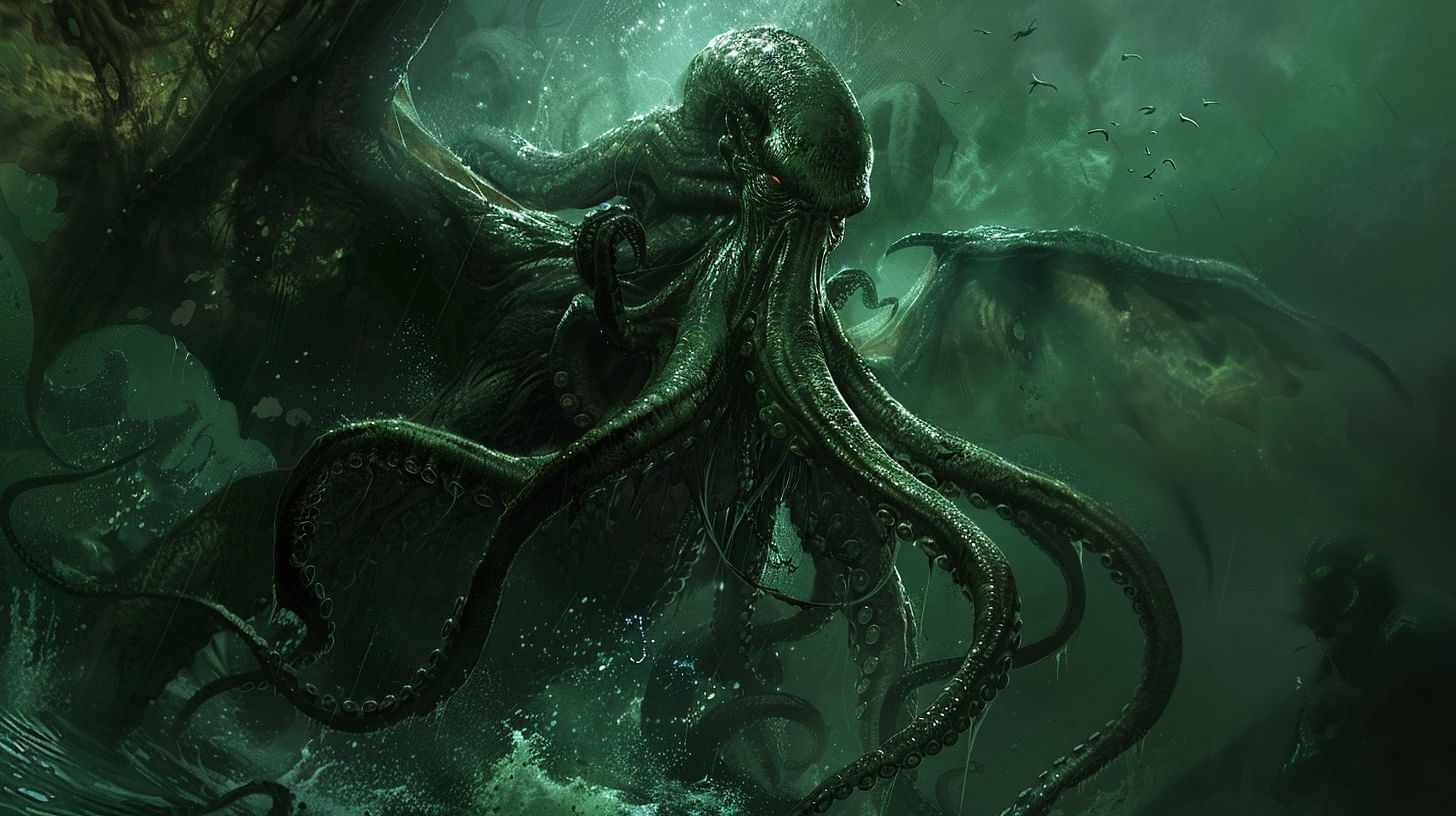
However, Lovecraft's most iconic monster is undoubtedly Cthulhu. His head is a mass of tentacles resembling an octopus, his body is massive and covered in scales, and his limbs end in claws. His back is equipped with dragon wings, and Cthulhu himself is so huge that the mere sight of him induces terror. He came to Earth from the depths of the cosmos long before the emergence of humanity; now he sleeps in the depths of the Pacific Ocean, waiting for his awakening to bring destruction.
These beings exist outside our concepts of reality; their true forms are as inscrutable as their motives. The Great Old Ones lie in the darkness, awake and constantly observing events on Earth, hidden beneath the earth's crust, in ice, or in the depths of the oceans, listening and waiting for their time to return.
Lovecraft's protagonists—often researchers, anthropologists, or antiquarians—stumble upon hints of their existence. But even these indirect glimpses are enough to destroy a rationally thinking mind. And even if the characters survive these terrifying encounters, the reader does not leave with a feeling of triumph, but with the aftertaste of infinite indifference—the realization that we are just insignificant creatures at the mercy of incomprehensible forces.
Perhaps the greatest power these creatures possessed was the attraction they exerted on Lovecraft's literary contemporaries. During his professional life, Lovecraft maintained extensive correspondence with other writers and encouraged them to use elements and characters from his mythology in their own works. References to Lovecraft's gods or mysterious volumes can thus be found in many stories by his friends, such as Robert E. Howard and Robert Bloch. Today, this shared universe is called the Cthulhu Mythos, named after Lovecraft's legendary creation.
The Cthulhu Mythos and the Necronomicon
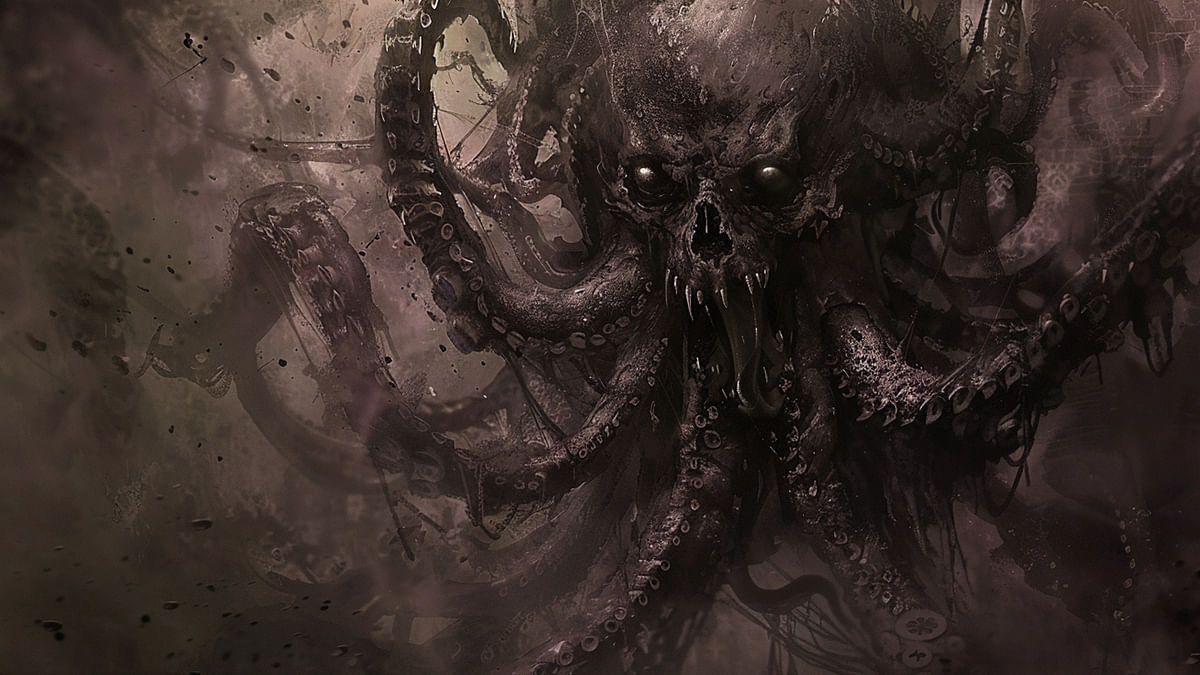
Another significant role in the Cthulhu mythology is played by a book called the Necronomicon, which outlines the ancient origin of Cthulhu and other Great Old Ones. It is a dark collection of forbidden knowledge with the magical power to bring incredible insights, but also madness and death. Lovecraft himself initially claimed that it was a translation of a real Arabic text, but later admitted that the text of the Necronomicon never existed. Its passages are incorporated into Lovecraft's stories, but a complete manuscript with the potential to create a book never existed. And so, people wrote one such manuscript themselves. Since the 1970s, physical copies of the Necronomicon began to appear, and its pages became religious texts, cult items, or demonic grimoires for some. And so, Lovecraft's entirely fictional "Book of the Dead" became a real participant in the Cthulhu mythology.
Personal Views and Prejudices
Unfortunately, Lovecraft's fear of the unknown had a negative impact on his personal attitudes. Some of his works may therefore seem offensive, presenting crude stereotypes or racism. However, the rich world he created completely transcends his personal prejudices. After his death, the Cthulhu Mythos was adopted by a wide range of authors who expand this captivating world with their own imaginations, dreams, and fears. They continue Lovecraft's legacy and push the boundaries of the genre known as Cosmic Horror.
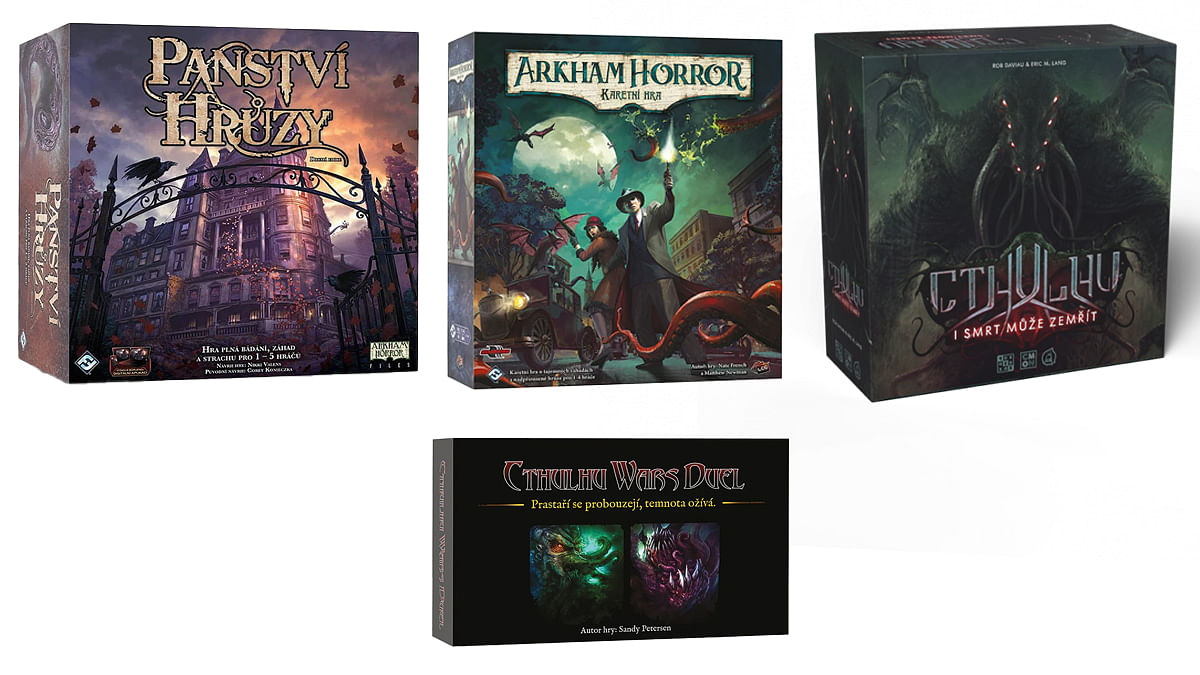
Despite his literary legacy, Lovecraft never achieved financial success. He died unknown and penniless at the age of 46—a victim of the sad indifference of the universe. However, his work has inspired countless short stories, novels, comics, RPGs, board games, and cultural icons. And as long as people feel dread at the unknown future, Lovecraftian horror will have its firm place in the darkest corners of our imagination.
"We live on a placid island of ignorance in the midst of black seas of infinity, and it was not meant that we should voyage far…"
author Petr Eller
Petr Eller
Autor článků na imago.cz

collective of authors


You might also like

The History of Doom: From Pixelated Hell to The Dark Ages
Doom as a cultural phenomenon: how a game full of demons, brutality, and mods survived for decades and conquered everything from fridges to calculators. full article...
Non-fiction journalism 10. 6. 2025 Karel Krajča 8 min
International Day of Creepy Kids
Discover the scariest kids from movies and books. Classics and modern horror films that show that even innocence can be deadly. full article...
Non-fiction journalism 27. 5. 2025 Karel Krajča 8 min
Lovecraft for Beginners: Where to Start
Find out how to start reading Lovecraft and dive into his chilling stories full of ancient horrors and fascinating worlds. full article...
Non-fiction journalism 3. 4. 2025 Jana Mrkvicová 6 min