


The History of Doom: From Pixelated Hell to The Dark Ages
Doom as a cultural phenomenon: how a game full of demons, brutality, and mods survived for decades and conquered everything from fridges to calculators.

What do you find in the article?
In the world of video games, some titles never age – and then there is Doom. The game that defined a genre, pushed technology forward, and taught the world that shooting demons can be not just brutal, but incredibly fun. But what led to the creation of Doom, and how has it evolved into the modern era? Let’s take a journey from pixelated hell to the explosions of a modern ray-traced inferno.
In the early 90s, John Carmack, John Romero, Tom Hall, and Adrian Carmack (related by name only) decided to disrupt the status quo. Their studio, id Software, already had the successful Wolfenstein 3D under its belt, but the team felt they could do more. They wanted a game with more freedom of movement, a darker atmosphere, and bloodier action. They named the project simply – Doom. They drew inspiration from action movies like Aliens and the brutal D&D campaigns they played together. John Romero liked to say that Doom is like heavy metal – but interactive.
My first encounter with Doom was truly unconventional. In the nineties, a cultural center in Ostrava opened something unheard of at the time – a virtual reality arcade. The CyberMaxx system was a large, heavy helmet connected to a PC by massive cables, and the game was controlled by a sort of puck. It was insane! They let me play Doom II; I spent a few minutes stumbling in place, got tangled in the cables, and later threw up… Back then, the technology just wasn't ready for virtual reality.
Since I didn't have a computer at home, I had to rely on friends. The breakthrough came when our elementary school opened an IT classroom packed with the first Pentiums. After the first lesson, our teacher realized we knew more about Windows 3.11 than she did, so she let us play various demos. And, of course, there was Doom! That was my first experience with a multiplayer game and the beginning of a lifelong love.
Doom (1993): The Birth of the FPS Genre
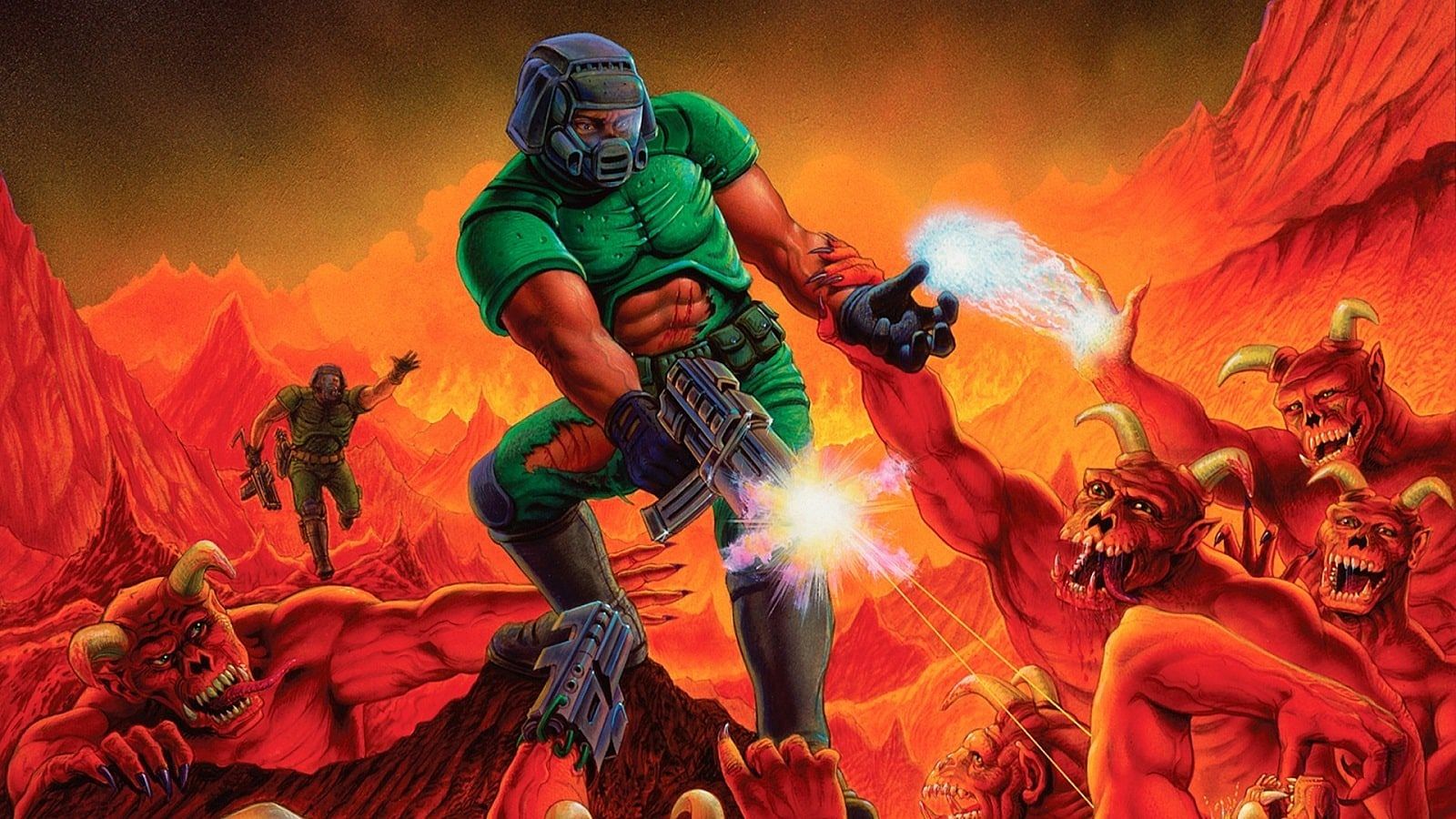
The first Doom was released on December 10, 1993, as shareware – players could download the first episode for free and order the rest by mail. The game ran on the id Tech 1 engine, which allowed for a pseudo-3D environment with height differences, dynamic lighting, and striking textures. The player stepped into the boots of a nameless marine on a Mars base where a gateway to hell had opened – and an icon named Doomguy was born.
Doom became revolutionary not just because of its technology and bloody action, but also its style. Brutal level design, iconic weapons like the plasma rifle or the BFG 9000, and monsters like the Imp or Cacodemon set a new standard. The soundtrack was rooted in metal – riffs inspired by Metallica, Slayer, or Pantera fueled the adrenaline-pumping experience. Doom also kickstarted a modding community that created custom levels and mods – laying the foundation for today's fan-made content.
In my case, it’s a bit of a paradox that I didn't finish the first Doom until adulthood, on the iPad version. But it was still an experience.
Doom became a literal technological meme thanks to its ability to run on almost anything – and the community took it as a challenge. Enthusiasts have run it on a TI-83 calculator, a Samsung smart fridge, and even a pregnancy test, which was modified to display the basic game graphics on its tiny screen. Doom has also run on an ATM, an oscilloscope, smartwatches, a Canon digital camera, and even a John Deere tractor via a dashboard hack.
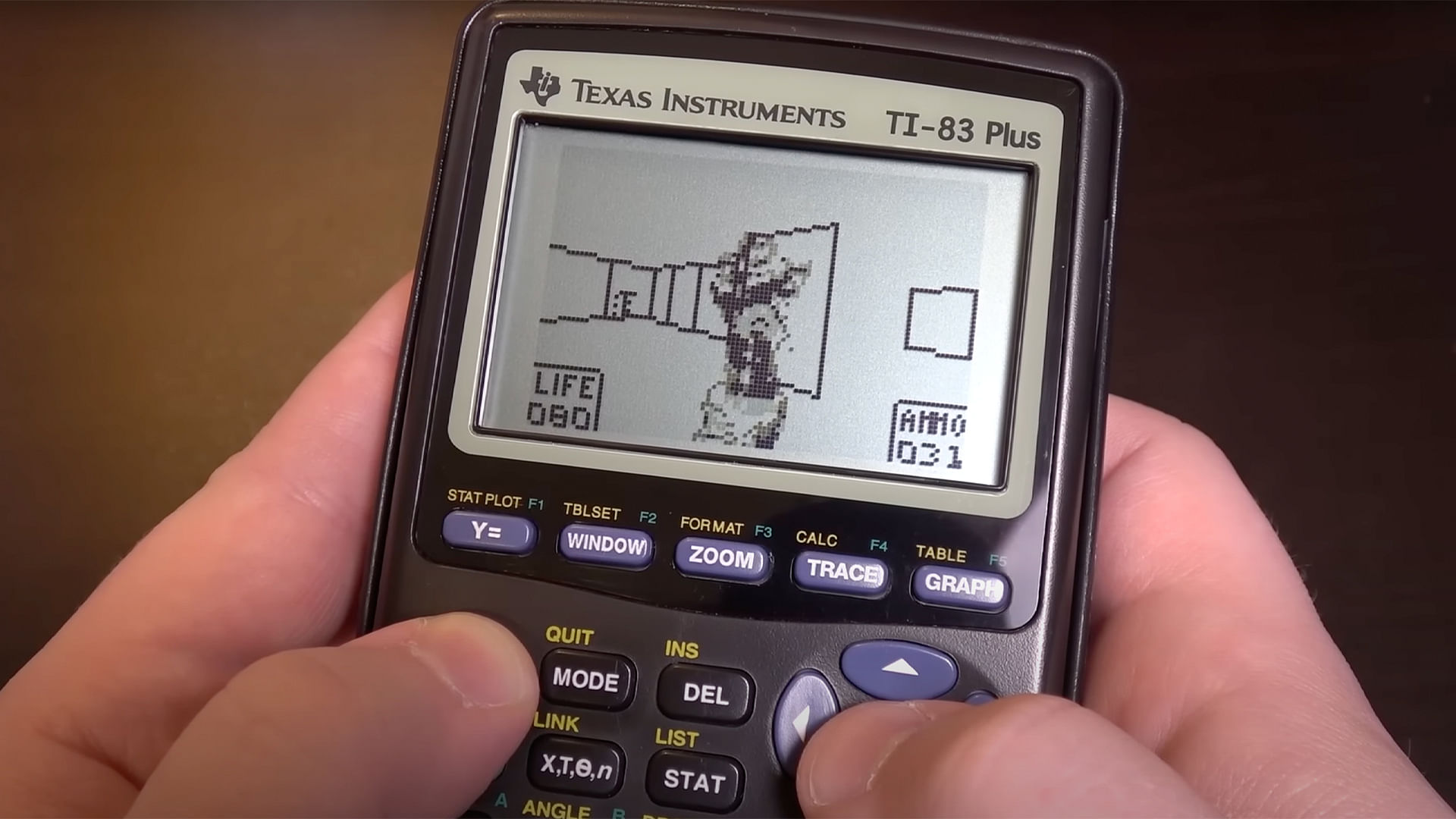
Developers have even ported it to an ASCII version that runs in a simple terminal, or a Minecraft Redstone computer that simulates it directly in-game. There’s even a version that runs inside another game – like Doom inside Doom, or in games like Minecraft or Garry’s Mod. This crazy obsession with "running Doom on anything" created its own subculture and became a symbol of how technically simple, open – and absolutely immortal – the original game is.
Shortly after its release, Doom sparked a strong wave of controversy due to its graphic violence, satanic symbolism, and dark visuals. At a time when most games were still relatively innocent, Doom shocked people with realistic demon-slaying, bloody explosions, and scenes from hell. Many religious and parental organizations labeled the game dangerous for youth, and in the USA, it became a frequent topic of debate regarding the negative influence of video games on children. The controversy intensified after the tragic Columbine school shooting in 1999, when the media repeatedly mentioned that the attackers were fans of Doom. Although no study has proven a direct link between games and violence, Doom became a symbol of this debate – and inadvertently helped spark the discussion about age ratings that led to the creation of the ESRB system.
Doom II: Hell on Earth (1994)
Doom II took place on Earth, which had been overrun by demons. Doomguy returns to cleanse it. A new weapon was added – the iconic Super Shotgun, which quickly gained status as a fan favorite. New enemies appeared, such as the Arch-vile, Revenant, or Pain Elemental, and the levels were larger and more complex. Doom II wasn't distributed as shareware but was a fully commercial product – and it sold excellently. A huge number of fan modifications and WADs were created on its foundation, some of which (like Brutal Doom) became legendary.
Doom 64 (1997): The Forgotten Treasure
Doom 64 was created exclusively for the Nintendo 64 console and differed significantly from previous installments. It featured entirely new graphics, levels, and atmosphere. While the first Doom was a chaotic metal concert, Doom 64 sounded like a dark, ambient nightmare. Aubrey Hodges' soundtrack relied on unsettling silence, static, and creaks. The game was slower, darker, and more atmospheric. Yet, it was often forgotten – until 2020, when a remaster for modern platforms was released. That was when it was revealed that Doom 64 is a direct prequel to the 2016 reboot.
Doom 3 (2004): A Technological Nightmare
After a several-year hiatus came Doom 3, which was fundamentally different from its predecessors. This time, it wasn't about fast-paced slaughter, but a dense horror experience. The player moved through dark corridors of a Martian base filled with heavy breathing and ominous whispering voices. The main dilemma was: hold the flashlight or the weapon? This decision often cost the player their life. Doom 3 ran on the id Tech 4 engine, which allowed for unprecedented work with dynamic shadows and light. Although it was a technological gem and players appreciated the thick atmosphere, many missed the classic Doom drive.
The third Doom is a personal favorite of mine. Yes, it doesn't have much in common with the original games, and I had to work a part-time job to afford a new graphics card, but I still remember the moments of terror and dark rooms lit only by a flashlight. I don't think I've ever been as scared by a game before or since.
Doom (2016): Reboot with Bullets
After the cancellation of the original Doom 4 project, which resembled a military FPS more than anything else, id Software decided to return to its roots. Doom (2016) was a return to raw, uncompromising speed. No reloads, no cover – just you, the demons, and plenty of buckshot. Players once again became the Doom Slayer – an unstoppable force. A new feature was glory kills, brutal finishing animations that also replenished health.
The music was composed by Mick Gordon, and his industrial metal soundtrack instantly became a cult classic. The id Tech 6 engine handled extremely fast pacing and allowed for 60 FPS gameplay even on consoles. Doom (2016) was a triumph and a return to roots that felt fresh and modern at the same time.
Doom Eternal (2020): Lore, Verticality, Challenge
In Doom Eternal, the series shifted once again. The game was faster, more vertical, and more strategic. Players had to learn how to effectively eliminate different types of enemies – sometimes with a chainsaw, other times with a grenade launcher or the Meat Hook, a hook attached to the shotgun. This time, the Doom Slayer was placed in a more expansive world that revealed his mythical origins, the battles of the Sentinel Knights, and divine conflicts between the celestial realm and hell.
Doom Eternal wasn't just another sequel – it was a monumental epic in which the player traversed a destroyed Earth, ancient fortresses, and other dimensions. The game combined frantic action with a complex story and was considered a masterpiece of modern FPS.
Doom: The Dark Ages (2025): Slayer in Armor
The latest addition to the series, Doom: The Dark Ages, is set in a dark fantasy world and serves as a prequel to Doom (2016). Here, the Doom Slayer becomes a legend among Sentinel warriors and fights in armor with a massive shield that doubles as a chainsaw. For the first time, the player gets the chance to pilot a mech or even a demonic dragon. The game's style shifts toward heavier, more rhythmic combat – but still with an emphasis on brutal action and explosive kinetics. The game runs on the new id Tech 8 engine and promises to be the darkest and most epic Doom yet.
Doom is more than just a shooter. It is a development legend, a cultural phenomenon, and a gaming school all in one. Since 1993, the series has traveled an incredible path – from pixelated demons to epic sci-fi fantasy battles across dimensions. And yet, Doom still manages to preserve what matters most: frantic pacing, uncompromising gameplay, and the joy of chaos. Whether you're a fan of old WADs or a modern glory kill machine – Doom is still alive. And it will live on.
author Karel Krajča

Karel Krajča
Šéfredaktor, content creator a organizátor festivalu Fantastická Ostrava. Fanoušek fantastiky, videoher, deskových her a popkultury obecně. Příležitostný milovník malování figurek a craftení všeho druhu. Hudební závislák a amatérský znalec fyziky a matematiky.


You might also like
The Witcher 3's Big Comeback: Free Remaster and Upcoming DLC
The Witcher 3 is making a big comeback! Find out everything about the free September remaster and the new 2027 story DLC, Songs of the Past. full article...
26. 8. 2026 Karel Krajča 3 min
Star Wars Lightsabers and Replicas
The lightsaber, the legendary weapon from the Star Wars film series. Many consider it one of the main reasons for the popularity of this world. Want one too? We'll advise you on how to choose a lightsaber. full article...
Non-fiction journalism 27. 7. 2026 Karel Krajča 10 min
Is the Assassin’s Creed Black Flag remake better than the original?
Is this remake actually better than the original? Find out how the story changes, gameplay mechanics, absence of modern-day segments, and pricing policy turned out. full article...
30. 7. 2026 Fenrys 4 min