


Interview with Pavel Ondrusz, author of the Dračí Hlídka RPG
We invited Pavel Ondrusz, the author of the Dračí Hlídka RPG, for a beer to chat about the past and future of his world. What is it like to create a major tabletop RPG?

What do you find in the article?
- How did you get into RPGs?
- Did you stick to fantasy RPGs, or did you try other things?
- What do you think of the local RPG community? How big is it?
- When did you decide to try making something of your own, and why?
- So, is Dračí Hlídka based on the stories and quests you wrote for Dračí doupě back then, or is it a completely new world?
- How did you start preparing Dračí Hlídka?
- Where does the dislike and opposition to Dračí Hlídka come from?
- What type of player are you, then?
- What do you think is the hardest part of creating a good RPG?
- How did the development of Dračí Hlídka go?
- What were you most afraid of when creating Dračí Hlídka?
- Do you know of anything that really didn't work out during development?
- Is there anything around Hlídka that always reliably amuses you?
- Besides the rulebooks, Monster Book, and advanced rules, you have a lot of additional online material prepared for fans. How do you work with it?
- How do such events at cons and festivals go? How does approaching a new player work?
- What are your plans for Hlídka next?
- Where do you get inspiration for other projects?
- How does the nomenclature and names in Dračí Hlídka originate?
- Do you use artificial intelligence in your work?
- There is an event that brings together fans of Dračí Hlídka - HlídCon. What can you tell us about it?
- Looking back at the whole ordeal of creating Hlídka, would you do it again?
Dračí Hlídka is a Czech tabletop RPG that builds on the history of classic games like Dračí doupě or Dungeons and Dragons. It is currently one of the most popular domestic projects in the genre. We invited its author, Pavel Ondrusz, for a beer to chat about the past and future of his world.
How did you get into RPGs?
When I was thirteen, a friend brought over Dračí doupě. Back then, I didn't even know what it was. We pulled out the rules, character sheets, and dice, hid in a basement clubhouse, and started playing. I never looked back. That was sometime in 1993.
Did you stick to fantasy RPGs, or did you try other things?
I've always been more of a fantasy guy, but we also played Shadowrun, GURPS, and others.
What do you think of the local RPG community? How big is it?
I think I have a pretty good insight into the Czech fantasy community. Most people in it are Dračí doupě players raised on version 1.6 or active players of Dungeons & Dragons 5E. Many of them haven't heard of the original DrD, and if they have, they think “dračák” is just DnD. :-)
Thanks to Big Bang Theory and many other movies and pop culture references, that's not much of a surprise. :-) Generally, I think there are tens of thousands of active RPG players in our country. Those who are temporarily “retired” (raising kids or lacking time/players) number in the tens of thousands more. Besides DrD and DnD 5E, there is of course Hlídka (the successor to DrD) or Jeskyně a Draci (a DnD adaptation) and many other systems, which are, however, on the fringes (at least in my opinion) – DrD+, DrD2, Forbidden Lands, Lone Wolf, etc. The fact is that the Czech and Slovak RPG pond is still relatively small. There is decent potential for growth, especially for established brands. Smaller projects get printed, but usually end up on shelves as a collector's “must-have” piece after a few games. Games without a massive community are dead (or doomed to extinction).
When did you decide to try making something of your own, and why?
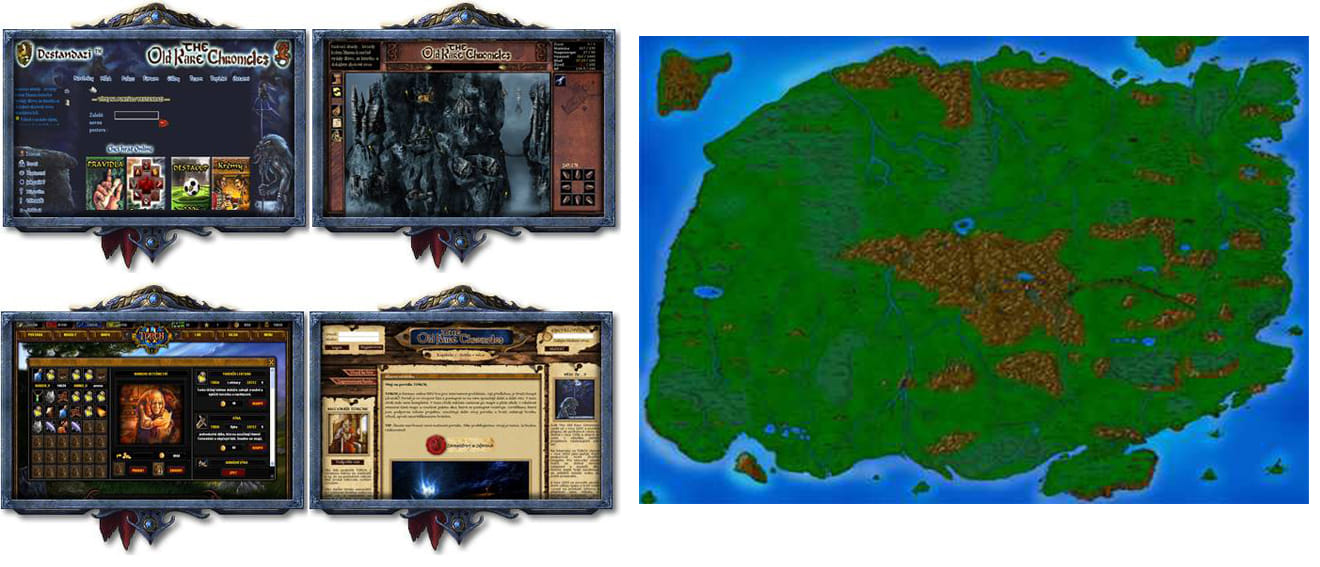
People around me had been suggesting it for a long time. I kept saying it was nonsense because Dračák was already here, and no one could beat it, nor was it worth trying. So I made a computer game called The Old Rare Chronicles. It was quite pioneering for its time, both in terms of massive online play and technology. Thousands of people played it between 2003 and 2007. It was basically an online Dračák. In 2012, the Altar publishing house released the last Dračí doupě. Around 2015, I realized there was slowly nothing left to play. I met with the boss of Altar to find out what plans he had for Dračák or if he would be willing to sell the license. That didn't work out, and it was clear we would have to come up with a new project.
At the beginning, there were three friends. We thought we'd have it done in a year and it would cost around 240,000 - 280,000 CZK. It ended up taking five years to create Dračí Hlídka, it cost a million and a half, and I was left on my own. Everything turned out differently than planned. But it turned out well. :)
So, is Dračí Hlídka based on the stories and quests you wrote for Dračí doupě back then, or is it a completely new world?
I tried to create a completely new world. But Hlídka contains plenty of things based on how we used to modify and adapt Dračák back then. I didn't put the lore from my world directly into the rules; I tried to keep them universal for any universe.
How did you start preparing Dračí Hlídka?
I had a clear template: Dračí Doupě, which I had been playing for thirty years. So I knew what I wanted and what kind of feeling it should have. Most importantly, I wanted to do things differently that annoyed me about Dračák. I knew that no matter how I wrote Hlídka, there would always be something that some players would do differently, and I approached it that way. From the beginning, I counted on people modifying Hlídka just like the original DrD. The goal wasn't to make a “perfect game,” but a platform that would connect people and on which they could build. :-)
First, I went to a lawyer. I told him my idea, and we went through everything that could potentially mean a copyright infringement. Within two days, we defined a framework so we wouldn't step on Altar's toes, and then I basically started writing a new Dračí doupě with my additions and named it Dračí Hlídka. Rights can be wild sometimes. The same goes for the whole game and its reception in the community.
Where does the dislike and opposition to Dračí Hlídka come from?
For how small the Czech RPG pond is, it contains “elitist bubbles” of people who feel they know everything about RPGs and thus have the right (or even the duty) to act as jurors and judges who decide for others what is good for them and what isn't. When someone tries to create something different without solemnly asking them how they should have done it “correctly,” they feel it as an insult and immediately write off such a system. Some in this community have Dračí Doupě pigeonholed as a bad system, and anyone who announces a successor is automatically labeled a fool. It's often based on the idea that if we don't like a certain game, we won't like games derived from it. Sometimes a completely unnecessary shootout starts with someone who doesn't know me and I don't know them. But I don't care about that kind of hate.
Hlídka is flexible. If something doesn't suit you, feel free to change it. That is, after all, one of the powers and privileges of the GM. It is also the GM who has to deal with “munchkins” (players who interpret every letter of the text literally and try to bend game situations into various deviations) or “powergamers” (who sacrifice part of the gaming experience for high-level math and character optimization). They try to build the best possible character with the best numbers for a given task, and when the GM does something non-standard, they get angry and argue.
Fortunately, 99% of players just want to enjoy the story and atmosphere, and as long as the GM is consistent, I don't see a problem. As long as people are having fun with the game system, it's good.
What type of player are you, then?
I am (I dare say) a fairly skilled storyteller. But as a player, I'm terrible. :-) I play little, and unfortunately, I often test how far the GM will let me go with a character and what they will allow. If they set clear rules, they win, and I then enjoy the game immensely.
What do you think is the hardest part of creating a good RPG?
Dividing RPGs into good and bad is very relative. By what metric should it be determined? Is it the number of copies sold? Learning speed? Number of pages? One person likes one thing, another likes something else. Some like pistachio ice cream, some like vanilla. Which one is bad and which is good? If a system finds its players, it has achieved its goal. It's funny that someone can argue about that. Fortunately, such people are few, and it's not bad to ignore them.
And regarding the difficulty of creation – there are many pitfalls where development can crash. We have a lot of talented creators here who try to create something. Some of them do truly amazing things, but they end up being perfectionists. Such a person dives into something, is never satisfied, keeps redoing and redoing, and eventually misses the window when people are still interested. Then they work on it for ten years, keep changing it, get tired and burned out, and their system dies because it's unfinished. It might sound strange and heretical, but I'd rather release a good product that is 80-90% polished than not release one that is “only” 99% perfect. With the first variant, a community starts to form organically, the team expands, and ideas and improvements for the game are added. With the second, there is only an angry author who was “just a step away from the finish line” (as so many times before), and angry people who eventually go look for something else.
How did the development of Dračí Hlídka go?
When we first introduced Hlídka to the public in 2018, it was a completely different game than the one people know today. Everything was rewritten maybe ten times, and hundreds of pages I wrote over those years were thrown in the trash (literally or figuratively). Some texts eventually appeared in the Advanced Rules, and part is prepared as supplements for other projects. Even so, it's a huge amount of material that I created and subsequently discarded because it didn't fit the overall tone.
That is, after all, a big challenge for all newcomers to the team. I warn everyone who joins me at the beginning that it won't be easy. There are some areas where I have a clear vision and I stick to it. Other times, I like to experiment and give only very general instructions. I then gradually evaluate the results and choose the best solution. Just like me, the people around me have to write many things just as a “proof of concept” and then have them thrown off the table. Not everyone is mentally prepared for such a style of work, but I warn everyone at the beginning. :-) It might look like a waste of time, but that's how I function “chaotically,” and that's how a lot of new beautiful things are created.
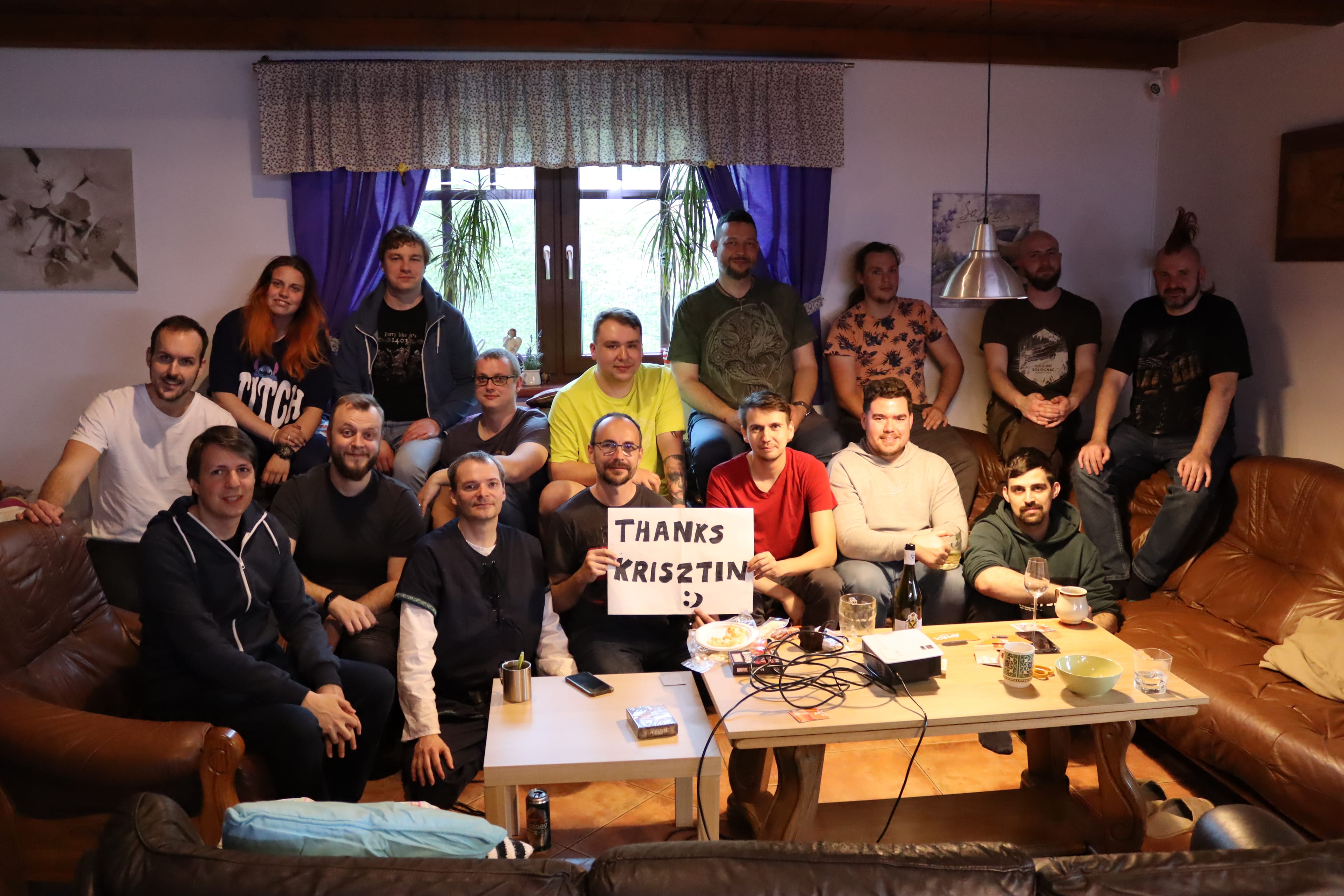
And now to the history. At the beginning, there were three of us. We had a plan that we would contribute together. We always met at the pub, divided tasks, “you'll do the thief, and you the wizard,” and in two weeks we'd meet and go through what everyone wrote. A qualified majority then decided what would pass. We changed and redid things for each other, and after about half a year, we created a game that none of us wanted to play. It was uniquely repulsive and unfun. :D It was clear this wasn't the way. Eventually, I remained alone and gradually recruited a new generation of the team. After the release of the PPZ book, everything went much easier. A bunch of new people jumped in, and we grew into a 40-member team (which is the current state). But we are still a “garage project.” No one works full-time or part-time. It's just a hobby and punk. :-)
What were you most afraid of when creating Dračí Hlídka?
I wasn't afraid of any big bugs in the rules or bad reactions from the community. I was only afraid of whether I would manage to release it at all. After five years of work, I was quite exhausted. Thanks to the donor program, we knew a fixed release date, but the guys on the team still wanted to rewrite and improve things. That would mean another half year or year of work, and I couldn't do that anymore. I had to decide that we were going to print, and even then, I wasn't sure if we would manage (typesetting, proofreading, publisher, etc.).
But we were incredibly lucky that Martin Štefko from Golden Dog finally helped us and pushed the book onto the shelves. I myself had neither the strength nor the money, so it wouldn't have worked without him. Martin took the risk, and I believe it paid off for him.
A few weeks later, it was clear that it was a success and that we would be doing the PPP. Anyway, we already knew how expensive it would be, so there was nothing left to do but start Black Tower and dive into it ourselves (start our own publishing house). The reprint of version 1.1 was already released under our banner, and we could start working on new things.
Do you know of anything that really didn't work out during development?
Honestly, probably not. It all turned out suspiciously well. :-) For everything we released, it was hell a few weeks before finalization, but we managed. Those final phases are always about health (literally), but then you get an email with thanks from someone who likes Hlídka, or you see it being played somewhere and people having fun or talking about it, and everything is forgotten. Then I tell myself it was all worth it.
But if I had to pull out a painful memory, it would be distribution. Experiences with lost, returned, and destroyed shipments that the Czech Post got its claws into guaranteed a regular dose of adrenaline and depression for a long time. It's a good thing we are no longer dependent on them and there are other options. :-)
Is there anything around Hlídka that always reliably amuses you?
Sometimes it's the funny idea some people have about how much money one makes creating games. :-) The reality is that our market is really tiny. Even if thousands of copies are sold, the first edition is always about covering costs. It's not just about printing, but also about a lot of beautiful graphics, typesetting, proofreading, and last but not least, competitions where prizes are given away, websites, traveling to dozens of events where the game is promoted, etc. If finances are generated after all that (which is the goal), they are immediately invested in other projects. Their creation is no longer as risky, but it is no less difficult. So if Hlídka generated anything, it's a strong and quality brand, a great community, an enthusiastic team of authors, and a lot of new products we are working on.
Besides the rulebooks, Monster Book, and advanced rules, you have a lot of additional online material prepared for fans. How do you work with it?
When I started with Hlídka and it was taking off, I tried to kickstart awareness of it and cover all marketing channels. I went to various events, did demo games, wrote quests and bonuses, and hoped that other authors would gradually join. Today, I have a great group of ambassadors who travel around the country and help, so fortunately, I don't have to travel as much. Also, a number of really talented people were found who helped with the website, a mobile app with online rules that you can search through, and they are linked to various online gaming systems, such as Foundry Virtual Tabletop.
How do such events at cons and festivals go? How does approaching a new player work?
One of the first events where we had a booth was Comics Salón & AnimeSHOW in Bratislava. There were thousands of people, and we actually didn't know what to do. It was strange. Fortunately, someone finally asked who we were and what we had, and that broke the ice. Until then, we didn't know how to approach anyone. Now, fortunately, we are seasoned. When we see someone's eyes wander to our booth, we immediately come out with the question: “Have you ever tried any RPG?”. You start talking right away. Surprisingly, the series Stranger Things helped the popularity of RPGs. A lot of people got hooked on it. Persuading an interested person to try a demo game is much easier then. We mainly strive for atmosphere and story; the rules are often secondary.
In all that time, I haven't had a single bad experience. Perhaps the only strange and funny reaction my colleague experienced. A guy came to his booth saying that Hlídka was bad and to convince him otherwise. My colleague nodded in agreement that it was perfectly okay to think that and recommended that he not play it and find another system that suited him. The guy looked confused and then left.
What are your plans for Hlídka next?
At the moment, we are preparing two new books. The first is called Rasy stínu a chaosu (Races of Shadow and Chaos), which is a supplement to the rules. It will contain 10 new races, especially the dark ones – orcs, goblins, vampires, and the like. Each race will have its generic history, culture, hierarchy, and insight into why it is the way it is described in detail. From the perspective of dwarves or humans, orcs are darkness and evil. From their perspective, however, it is a nation that abounds in ferocity, protects its territories, and corrects the wrongs done to them in the past. It's all about the point of view on a given thing. This will create the possibility to play quite different campaigns that are not so “sunny,” and it will offer completely new possibilities for playing (in terms of abilities and RP).
The second book will be the Krypty a jeskyně (Crypts and Caves) compendium. Simply put, it will be a “cool binder” that will contain three special underground adventures, but also new spells, items, and expansions for each profession. Players can then use the binder as a source of their own information (you can insert your own texts on the Hlídka template) or carry their game materials (character sheets, etc.) in euro-folders or card sleeves.
During next year, the book O domovině (About the Homeland) should also be released. It will be something between a travelogue and an encyclopedia. The goal is to give people better insight into the geography and history of various places in the Homeland, provide details of the world's lore, a rough overview of politics, global conflicts, etc. At the same time, the book will contain descriptions of existing places on the maps, bring a separate map of the northeast, and overall expand the experience for everyone who currently uses the Othion map.
Besides that, Eva Lassler is preparing another gamebook from the Dračí hlídka world, and two more novels are in preparation that will begin to develop the universe and shed light on the formation of the First Watch units.
Where do you get inspiration for other projects?
Usually, it comes really quickly. I see something somewhere, something occurs to me, I get excited, and we go for it. Only then do I usually find out what a massacre it will be, but that's part of it. It's not an art to get excited about something different every month, but to finish things :) (even if it sometimes takes quite a while).
How does the nomenclature and names in Dračí Hlídka originate?
I have great inspiration in the work of J. R. R. Tolkien, at least for the names of elves and dwarves. For humans, I try to choose names corresponding to the locations. I take something from English, French, Polish (again, according to location and history). Villages in the Homeland have Czechified names - Blatná, Skalistá. I mix old and new times. Albertsdorf is a small easter egg and bears the name of Albrechtice, where I come from.
Do you use artificial intelligence in your work?
We started using AI during the finalization of the PPP for work that we previously had to do manually and took a lot of time. An example was generating various lists of gemstones for alchemists (including information about color, deposit, price, etc.). The “raw data” obtained in this way was then edited and rewritten “the old-fashioned way” into a form that made sense. In general, I think AI has a great future in RPGs, and whoever catches this wave in time will have the opportunity to determine the direction. Only our graphic designers don't have completely peaceful sleep because of it :-) (though I prefer human creation over computers there, so they can be calm).
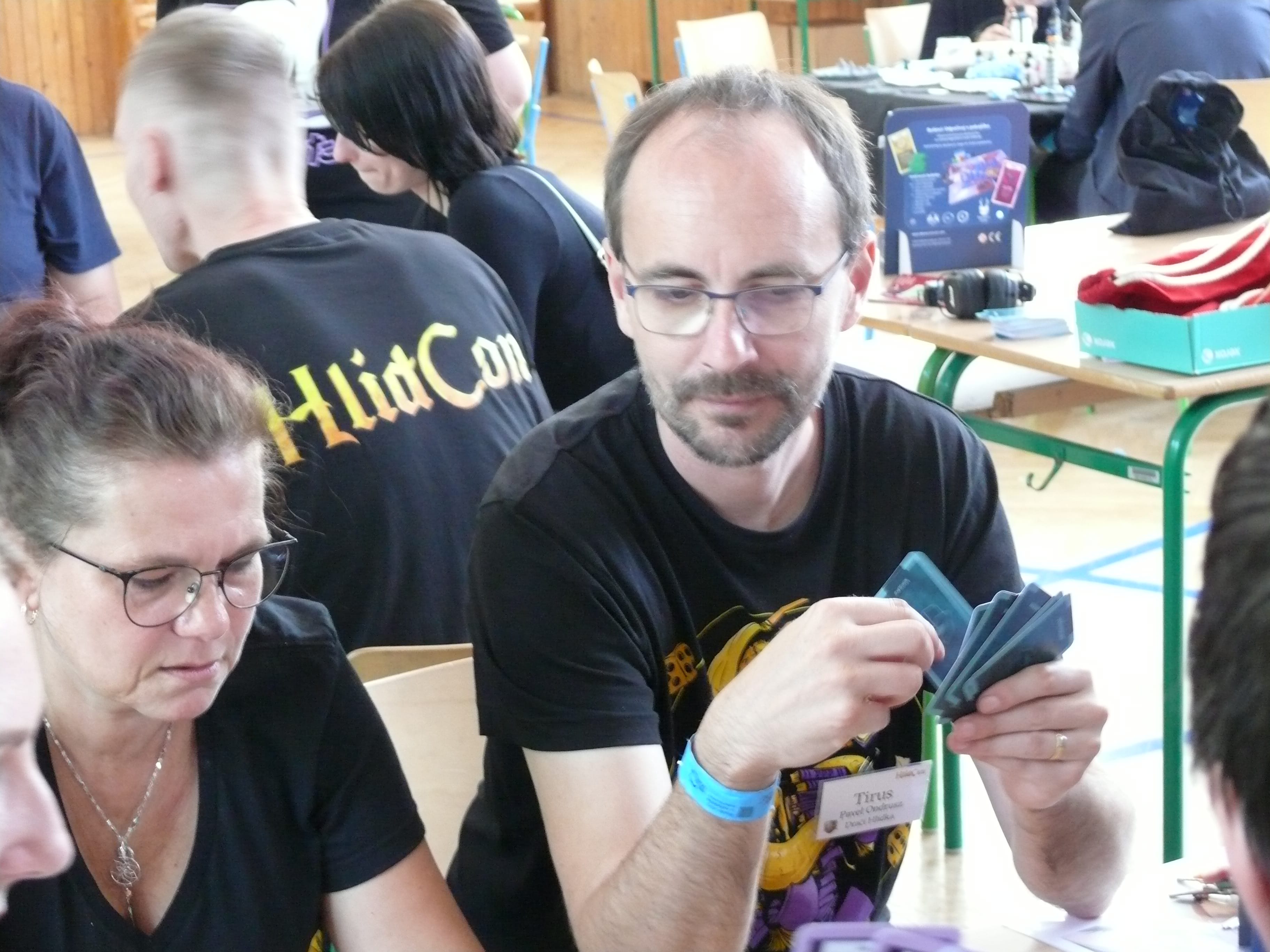
There is an event that brings together fans of Dračí Hlídka - HlídCon. What can you tell us about it?
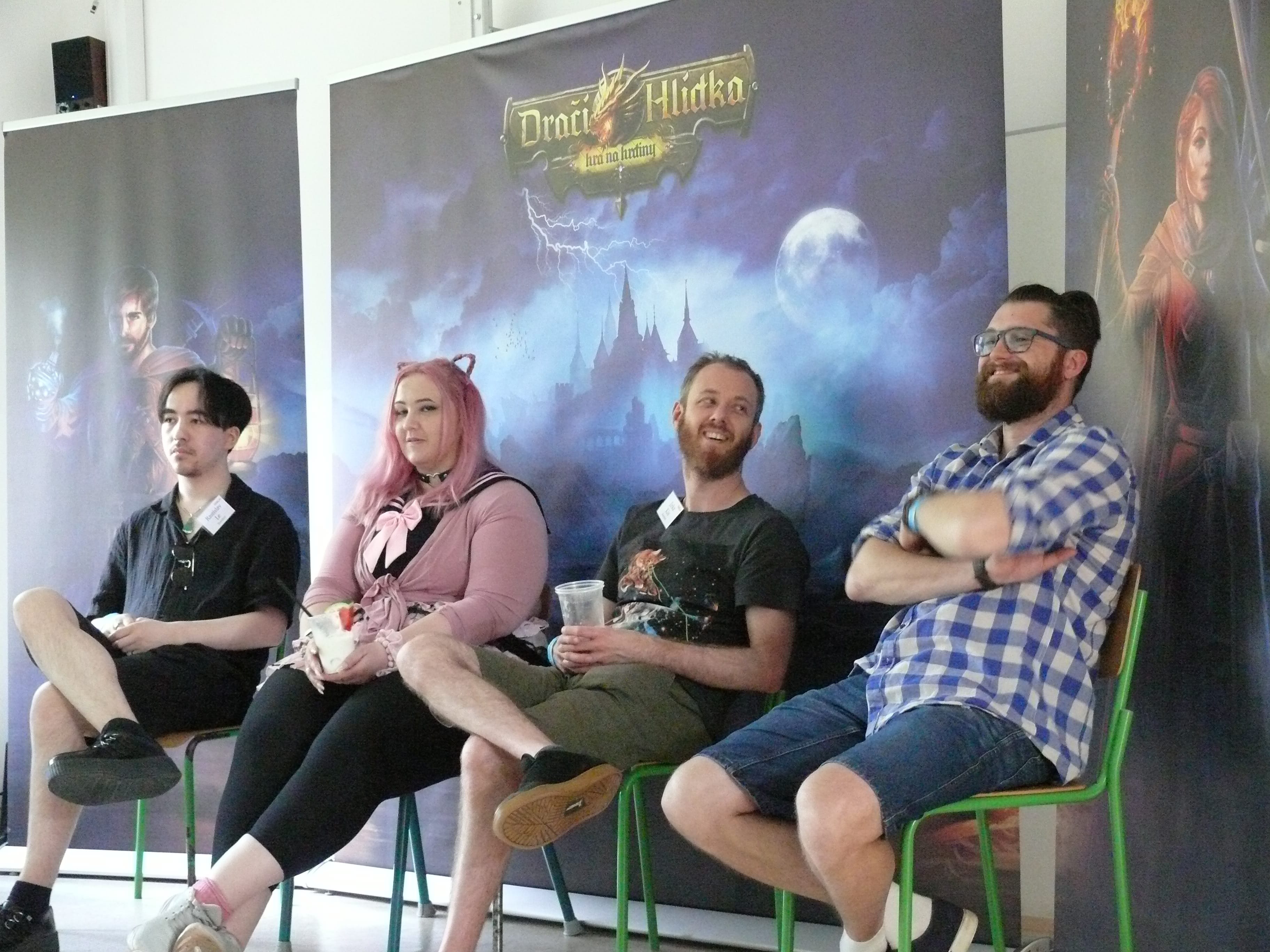
This year, the second year of HlídCon took place in Prague. It is a three-day event in June for all fans of Hlídka and role-playing games in general. For me, the whole event is a synonym for a great community, many opportunities to play, and how to spend days and nights in a very pleasant way. Moreover, the event is by no means just for adults, but many accompanying activities for children run there as well. Evening chatting by the campfire or singing with a guitar is also something I'm happy to repeat anytime. I believe no RPG fan will be bored there.
Looking back at the whole ordeal of creating Hlídka, would you do it again?
Probably yes, if only because I met a lot of great people I would never have met otherwise. I'm not sure if I would dare to do it if I knew everything I know today. :D But if I thought like that, I would hardly ever set out on any journey for adventure. :-)
authors Eva Lassler and Karel Krajča

Eva Lassler
Eva „Ronne“ Lassler je autorka a výtvarnice z Ostravy. Je spisovatelkou zaměřující se na gamebooky, překladatelkou a organizátorkou festivalu Fantastická Ostrava.

Karel Krajča
Šéfredaktor, content creator a organizátor festivalu Fantastická Ostrava. Fanoušek fantastiky, videoher, deskových her a popkultury obecně. Příležitostný milovník malování figurek a craftení všeho druhu. Hudební závislák a amatérský znalec fyziky a matematiky.
You might also like
Mytago Publishing Newsletter #37
Discover the latest from Mytago Publishing! We're releasing an expansion for The Witcher RPG, a campaign for Pirate Borg, and another installment of Fighting Fantasy. Find out what's in store for you this year. full article...
20. 8. 2026 Jiří Reiter 5 min
A Brief History of Dice
Did you know that dice have accompanied humanity for over 5,000 years? Take a look at their history from the first throwsticks to modern collector sets. full article...
13. 8. 2026 Karel Krajča 6 min
An Overview of Mark of the Odd RPGs
Are you drawn to minimalist RPGs? We've prepared a comprehensive overview of games built on the Into the Odd system. Find your favorite genre! full article...
10. 7. 2026 Jiří Reiter 21 min