


A Guide to The Walking Dead Universe RPG
Enter The Walking Dead Universe RPG. We'll show you how to play, how the dice work, and how to create a character for survival in a world full of zombies.
What do you find in the article?
- Three ways to start
- 1. Starter Set – The ideal start for a GM
- 2. Core Rulebook – Freedom and improvisation
- 3. GM Screen – A useful helper during the game
- How to play The Walking Dead: Character creation and key terms
- Session flow, monologues, and story recaps
- Dice, risk, and the Push the Roll mechanic
- Tips for GMs and how to build a dark world
- Final evaluation and verdict
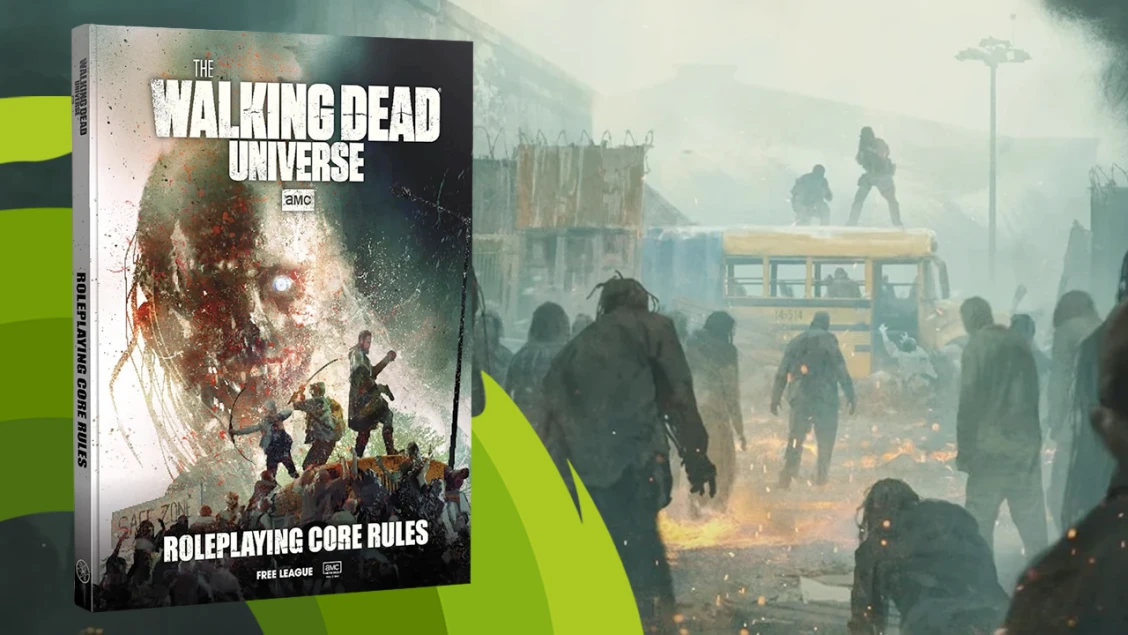
If you recognize the famous "Don't Open Dead Inside" sign, you surely know the characters from the zombie apocalypse The Walking Dead. You can bring these heroes to your table in The Walking Dead Universe RPG by Free League, which runs on the YEAR ZERO PROJECT system.
There are three products you can buy to help you get to know this world. The first option is the Starter Set with a pre-made campaign. The second is the Core Rulebook for full-fledged survival, and the last is the GM Screen with information for the gamemaster.

collective of authors


Three ways to start
1. Starter Set – The ideal start for a GM
This box contains condensed rules tailored for beginners, a campaign for the GM, maps, thematic D6 dice, and pre-generated characters. The campaign is designed as a one-shot that you can finish in a single session. However, it requires a larger number of players because it includes six to eight pre-set characters with interconnected stories. In the Starter Set, you will find four very familiar faces: Glenn, Gabriel, Michonne, and Carol.
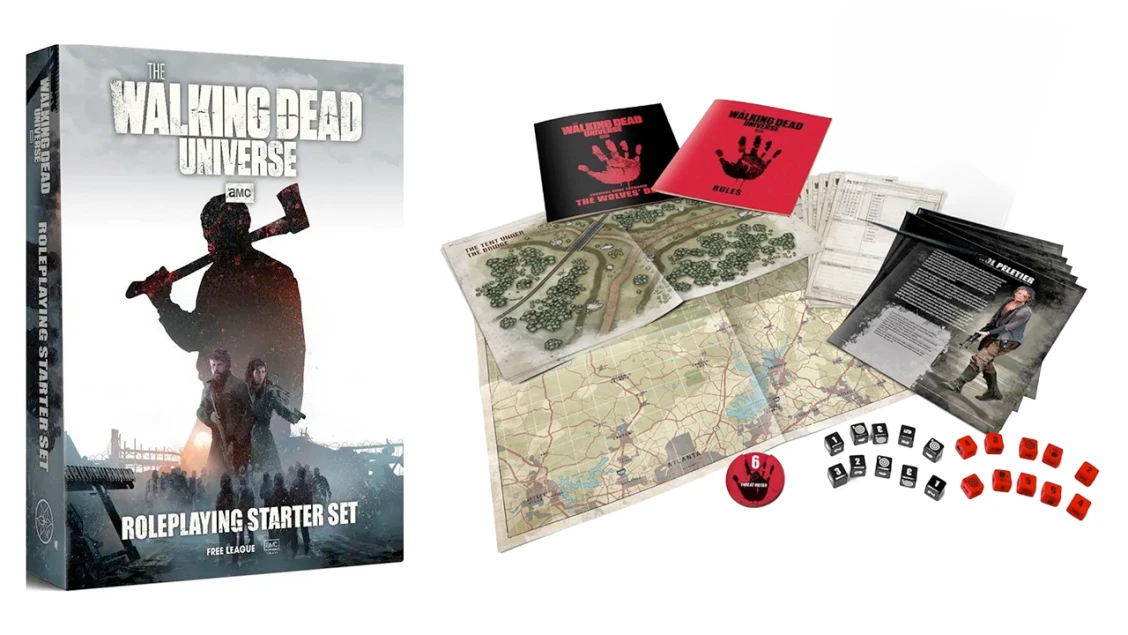
Our group found this set very beneficial, especially regarding the mechanics for the GM, who plays through about fifty percent of the campaign alone since they have to coordinate the group on a pre-set map with a clear story. Personally, I would recommend buying this box to anyone who knows they will be a GM in the future. However, the players had mixed feelings about it because they had to play characters they didn't create themselves, so they couldn't fully immerse themselves in the role, and we were also surprised by the rather open ending.
A big benefit, however, is that players encounter terms like ARCHETYPE, DRIVE, ISSUE, SECRET, and ANCHOR here for the first time, which characterize the entire game.
2. Core Rulebook – Freedom and improvisation
This Core Rulebook has just over 160 pages and is filled with illustrations, letters, and quotes from characters from the show. The book is divided into several chapters for specific situations and contains maps, character designs, factions, and rules for solo play.
A large part of the book consists of huge tables—you use dice to determine almost everything, and you won't use anything other than D6 dice.
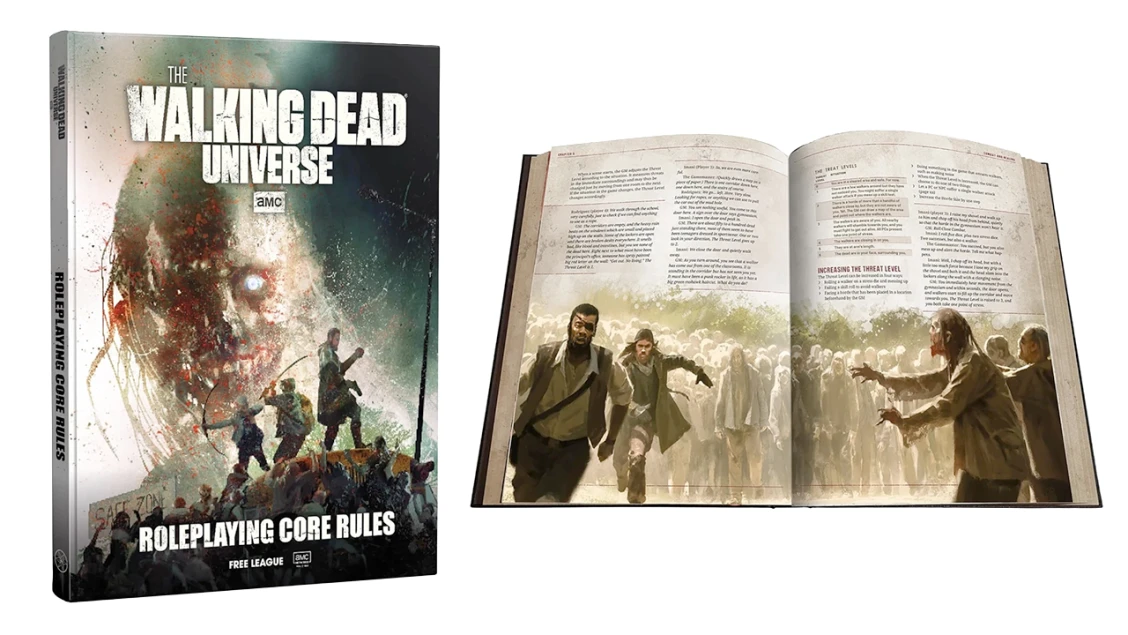
An experienced GM knows that players can completely derail a prepared story with their actions. At such moments, the rulebook offers great options for improvisation. Personally, I am preparing for the final ENDGAME session, but what exactly the players do along the way is primarily determined by dice rolls.
An example of unpredictability from our game was a 2D6 High roll (you roll two D6 and take the higher combination), where a group of players suddenly discovered a monster truck covered in sumo wrestler stickers.
Furthermore, the rulebook allows you to incorporate various talents for the zombie apocalypse or bonuses for items, such as cigarettes, which give you a bonus to manipulation. You simply cannot start properly without this book.
3. GM Screen – A useful helper during the game
The last thing from Free League is the GM Screen, which is very nicely designed. While it doesn't offer anything essential for the GM, it contains a lot of pre-printed information, such as weapon types, specific attacks, and zombie lore.
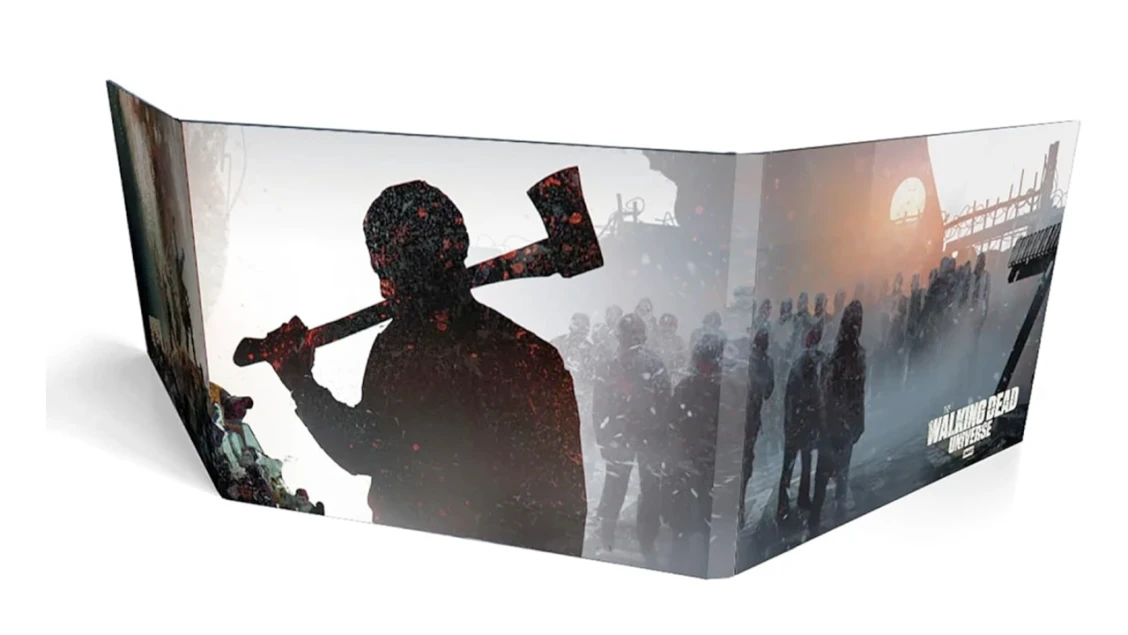
Honestly, I don't find the table about zombie lore important enough to be on the screen, because you usually prepare that information in your head beforehand. Instead, I would consider whether a combat evaluation table would be more important for the GM.
If a regular screen covered in sticky notes is enough for you, this specific piece isn't essential.
How to play The Walking Dead: Character creation and key terms
Before you start playing, it is very important to create a character. At the beginning, each player receives three sheets from the GM: character, haven, and challenge. The first important element is your Archetype, where you choose what you were before the zombie apocalypse. Your entire character can develop from this, but it doesn't have to play any role and can just be a glimpse into the past.
Another term is PC/NPC ANCHOR, which we translate as anchor. You choose another player or a non-player character with whom your character will have a strong bond. This anchor is an important mechanic because when something happens to them, your character also suffers from stress or loss of abilities.
We also distinguish between the opposites DRIVE and ISSUE. Drive is the motivation for survival, which you consult with the GM, such as "I'm looking for my lost husband." Conversely, Issue is the opposite of a drive. The character suffers from it and it shapes their personality; examples include gambling, alcoholism, or even being too trusting.
To relieve stress, each player also chooses their HAVEN, which is a personal safe space or a place of absolute calm, such as a treehouse or an old bus in the woods.
Session flow, monologues, and story recaps
Before each session, one player is chosen to lead a so-called DDM (dearly departed monologue) before the game starts. This is a monologue to a character you know or think is dead. You can prepare sad or happy memories, and after you finish, you roll double D6 low to gain experience. However, this rule doesn't have to be applied and you can skip it without any problems.
An alternative is for one of the players to prepare a short story about what happened since the last session, which adds a great element of surprise to the game. For the GM, this story offers great opportunities to expand the game with other unexpected events.
Dice, risk, and the Push the Roll mechanic
This game is played exclusively with D6 dice, and your attributes determine how many dice you roll. For a basic skill check, you only need to roll one success, which means one six on the dice. If the situation is harder, the GM can increase the number of required successes. If you don't roll any successes, you can either accept the situation or use the PUSH THE ROLL mechanic.
The GM describes the failure, for example, that you missed your attack and fell to the ground. To prevent your character from being bitten, you ask to push the roll, describe your subsequent action, and you can re-roll all your dice once if it makes sense. However, the GM adds a so-called stress die (a differently colored D6) to your dice pool. This stays with you until you reduce your stress, for example in your HAVEN.
If you roll a one on the stress die and no successes, a Mess up occurs and the GM makes the situation significantly worse. If you roll a one on the stress die but also a success on another die, the action succeeds, but it will have harsh consequences elsewhere. At the end of the turn, you must roll your stress dice to manage your fears. Failure can lead to PTSD, loss of drive, or the creation of a new issue. The rest of the rules then describe combat evaluation, NPC behavior, weapons, armor, and even functional vehicles, from bicycles to tanks.
Tips for GMs and how to build a dark world
As a GM, don't be afraid to reach for well-known characters not only from The Walking Dead but also from spin-offs or other games and series when building your world. In our campaign of four to eight sessions, I included characters from the series Alice in Borderland, the spin-off Dead City, or the biker Deacon St. John from the PC game DAYS GONE. If you have people in your group who know this world well, don't be afraid to add famous factions from the Whisperers to the Commonwealth, or the Kingdom.
Don't make missions overly difficult. Unlike classic DnD, players have an open world; they have to travel across a giant map the size of an American state and search buildings for supplies. At the same time, they are constantly threatened by zombies or other enemies.
For a start, I recommend using the Atlanta start up scenario on page 125 of the core book, where you work with constantly moving zombie hordes.
Final evaluation and verdict
Buying the Starter Set made decision-making much easier for me as a GM in many situations. The Core Rulebook is extremely fun, even if some important information is sometimes a bit hidden and you need to read the page again more thoroughly for it to make sense.
As a huge fan of the comics, PC games, and series from this universe, I finally got a game that I enjoy and that breaks players out of their routine. In a world where one wrong decision in five seconds means death, many great evenings await you. I firmly believe that the course of our game will serve as good inspiration.

Dominik Gál
Deskové hry, čtení, hraní na PC a seriály je pro mě každodenní útěkem od reality. Volný čas se snažím trávit s přáteli, a to hraním deskových her, večerní hraním multiplayer PC her nebo se sólo poflakovat s knihou od Kotlety.
You might also like
Mytago Publishing Newsletter #37
Discover the latest from Mytago Publishing! We're releasing an expansion for The Witcher RPG, a campaign for Pirate Borg, and another installment of Fighting Fantasy. Find out what's in store for you this year. full article...
20. 8. 2026 Jiří Reiter 5 min
A Brief History of Dice
Did you know that dice have accompanied humanity for over 5,000 years? Take a look at their history from the first throwsticks to modern collector sets. full article...
13. 8. 2026 Karel Krajča 6 min
An Overview of Mark of the Odd RPGs
Are you drawn to minimalist RPGs? We've prepared a comprehensive overview of games built on the Into the Odd system. Find your favorite genre! full article...
10. 7. 2026 Jiří Reiter 21 min