


How to create a realistic map for your world
Learn how to create fantasy maps that look believable. Inspiration from history, tips on mountains, rivers, cities, and the magic of your world.

What do you find in the article?
Oh, what a wonderful feeling it is when you buy a new fantasy book, open it, and a map greets you right at the beginning. It's even better when that map is realistic, logical, and beautifully drawn.
At least that's my opinion. Anyway, in this article, we'll look at how to create such a realistic map, whether on paper or digitally.
From the history of fantasy maps: Maps of imaginary worlds have a longer history than you might think. As early as 1516, Thomas More supplemented his Utopia with a map of a fictional island, and John Bunyan used a schematic “map” of the journey to the Celestial City in The Pilgrim's Progress. Jonathan Swift in Gulliver's Travels and R. L. Stevenson in Treasure Island reinforced the impression of reality in their worlds with detailed maps that guided readers through the plot. One of the first modern maps is considered to be the one from Haggard's King Solomon's Mines from 1885. At the beginning of the 20th century, L. Frank Baum created a map of the world of Oz, which already resembles today's concept of fantasy cartography. However, the definitive standard was set by J. R. R. Tolkien – his maps of Middle-earth made maps an integral part of the epic fantasy experience, and since then, they have become an almost mandatory element of the genre.
You can find a wide selection of fantasy maps for inspiration or for purchase here at imago.
Size
First, you need to realize how big a map you want to create. Will it be a map of an entire planet with all its continents and oceans? Do you want a smaller map that fits only one continent or kingdom? Or will a city map suffice? Of course, you can even make a “map” of a single building. That's up to you. Here, you'll learn mainly about larger maps. About maps of kingdoms, continents, and entire worlds.
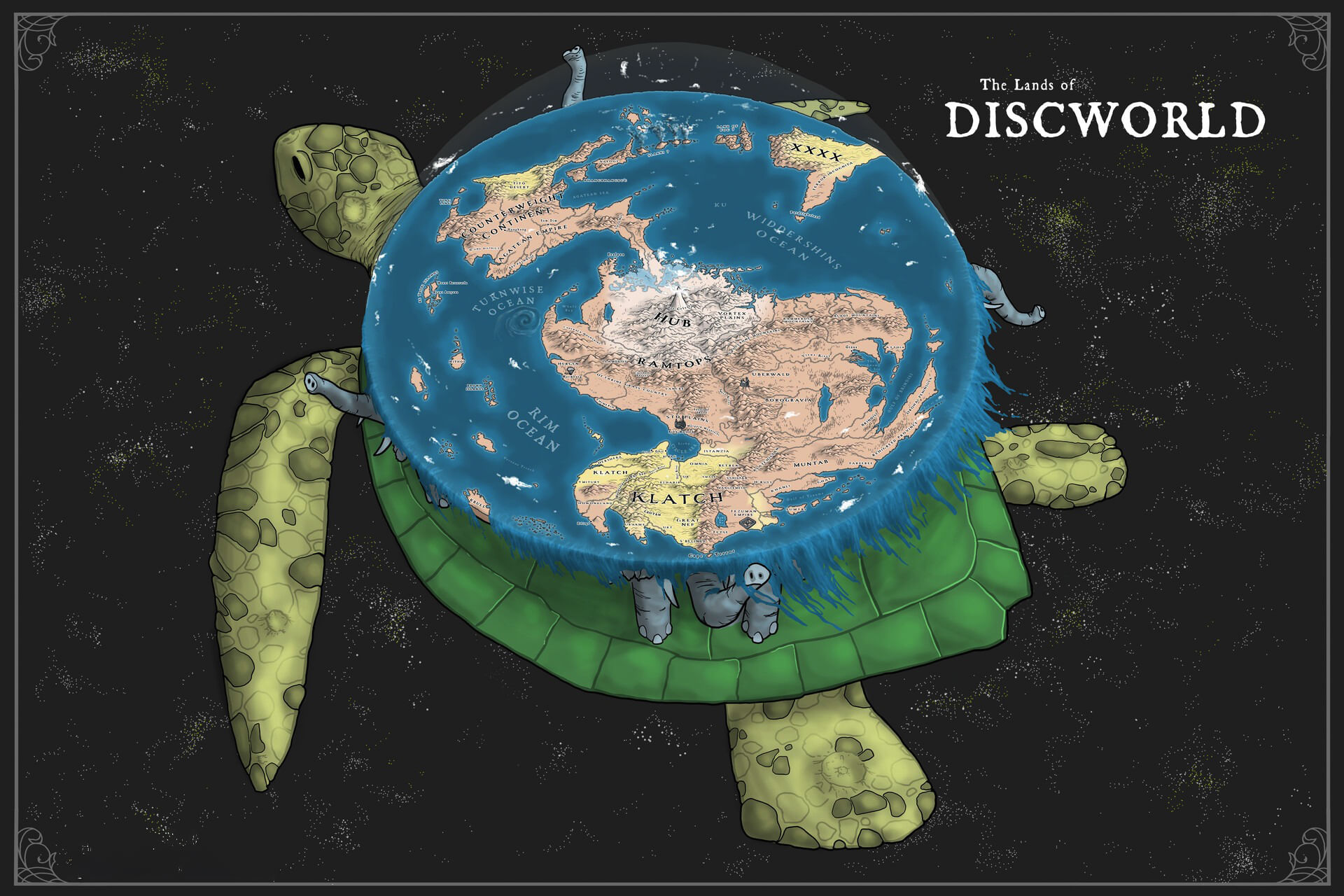
Peninsulas, islands, and islets
Now that we know how extensive the map will be, we can start thinking about the shape of the lands and seas.
Islands can have almost any shape, but the coastline shouldn't consist of just a few straight, slightly rounded lines. To create a realistic impression, you need to alternate straight and jagged lines. You can get inspired by the coastlines of this planet, but don't look at Puerto Rico too much. It looks like a rectangle drawn by a deranged macaque.
Tectonics and mountain ranges
You'll only use this tip if you're making a map of a world or a continent. You can certainly use mountains in a kingdom map too, but tectonics aren't as important there. Figuring out where tectonic plates are located and how they move might sound scary and complicated. But it's not complicated at all, because it doesn't actually matter that much.
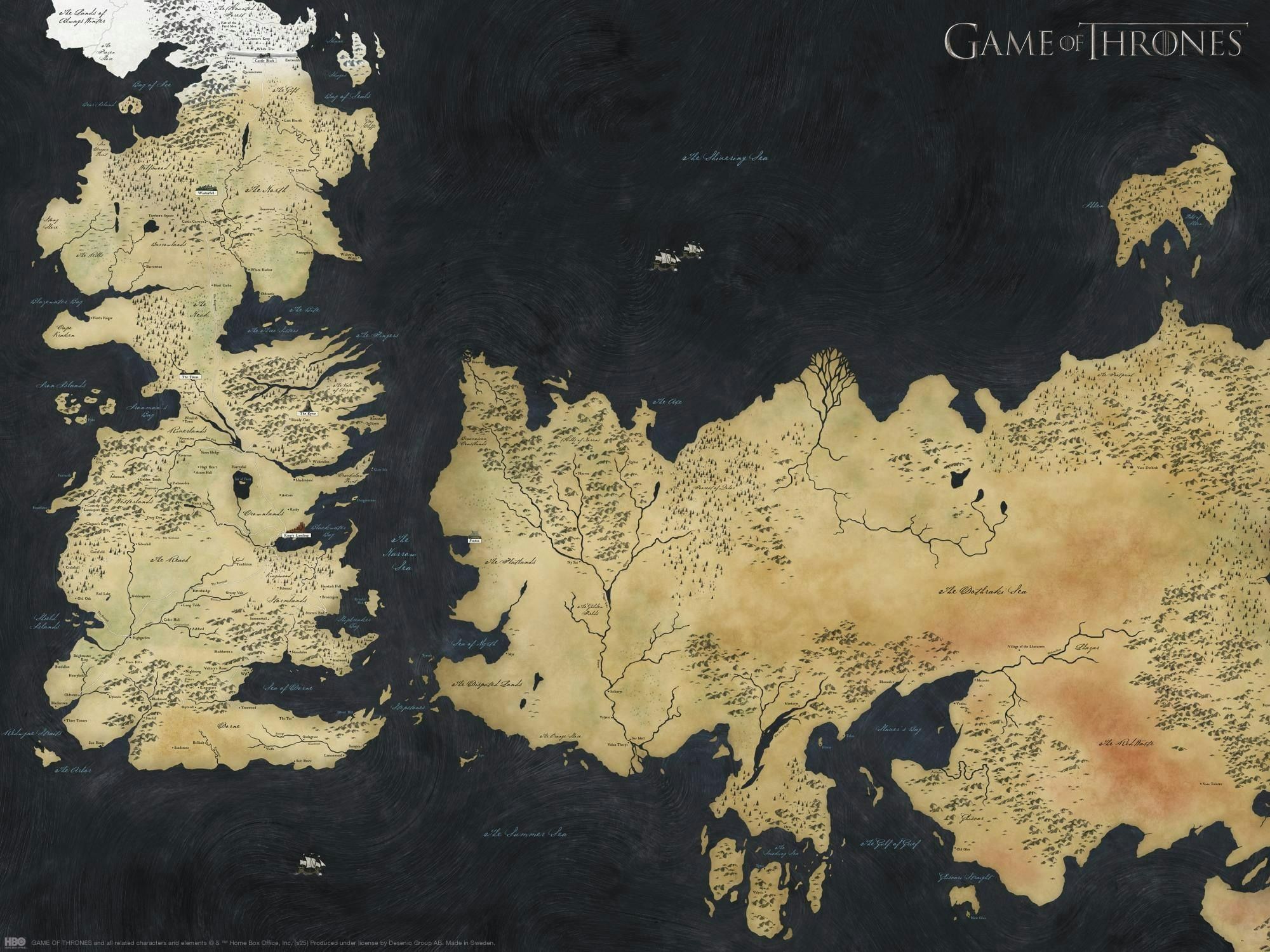
Lightly mark a few lines on your map that symbolize the boundaries of tectonic plates. Draw mountain ranges approximately along these lines. Four plates shouldn't meet at a single point.
Rivers
Rivers are very simple to draw. It's just a line that keeps twisting from left to right and right to left. River sources are usually in the mountains, so the rivers of your world should also start somewhere near mountains.
It's good to know where they start. But where do they end? There's a very easy answer to that. They either flow into the sea, into a lake, or they merge into another river. Careful: in the real world, rivers almost never split into two; instead, they flow together into one.
Forests
On the map, you can draw several types of trees in the forests: Palms for warm climates, conifers for cold and temperate ones, and deciduous trees for temperate ones. It's a kind of lifeline for fantasy cartographers. They can be, essentially, everywhere, but be careful not to overdo it.
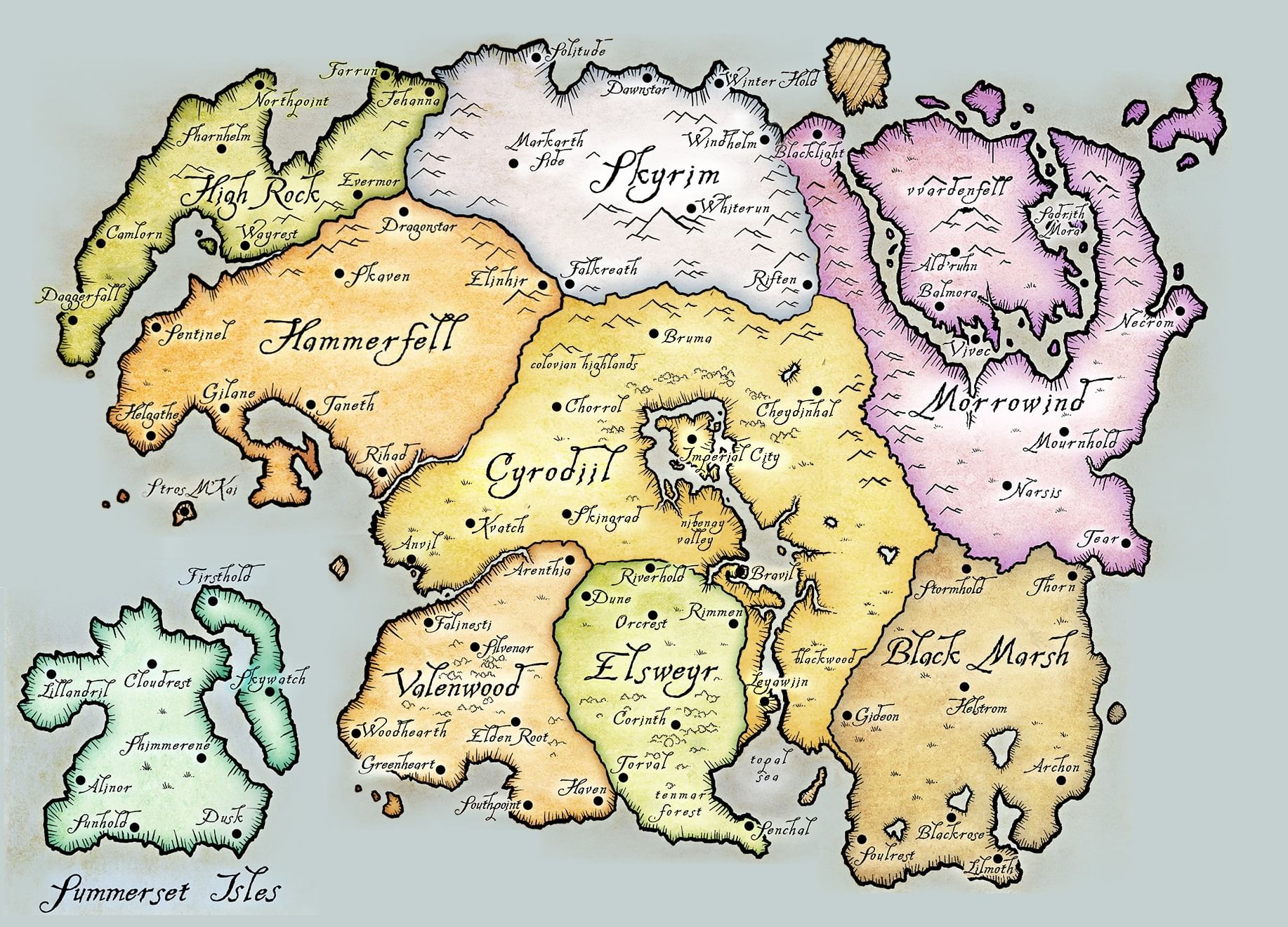
First, I say they can't be absolutely everywhere, because you won't find vast forests near large cities, as the city's inhabitants harvest wood from them.
Second, don't overdo it, because if the whole map contained a few mountain ranges, several cities, and the rest just forests, it wouldn't be realistic.
You don't have to follow the first rule one hundred percent.
Deserts, tundras, and more
Some of the last natural elements your maps can contain are deserts, tundras, swamps, marshes, steppes, forest-steppes, and polar barrens.
Polar barrens and tundras have one very simple rule. They are located near the North and South Poles.
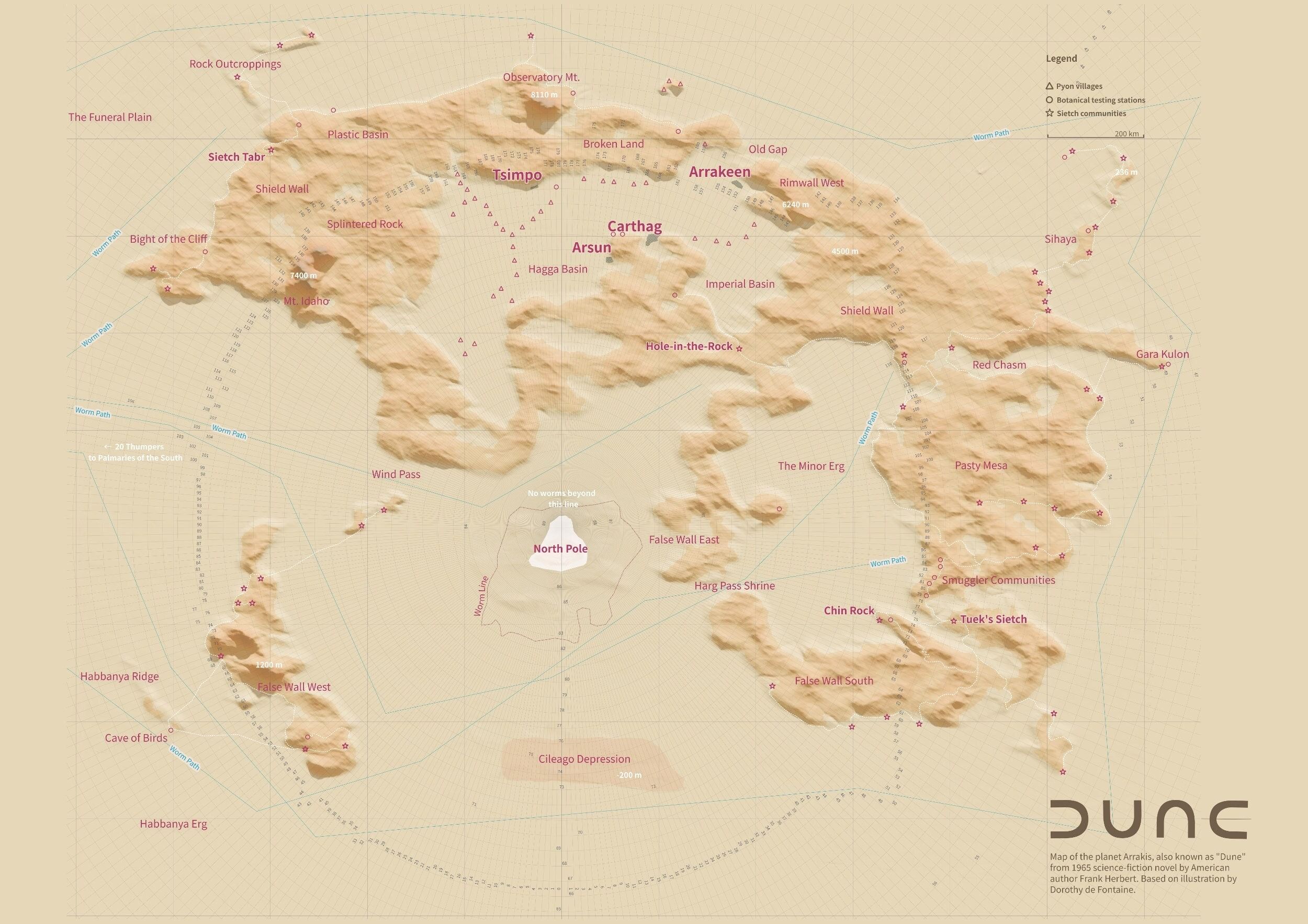
Forest-steppes and steppes have it a bit more complicated, but looking at it very generally, they are found in vast, dry areas of temperate to subtropical climates.
Swamps and marshes, on the other hand, are in places where it is rather humid and are found almost everywhere except perhaps in polar climates.
Deserts are found primarily in tropical and subtropical climates. However, there are exceptions. For example, one tiny desert is located in Poland, and as far as I know, that is not a tropical climate.
Cities
Cities don't have strictly defined rules. Although the largest of them are usually built near water, they can also be in the middle of a desert or in the mountains. Nevertheless, I would recommend placing most cities near rivers, seas, and lakes, and away from extreme environments. They can also be in the middle of plains or near a forest. You can incorporate words from your conlang into city names.
You can learn more about creating a conlang (constructed language) in the article How to create your own language.
Magic
If magic exists in your world, it is also one of the important factors. It is a way to justify anything unrealistic. A river splits into three in one place? Magic! Mountains form a circle in the middle of the map? Magic! Bizarre continent shapes? Magic!
Points of interest
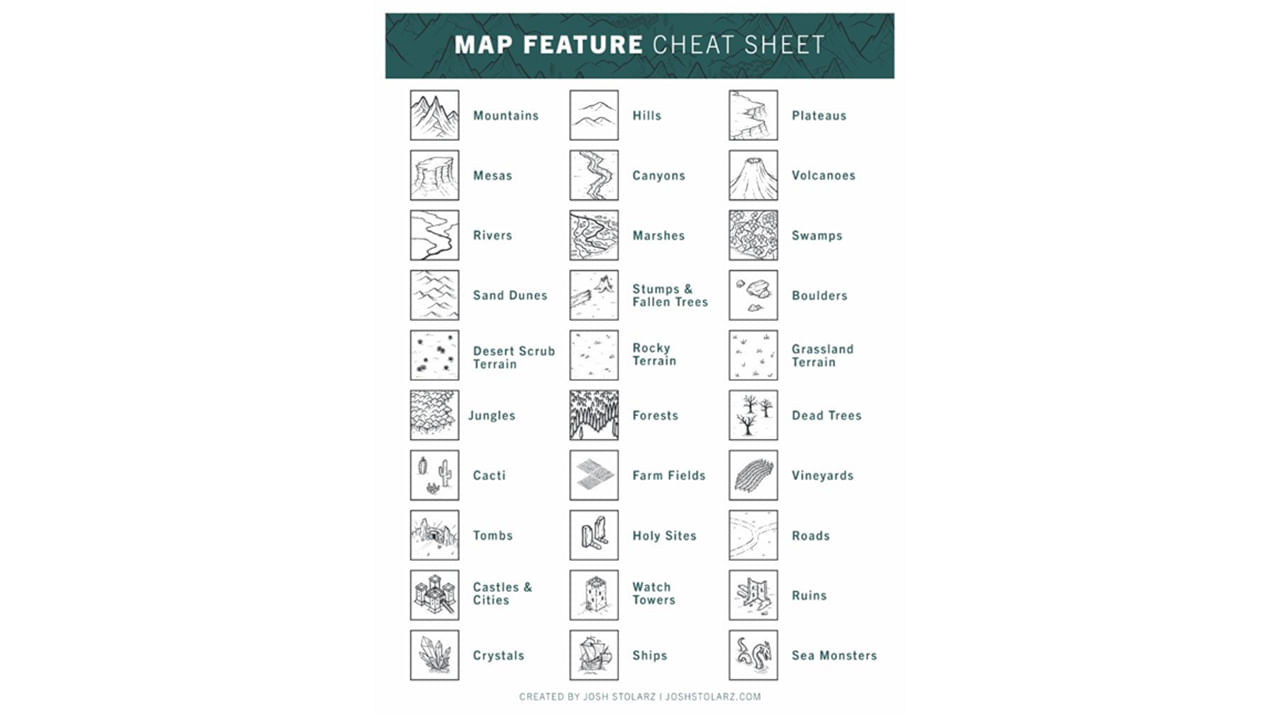
You can further improve your map by adding interesting, unique, and magical places. At the same time, the map will look as if it truly has a history, inhabitants, and cultures. These interesting places include, for example, volcanoes, ruins, castles, watchtowers, caves, wizards' dwellings, and as an interesting element to fill the emptiness of the seas, you can also add a sea monster or a ship. Furthermore, you can add craters, chasms, or cliffs.
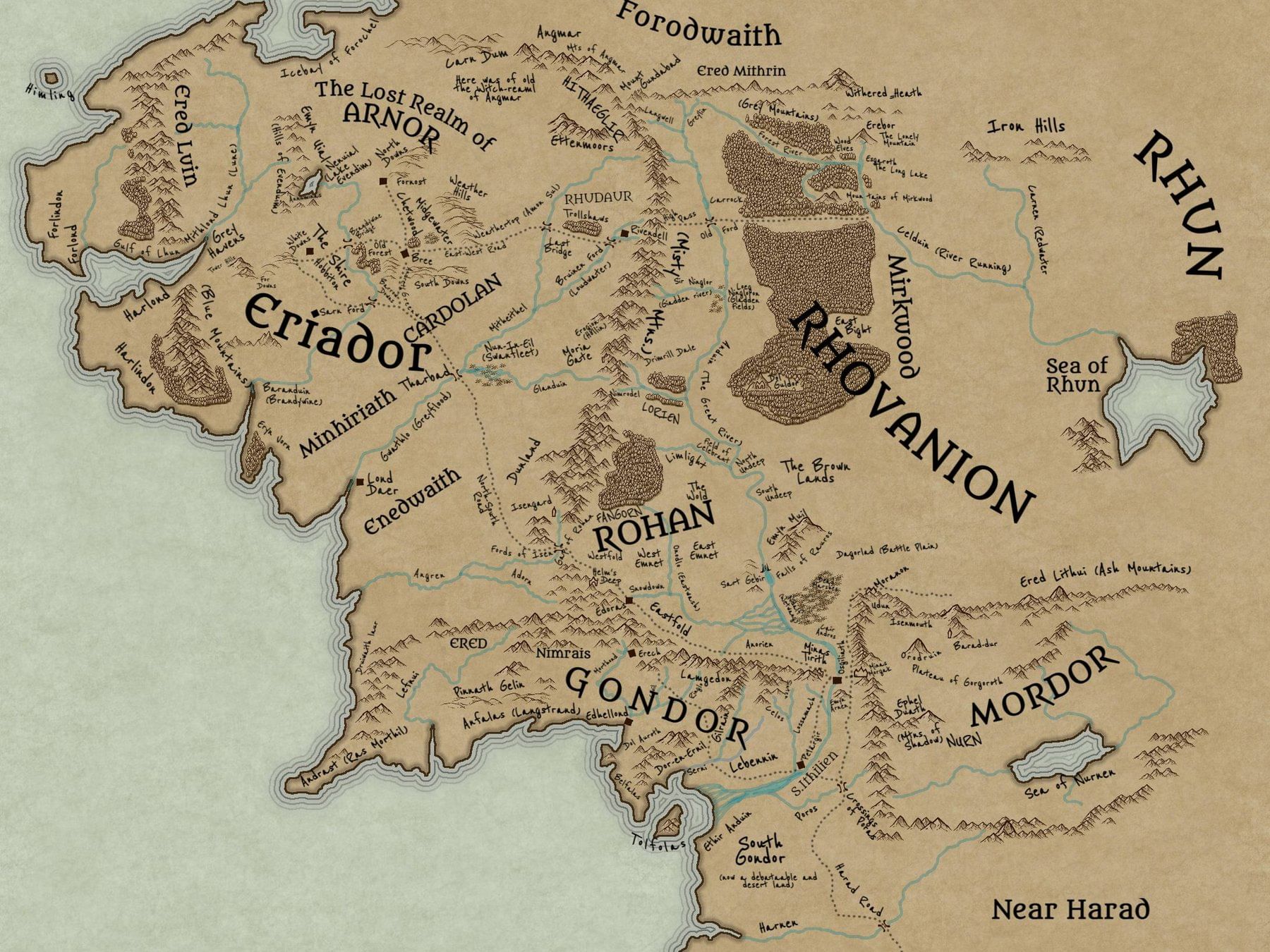
The iconic map of Middle-earth is full of errors: The iconic map of Middle-earth has a number of geographical peculiarities upon closer inspection. Mountain ridges often break into right-angled shapes and form natural boundaries, which would be very unusual in real geology. Rivers also behave strangely – for example, the Anduin flows parallel to a mountain range for a long time and has surprisingly few tributaries from one side. The Entwash even creates a vast delta without the river's flow slowing down. The result is a world that feels dramatic and serves the story well, but from the perspective of physical geography, it would behave differently. Tolkien himself treated maps more as a tool for storytelling than as a faithful image of geology – he even said that the map came first and only then the story, so the world was designed mainly to support the plot and adventure, not natural sciences.
Geopolitics
This step is best left for last. That is, if you decide to do it at all, but it's not necessary. It concerns state borders.
Since ancient times, people have used natural features as borders. These were mainly bodies of water and mountains. That will probably be the best choice for your maps too. Later, artificial borders began to emerge. This is beautifully visible on the border between the USA and Canada. Artificial borders are often straight lines, but that doesn't always apply. Let's look at Namibia, for example. That strip sticking out of it towards the east was artificially created so that Namibia would have access to the Zambezi River. If you feel like it, you can use this type of border too. If your world is larger and more advanced, feel free to create colonies as well.
How to do it?
You still need to know how to draw the individual elements. In the image below are the basic map elements that you can follow. You can find more amazing tutorials by Josh Stolarz on the page www.mapeffects.co
However, you can also create your own style or get inspired by other maps.
Good luck, cartographer!
Creating realistic fantasy maps is complex but very fulfilling. The key is a combination of creativity and a logical approach to the natural world. Thanks to careful planning, you can create a map that will be not only beautiful but also believable and functional for your stories or games.
P. S.: Don't draw maps like a macaque.
author Jan Konečný
Jan Konečný
Autor článků na imago.cz


You might also like

How the friendship between Tolkien and Lewis created modern fantasy
How did one afternoon in Oxford change literature? Read about the alliance between Tolkien and Lewis that gave rise to Middle-earth and Narnia. full article...
3. 6. 2026 Tereza Nesvadbová 6 min
Heroes V - high fantasy LARP where dreams come true
Discover the world of Heroes V - The Thirteenth Eclipse! An epic LARP full of magic, battles, and roleplaying that will pull you into an adventure you won't find anywhere else. full article...
Non-fiction journalism 12. 5. 2026 Ivo „Bonhart“ Nepeřil 3 min
Review of the board game The Hobbit: An Unexpected Journey
Draft dice, collect resources, and defeat Smaug the dragon. The Hobbit board game is here! Find out in our review why this new release should be on your table. full article...
Reviews 29. 12. 2025 Jana Mrkvicová 4 min