


Warhammer: The History and Present of Wargaming
Warhammer: Age of Sigmar and 40,000. History, factions, painting, and games that define the world of wargaming. Join the community.

What do you find in the article?
- Warhammer: Fantasy and Sci-Fi Worlds
- Warhammer as a Game and a Hobby
- Two Main Lines: Warhammer Age of Sigmar and 40,000
- Other Versions and Spin-offs of Warhammer
- Warhammer in Pop Culture
- History of Warhammer 40,000 Editions
- History of Age of Sigmar Editions
- Factions in Warhammer: Age of Sigmar and 40,000
- Basic Principles of Play
- The Warhammer Community
Warhammer is a term known today not only to tabletop gamers but also to anyone involved in broader pop culture. It originated in the 80s as a miniature wargame and soon grew into a massive phenomenon connecting board games, video games, books, comics, and upcoming films. It’s not just about the game itself – Warhammer has become a hobby that combines strategy, miniature painting, army building, and community gatherings.
- The World and Factions of Warhammer
- How to start playing Warhammer: Age of Sigmar?
- How to start playing Warhammer: 40,000?
- How to start painting Warhammer?
- How to start reading Warhammer?
- Warhammer 40,000: The story of the Primarchs who changed the galaxy
- Skirmish games: The ideal start to the world of wargaming
The roots of Warhammer reach back to 19th-century wargaming, when tabletop battles were used for military training. These serious simulations gradually evolved into a hobby – the first rules for playing with miniatures were published in 1913 by H. G. Wells as Little Wars.
Games Workshop built on this tradition when they launched Warhammer Fantasy Battle in 1983. Players could finally lead their own battles between Orcs, Elves, or Humans. A few years later, designer Rick Priestley brought this concept into a sci-fi setting, and in 1987, the first edition of Warhammer 40,000: Rogue Trader was released. The dark future filled with gothic space battles immediately captured imaginations and laid the foundation for a phenomenon the whole world knows today.
Warhammer: Fantasy and Sci-Fi Worlds
From the beginning, Warhammer split into two branches. Warhammer Fantasy Battle from 1983 offered a dark world of swords, magic, and bloody battles inspired by classic fantasy. Four years later, its sci-fi counterpart appeared – Warhammer 40,000, set in a dystopian future where humanity wages an endless war against aliens, demons, and its own heresy. While Fantasy emphasized the clash of classic race armies, the 40k universe became synonymous with gothic space warfare.
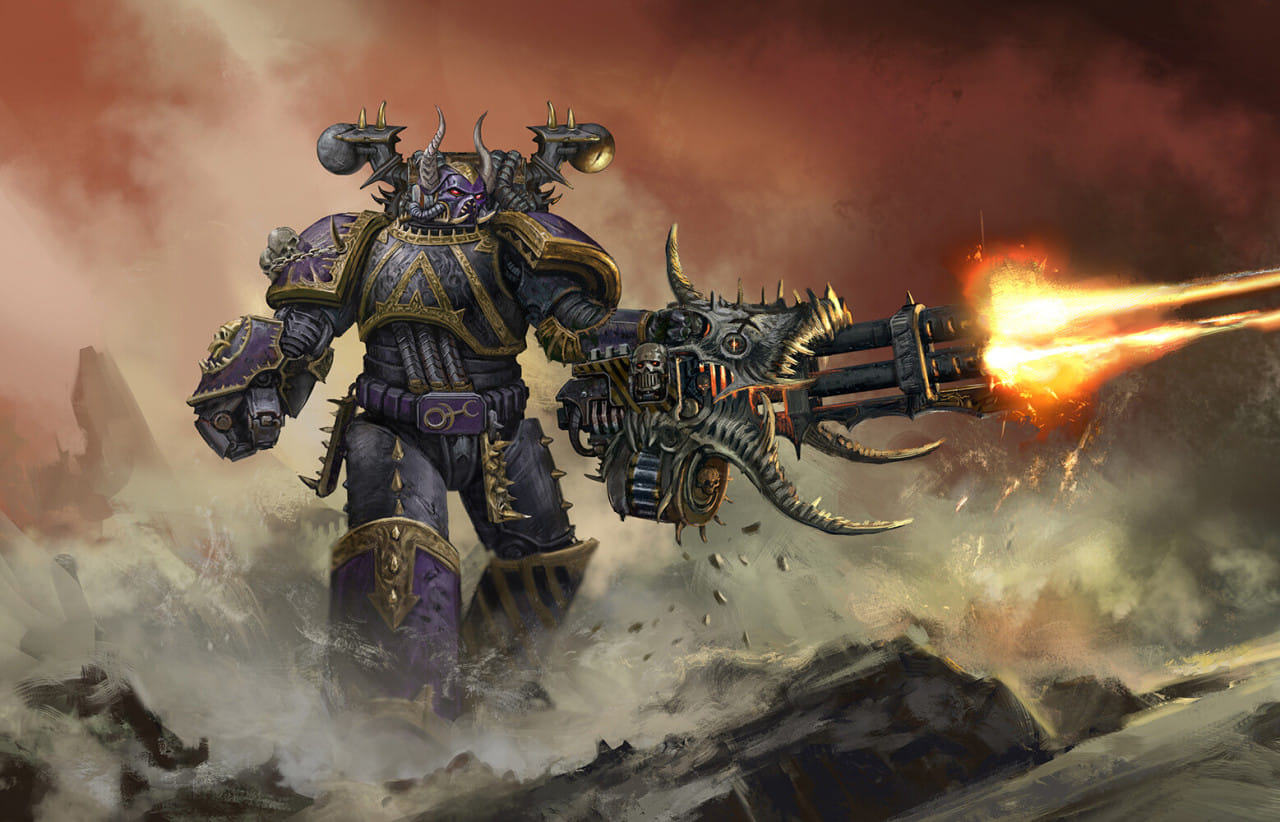
The Fantasy line later transformed into Warhammer: Age of Sigmar, which continued the original world in 2015 with new stories and more modern rules. Thanks to this, two major brands exist side-by-side today – Age of Sigmar for fantasy fans and Warhammer 40,000 for lovers of dark sci-fi.
Warhammer as a Game and a Hobby
Warhammer is not just a tabletop battle; it’s an entire creative world. Each army consists of dozens of detailed plastic miniatures that players assemble and paint themselves. This aspect is just as important to many fans as the game itself – some thrive on tactical combat on the table, while others spend hours with paints and brushes to bring their units to perfection.
Miniature painting has become a discipline in its own right, with its own techniques, competitions, and community. It’s not just a necessity, but an opportunity to give your army a unique look – from simple base coats for beginners to master-class dioramas that become works of art. Warhammer thus connects the gaming experience with the joy of creation, making it a hobby that can keep you hooked for years.
If you want to create a unique army, at imago you’ll find not only a wide selection of miniatures but also a fantastic range of paints, bases and terrain, brushes and other tools that will ensure long hours of fun under the glow of a hobby lamp.
Two Main Lines: Warhammer Age of Sigmar and 40,000
Although both Warhammers are based on the same wargaming foundation – battles with miniatures on a table – their rules have gradually evolved in different directions.
Unlike the original Warhammer Fantasy Battles, where armies stood in rigid regiment formations, Warhammer Age of Sigmar is much more dynamic. Miniatures move freely; you just need to keep units within a certain "coherency" – meaning models shouldn't be too far apart. This gives players more freedom in maneuvering and allows for creative reactions to the flow of battle.
Melee combat remains a crucial part of the game, but shooting and hero abilities also play a major role. Magic is a separate chapter – it can buff your units, weaken the opponent, or influence the battle using "endless spells." It’s not a spell that decides everything with a single dice roll, but rather another tactical tool that can tip the scales at the right moment.
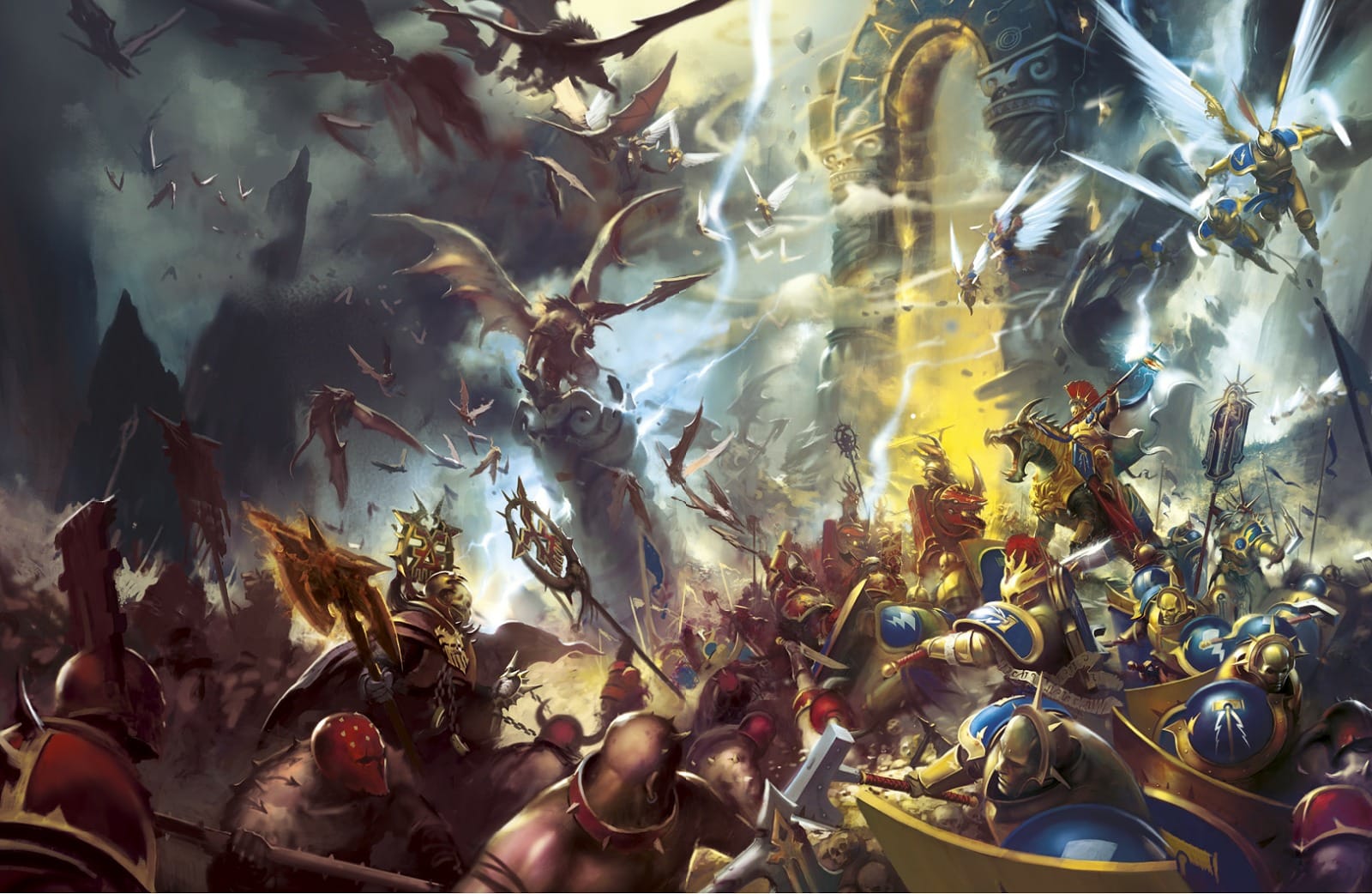
Warhammer 40,000 focuses on smaller units and freer movement. Each miniature moves independently, and the battlefield is full of ranged fire – from bolters to giant laser cannons. Close combat still exists, but it usually serves as a dramatic conclusion to skirmishes. Another interesting feature is the role of "psykers," the equivalent of wizards, whose abilities are explained through the mysterious energy of the Warp.
The result is that Warhammer Age of Sigmar feels more like a classic battle of medieval armies with magic, while Warhammer 40,000 resembles modern or futuristic warfare, where firepower and tactical positioning of units decide the outcome.
Other Versions and Spin-offs of Warhammer
Alongside the main lines of Age of Sigmar and Warhammer 40,000, there is a whole range of standalone games that explore the world from different angles. The cult classic Blood Bowl combines fantasy factions with American football in a brutal and satirical way. Necromunda focuses on gang wars in the underhive of 40k hive cities, while Warhammer Underworlds offers a tactical arena game with small groups of heroes and card mechanics.
Blackstone Fortress is a cooperative board game that connects wargaming with RPG elements and space fortress exploration. Kill Team presents a faster skirmish version of Warhammer 40,000, focused on small squads of elite units. Fantasy has its own skirmish equivalent in the form of Warcry, where smaller warbands clash in the Mortal Realms.
Furthermore, larger projects are being created for enthusiasts of massive campaigns. The Horus Heresy takes place in the past of the 40k universe and captures the fratricidal war between loyalist and traitor Space Marine legions. Legions Imperialis focuses on epic battles of titans, tank regiments, and massive armies on a scale that feels like a true galactic war on the table. And finally, there is The Old World, a return to the classic fantasy setting of the original Warhammer universe, bringing nostalgia and new possibilities for players who missed the old world.
These "side games" show that Warhammer isn't just about massive armies, but also about quick skirmishes, cooperative adventures, or epic campaigns on a different scale.
Warhammer in Pop Culture
Warhammer is long past being just a tabletop game; it’s a phenomenon that has penetrated deep into pop culture. It has inspired numerous novels, comics, and video games – from the legendary Dawn of War series to the cooperative Vermintide, and the recent Darktide or Space Marine. Dozens of books are published by Black Library, expanding the stories of famous heroes and dark factions. The aesthetic of gothic sci-fi has also influenced music, fashion, and the visual style of other gaming series. There is even a role-playing game set in this world.
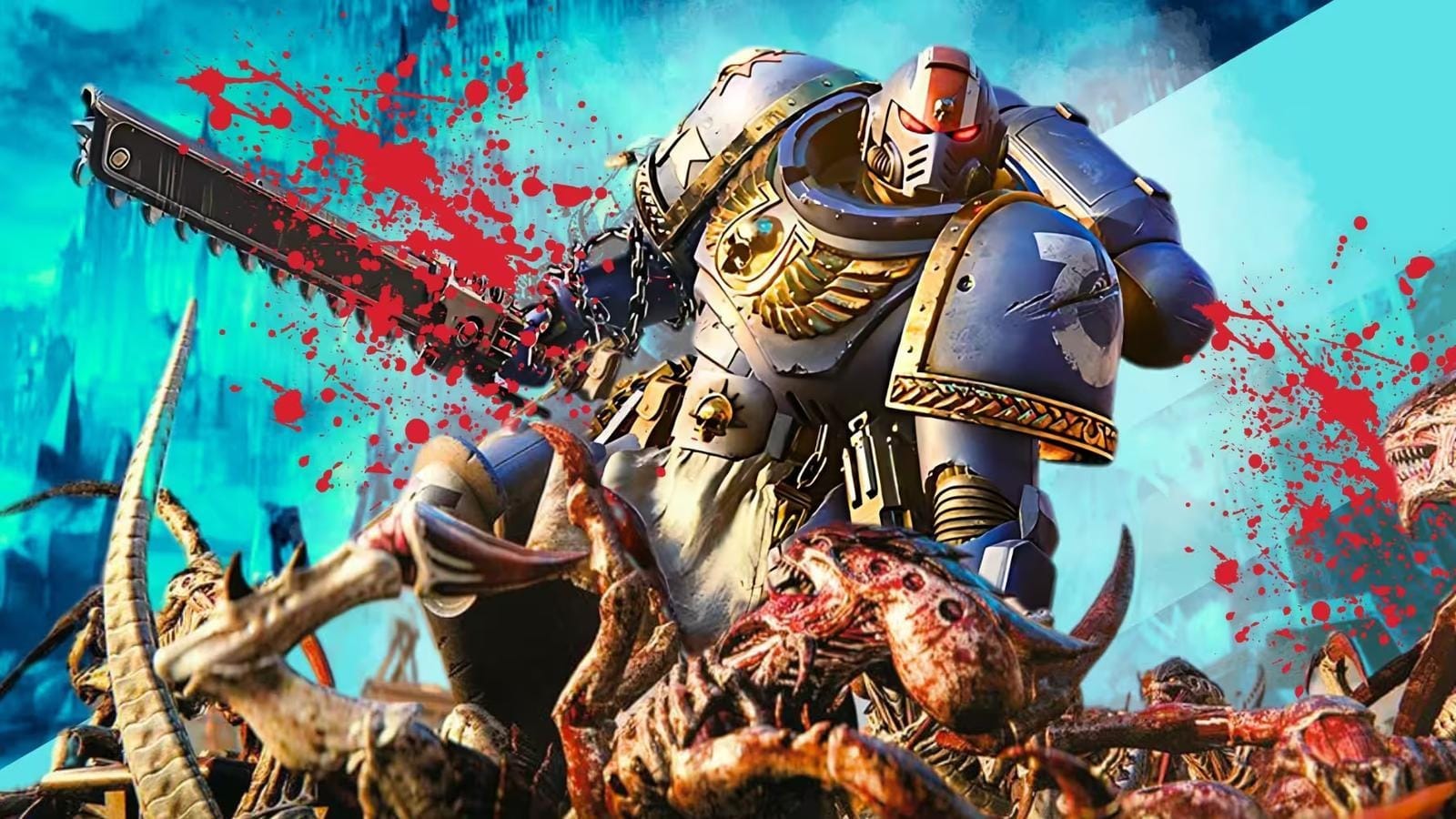
Miniatures and motifs from Warhammer appear as Joy Toy collectible figures, in board games or computer adaptations, and inspire filmmakers. In recent years, Games Workshop has also signed contracts for upcoming series and films, for example with Amazon. Thanks to this, Warhammer is gradually becoming not just a cult hobby, but a full-fledged part of global pop culture.
History of Warhammer 40,000 Editions
The first edition of Warhammer 40,000 was released in 1987 under the name Rogue Trader. It was quite loose, leaving players room to adjust rules to their own liking. In 1993, the second edition arrived, which clarified the game and introduced army books for the first time, detailing individual factions.
The third edition from 1998 simplified mechanics and focused on larger battles, making the game accessible to a wider audience. It was followed by the fourth edition (2004) and fifth edition (2008), which further tuned the rules and brought increasingly detailed and high-quality models. In 2012 and 2014, the sixth and seventh editions followed, adding more cinematic effects, new missions, and supplementary rules for even more diverse gameplay.
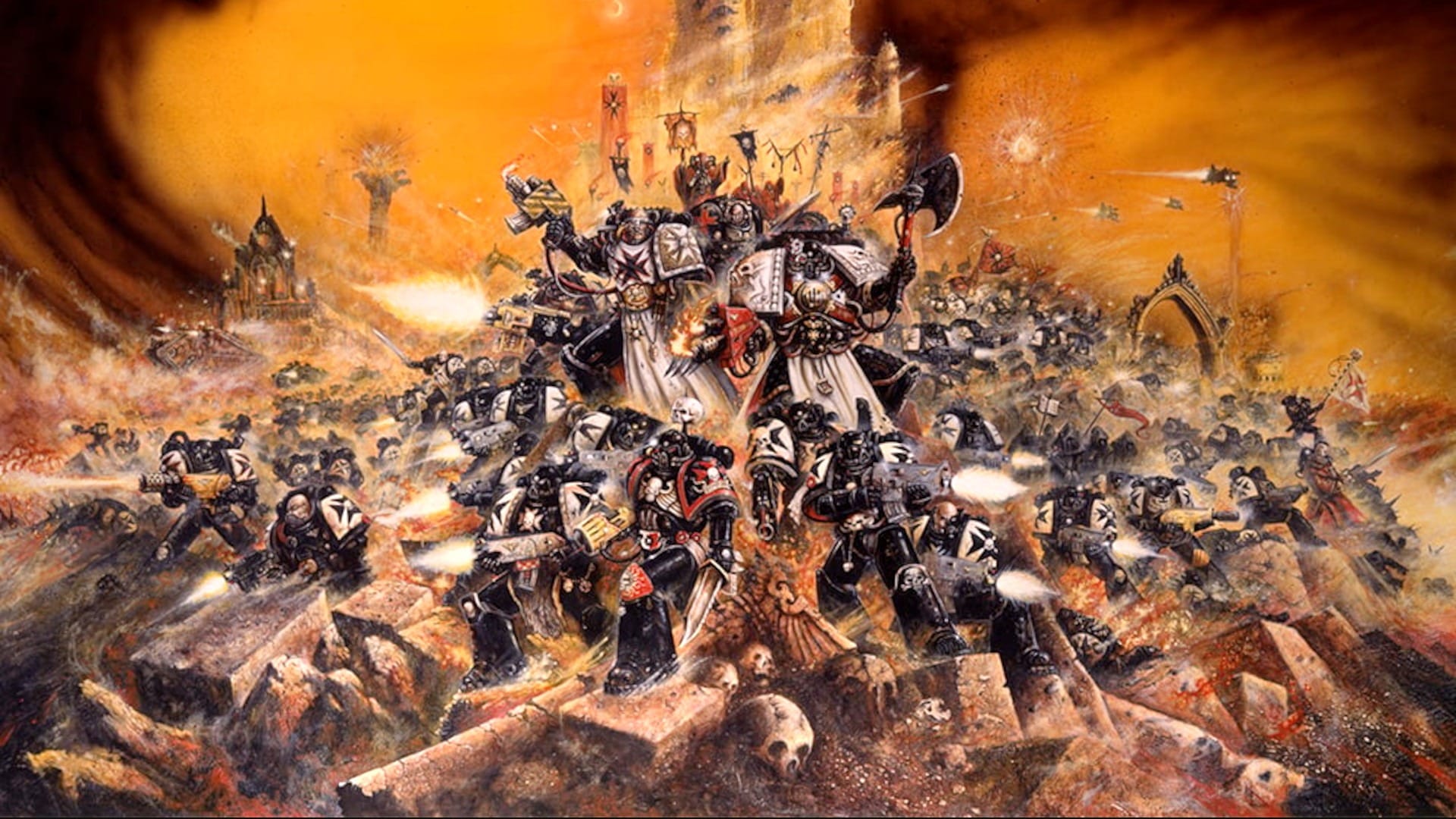
In 2017, a major change occurred – the eighth edition offered a big reset, significantly simplified the rules, and made entering the game much easier. This trend continued in the ninth edition from 2020, which added new game modes and modern manuals.
The current tenth edition, released in 2023, further simplifies the rules, offers free datasheets, and moves Warhammer 40,000 toward an even more accessible game that can appeal to both newcomers and seasoned players.
History of Age of Sigmar Editions
Age of Sigmar replaced the original Warhammer Fantasy Battle in 2015 and offered a completely fresh start. The first edition was radically different – instead of complex tables and formations, it brought simple rules and an emphasis on a smaller number of models.
The second edition was released in 2018 and significantly deepened the game. It added more detailed mechanics, new magic systems, and expanded the story of the Mortal Realms. The third edition from 2021 unified the rules, sped up the pace of the game, and placed greater emphasis on missions and scenarios.
The current fourth edition (2024) continues the trend of accessibility – rules are freely available, army lists have been simplified, and the game is even more welcoming to newcomers without losing depth for experienced players.
The publisher chooses three-year cycles for releasing editions for both Age of Sigmar and 40,000. We can therefore expect new releases sometime in the summer of 2026.
Factions in Warhammer: Age of Sigmar and 40,000
One of the biggest draws of Warhammer is choosing an army that reflects your playstyle and the aesthetic you enjoy. In Age of Sigmar, you will find factions based on classic fantasy motifs – from noble Elves and resilient Dwarfs to kingdoms of Men or brutal Orcs and endless legions of the Undead. The modern era has also brought new icons, such as the Stormcast Eternals, divine warriors created by Sigmar himself.
In Warhammer 40,000, similar archetypes appear in a dark sci-fi coat. Orcs turn into insane technological barbarian Orks, Elves into the ancient space-faring Aeldari, and humanity into the vast Imperium, where genetically enhanced Space Marines fight for the Emperor. They are joined by original factions like the insectoid Tyranids or the ancient robotic dynasties of the Necrons.
Age of Sigmar thus builds on mythology, magic, and epic battles of gods and mortals, while Warhammer 40,000 brings gothic sci-fi, where technology, religion, and endless war across the galaxy mingle.
More about factions in the separate article: The World and Factions of Warhammer.
Basic Principles of Play
Whether you dive into Age of Sigmar or Warhammer 40,000, both games stand on similar wargaming principles. Each player leads their army of miniatures, which move across the game table, clash in combat, and complete scenarios. Turns alternate, and each unit has its profile (warscroll or datasheet) clearly stating how far it moves, how strongly it attacks, or how it resists damage. The game is played using six-sided dice, which decide the success of attacks, spells, or defense. The basic rules are always the same for all factions, but specific abilities and quirks differ according to the army you choose.
The difference lies in the atmosphere and details: Age of Sigmar emphasizes magic, heroic abilities, and melee combat between armies in a mythological world, while Warhammer 40,000 focuses more on shooting, ranged tactics, and gothic sci-fi aesthetics. In both cases, however, it’s not just about "defeating the enemy," but mainly about the experience – about telling the story of each battle and enjoying epic clashes with friends that wouldn't happen anywhere else but on a table with miniatures.
The Warhammer Community
Warhammer is not just a game; it is also created and supported by a huge community. Players regularly meet in game stores, clubs, and at large tournaments, where newcomers and veterans with armies painted over many years meet. Alongside competitive play, there is a strong painting and modeling scene – people share their creations on forums, social media, or special competitions, the most famous of which is Golden Demon. Moreover, the community is not limited to just playing: fan stories, videos, podcasts, and entire projects are created that keep Warhammer alive. Thanks to this, every newcomer has a chance to quickly find support, inspiration, and new friends.
Where to go for current information?
author Karel Krajča

Karel Krajča
Šéfredaktor, content creator a organizátor festivalu Fantastická Ostrava. Fanoušek fantastiky, videoher, deskových her a popkultury obecně. Příležitostný milovník malování figurek a craftení všeho druhu. Hudební závislák a amatérský znalec fyziky a matematiky.


You might also like

Armageddon calls: Everything you need to know about the 11th edition of Warhammer
Warhammer 40k 11th edition is here! Codexes from the 10th remain, but the rules are changing. Find out what changes shooting received and what awaits you on the battlefield. full article...
8. 6. 2026 Karel Krajča 7 min
StarCraft: The Miniatures Game – The RTS legend comes to life on your tabletop
Legendary StarCraft as a wargame! Command the Zerg, Terrans, or Protoss in an epic battle on your table. full article...
13. 3. 2026 Karel Krajča 5 min
Skirmish games: The perfect start to the world of wargaming
Skirmish games are the ideal entry into wargaming: small teams, personal stories, and tactical combat on smaller tables. Kill Team, WarCry, Battletech, and more. full article...
Non-fiction journalism 22. 12. 2025 Karel Krajča 4 min