


How to write a gamebook without losing your mind (Part 3)
Would you like to write a gamebook? In the final article of this series, we'll focus on decision-making systems and discuss what to do with your finished gamebook.

What do you find in the article?
In the first part of this series, we focused on the basic characteristics of gamebooks. In the second part, we took a peek under the hood of game design. In this final article, we'll dive into decision-making systems and discuss what to do with your finished gamebook.
Decision diagrams or "schizophrenia" in practice
I don't mean to trivialize or mock schizophrenia as a serious and complex mental illness with this subtitle. It's purely a superficial comparison. The fact remains that when writing gamebooks, you might feel a certain splitting (or even quartering) of your personality.
Decision diagrams are a well-known friend to many programmers, game designers, and even entrepreneurs. They create a kind of forecast—estimating the progression of actions and reactions—based on specific conditions. A very basic decision diagram might look like this:
The main task is to get out of bed and go to work. What happens in between is a matter of the decision system, meeting conditions, and setting them up.
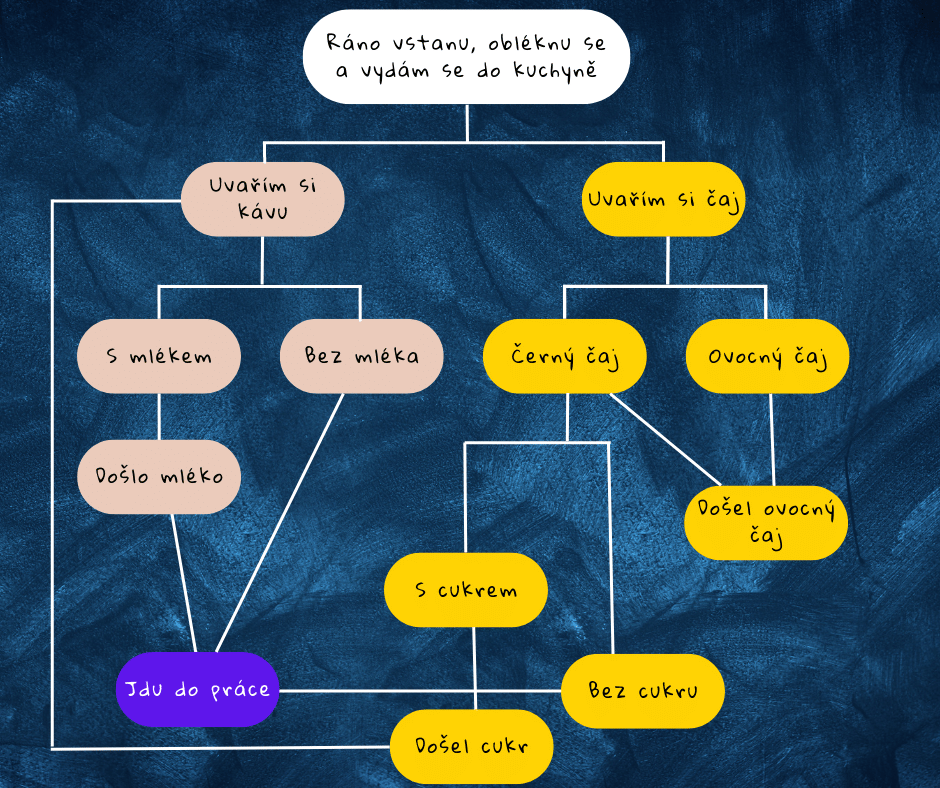
In this case, the first decision is whether to have coffee or tea for breakfast. If you want tea, you choose between fruit or black tea. If you pick fruit, the next link reveals it's out of stock. So, you go back and choose black tea. Here, you get another choice: with or without sugar. Assuming that as a player I decide to have tea without sugar and I'm happy with that, I drink it and head to work. Period. I've successfully passed the first decision phase. But if I want to sweeten my life and add sugar, I find out the sugar is gone. So, I reach for the option to brew coffee… and so I proceed further.
This decision system is sometimes called "forced convergence." This means that regardless of what happens between waking up and leaving for work, you always end up going to work. Forced convergence is useful when you need the player to proceed at all costs, because without that specific decision or event, the story couldn't continue.
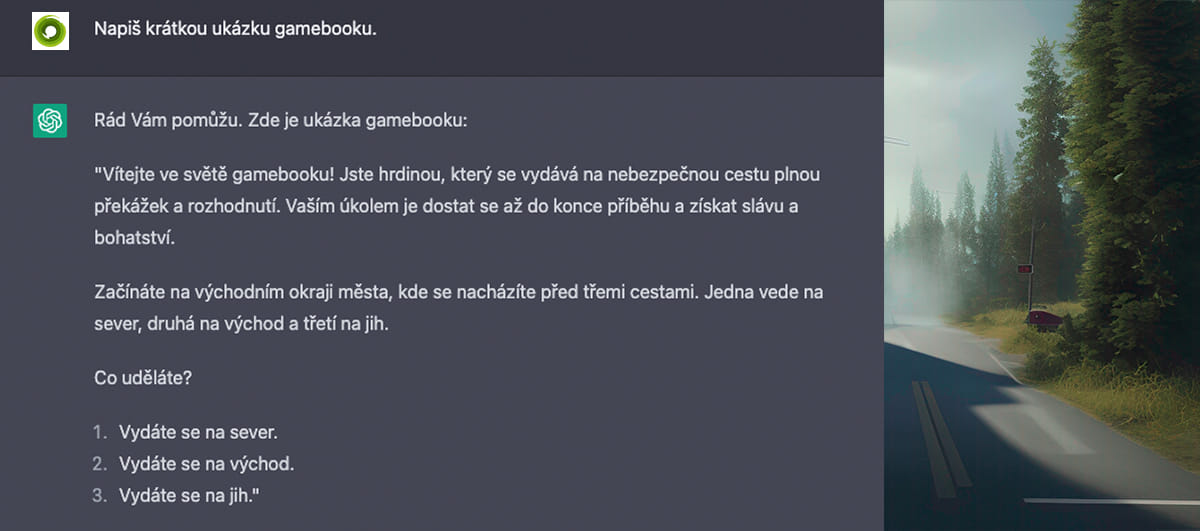
However, you can insert "delayed branching" into forced convergence. What does that mean? Let's go back to the morning drink example.
What if you had coffee without milk in the morning, went to work, had a great day, and on the way home from the pub, you ran into an alien monster that doesn't like people who drink coffee without milk?
At that moment, your initial decision would have a real impact—it just manifested later.
And you could continue like this with various methods and paths. Sometimes you must meet certain conditions or pass through a specific link to successfully finish the game. Take the Kaltské jeskyně (Kaltské Caves) as an example, where you never escape the loop of running and encounters with a bloodthirsty beast unless you have the right weapon. In City of Thieves, you can go through the entire gamebook, and then a single question sends your two hours of gameplay down the drain. Right before the end!
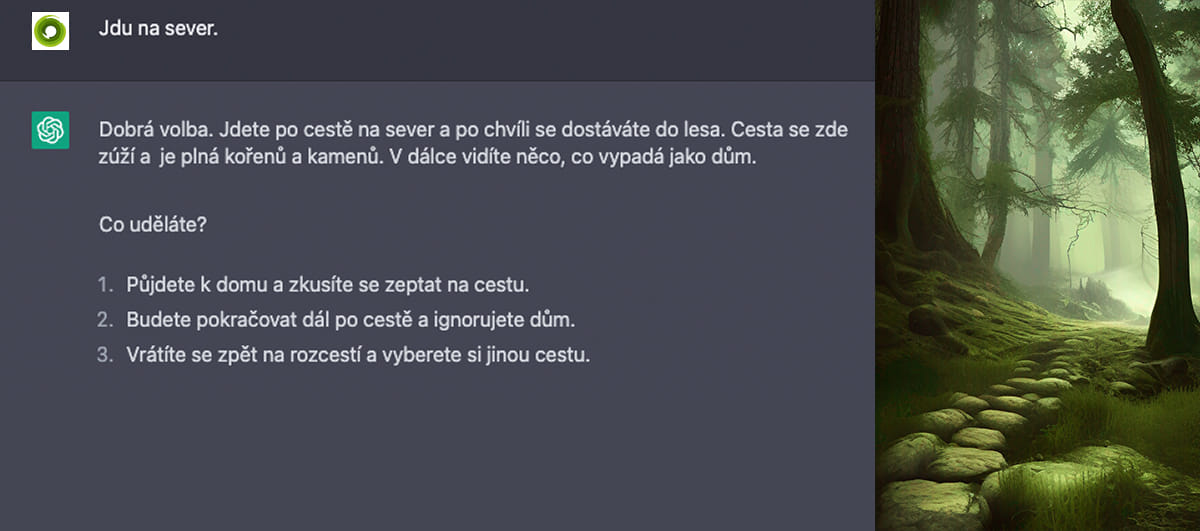
In a way, these twists are fun, but they can discourage some players. That's why I recommend using them in moderation or ensuring there's at least a 30-40% chance that a curious player will obtain that item/information. Even if it's in different places and under different conditions.
Probably the last thing I'd like to add about branching and decision-making is that if you ever get "stuck" and don't know what options to offer the player, always consider the following: Ask yourself what the natural reaction to the ongoing action is.
If the protagonist finds a strange cottage in the middle of the forest, what do they do? Knock on the door? Explore it? Break in? Walk away?
If the protagonist gets into a conflict with a creature, what will the reaction be? Attack? Retreat? Negotiate? Intimidate?
And if you happen to reach a phase where the story is stalling and no logical reaction comes to mind (because there's nothing to react to), do what all authors do—insert an external influence. Even a small detail, like the hero getting a sunburn, allows you to ask further questions. Will they try to hide the burn under their clothes? Joke about it? Look for a miracle healing cream?
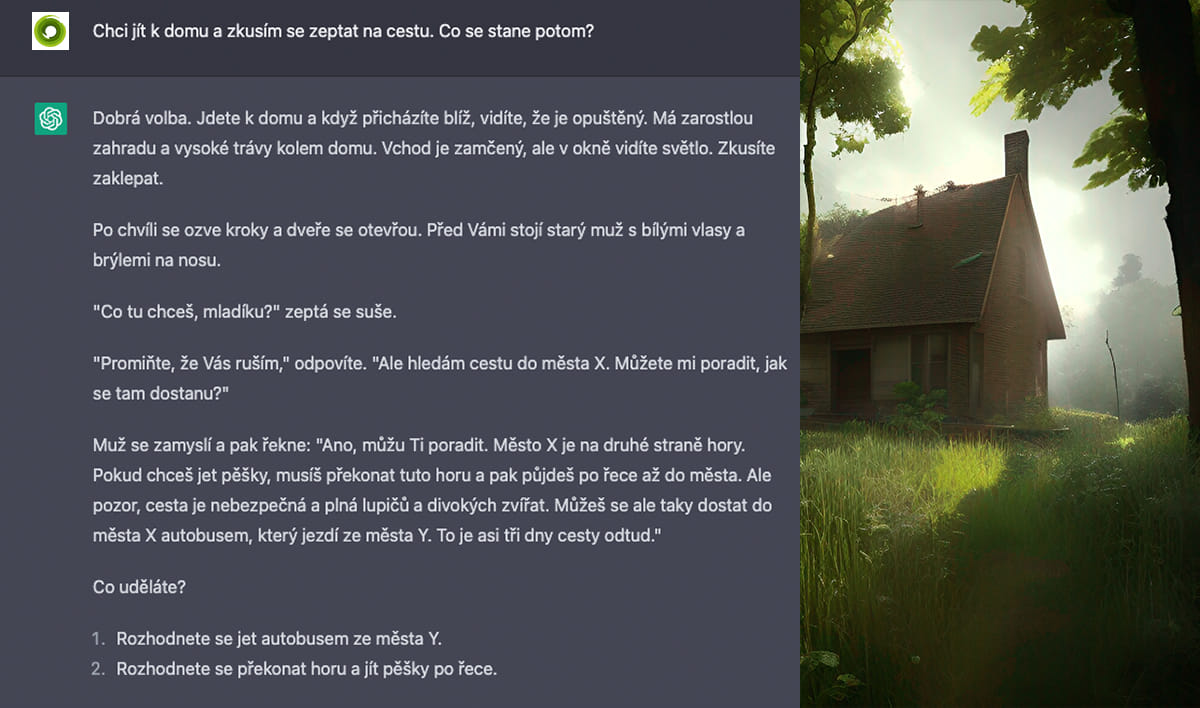
Of course, even in this case, you need to think in moderation. Constantly pushing small twists can feel chaotic.
In conclusion—I consider one of the hardest things about writing a gamebook to be the fact that as an author, you perceive all decisions at the same time. It takes a while to adapt to that tangle of paths and decisions. That's why you should take notes, draw maps, and use markers. Anything that helps you separate the individual lines. Also, play your own gamebook occasionally. Try to put yourself in the reader's shoes and go through the paths that you assume the reader would choose. If you don't want to stop moving forward through the story, that's a good sign.
Numbering links
I'm often asked how I number my links. Well, I don't know how the pros do it. At the beginning, I decide I want the game to have at least 300 links. I make a table and then randomly check off the used boxes.
When there are too few links, I add more. When there are too many, it's time to split paragraphs, create new branches, or renumber. That happens too.
What to do with a finished gamebook?
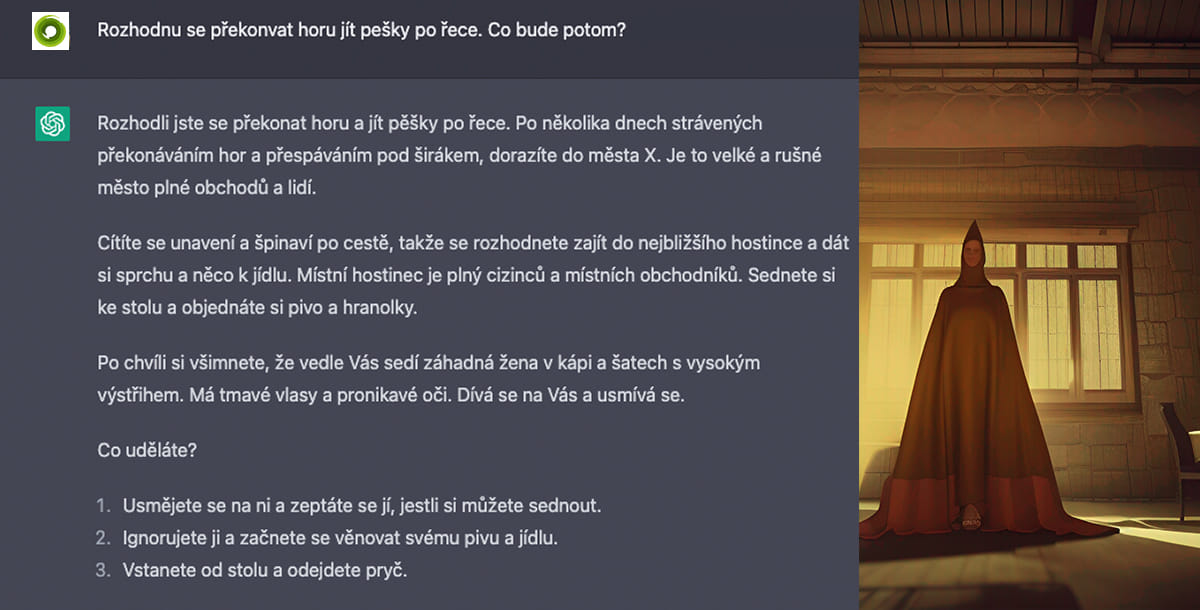
Once you're done, the first step is to find a test audience (beta readers). If this is your very first work and no one has read your writing yet, send it to 5-8 people who are honest with you.
I fundamentally disagree with the claim that the more readers, the better the feedback.
You might think, "two heads are better than one," but personally, I'm not a fan of that theory.
My beta readers are often friends or family. Family represents a sample of the population that came to my book quite by accident. There are no fantasy fans in my family, so as long as my works are clear, understandable, and fun for them, I'm on the right track. Then comes the sample of friends—they usually know how I write, how I think, and they are oriented in fantasy. If I pass their filter, there's a high chance the book/gamebook is a success. At least in the sense that it met not only my expectations but theirs as well.
Don't forget that you can never please everyone. There will always be those who praise you and those who sink you. Listen to both, but as far as criticism goes, take only the constructive kind to heart.
Criticism based on ridicule, insults, hatred, and questioning your abilities is not constructive. Do not let it drag you down under any circumstances.
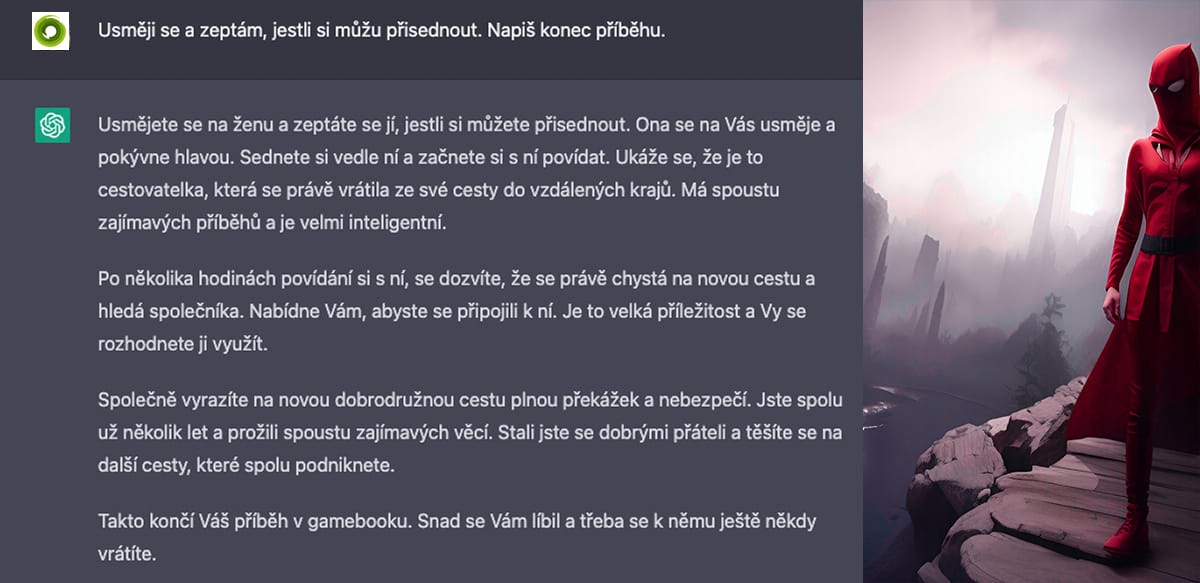
Realize that you must take feedback with a grain of salt. Not everyone will like your book, which is perfectly fine. It's important to get constructive criticism from people you trust, but also realize that not every opinion will be useful to you. Getting good feedback means knowing who to turn to.
How to publish a book – wikiHow.
And we're at the end. Many articles have already been written about how to publish a book. So, I'll refer you to the boundless wisdom of the internet.
It's no fun, believe me. And writing is not a way to get rich. Remember the phrase "starving artist"? There's some truth to it. I think, especially in the Czech Republic, you can count the authors who make a living solely from writing on the fingers of one hand. But that should by no means discourage you.
I hope my insights "from the other side of the barricade" helped you at least a little to understand how gamebooks work and how to work with them. Hopefully, we'll see some kind of modern gamebook renaissance soon. Fighting the gaming industry won't be easy, but I still believe that interactive books have potential that is worth exploring.
author Eva Lassler
List of parts:
How to write a gamebook without losing your mind (Part 1)
How to write a gamebook without losing your mind (Part 2)
How to write a gamebook without losing your mind (Part 3)

Eva Lassler
Eva „Ronne“ Lassler je autorka a výtvarnice z Ostravy. Je spisovatelkou zaměřující se na gamebooky, překladatelkou a organizátorkou festivalu Fantastická Ostrava.
You might also like

Gamebooks for kids – why play them and which ones to choose?
Gamebooks lead children to reading in a fun way and develop other skills too. Our guide explains everything and advises on which gamebooks to choose for little adventurers. full article...
Tips and guides 14. 9. 2026 6 min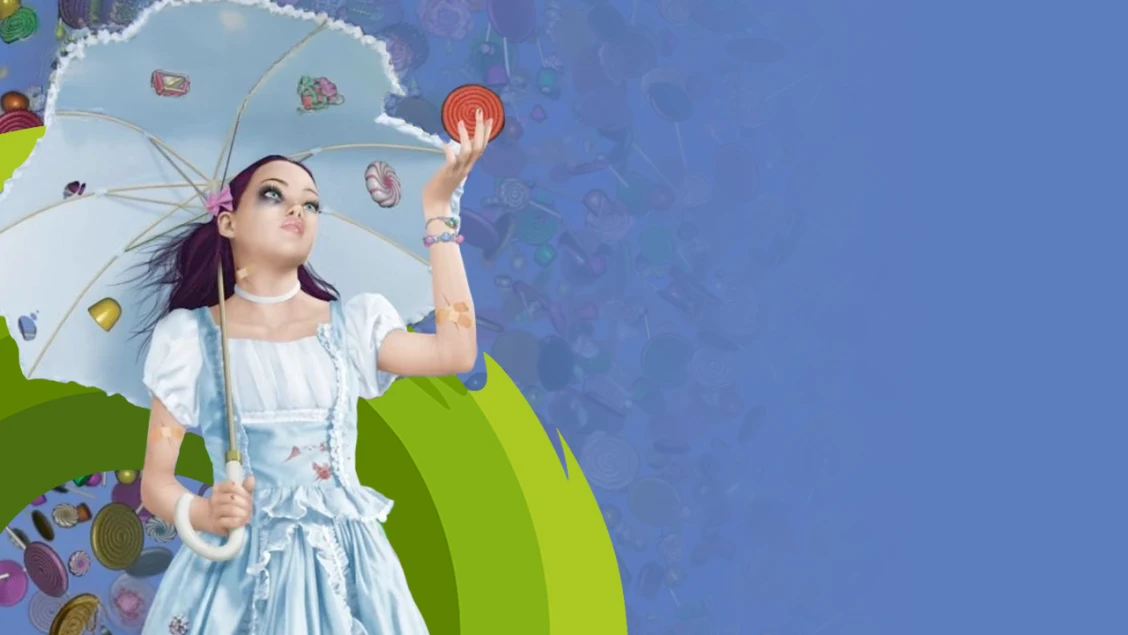
Book Review: Sladký příběh – A Dark Fairy Tale of Bizarro Fiction
Do you dream of reaching the end of the rainbow? In Sladký příběh, a childhood dream turns into a dark reality. Find out in our review why this slim book will consume you. full article...
25. 8. 2026 Tereza Nesvadbová 3 min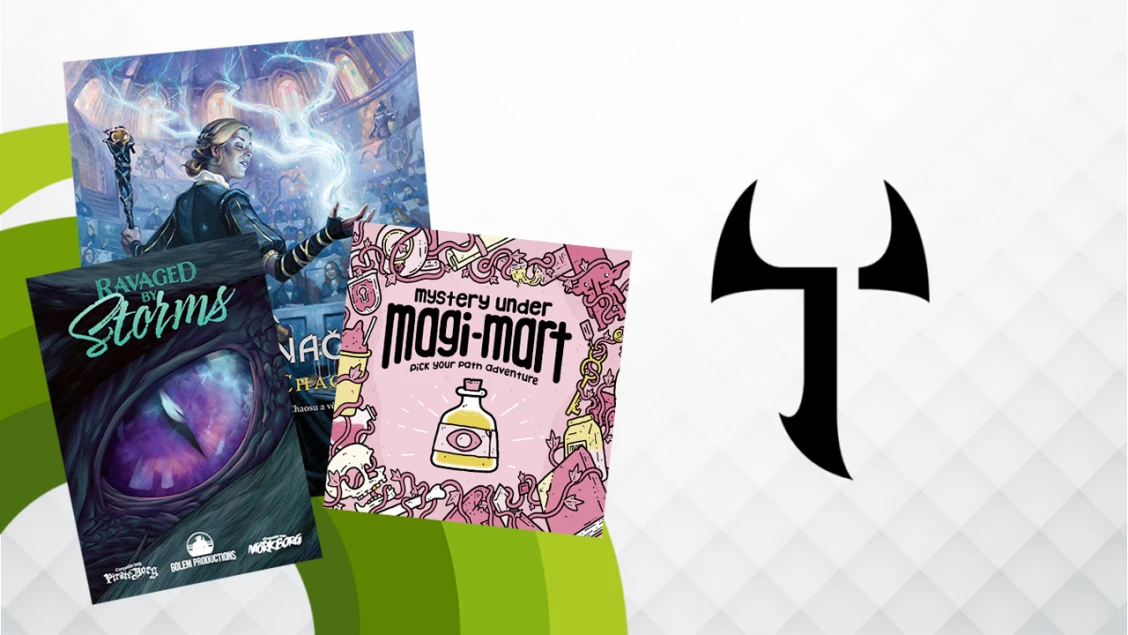
Mytago Publishing Newsletter #37
Discover the latest from Mytago Publishing! We're releasing an expansion for The Witcher RPG, a campaign for Pirate Borg, and another installment of Fighting Fantasy. Find out what's in store for you this year. full article...
20. 8. 2026 Jiří Reiter 5 min