



The Blood of Dawnwalker: A Spiritual Successor to The Witcher 3
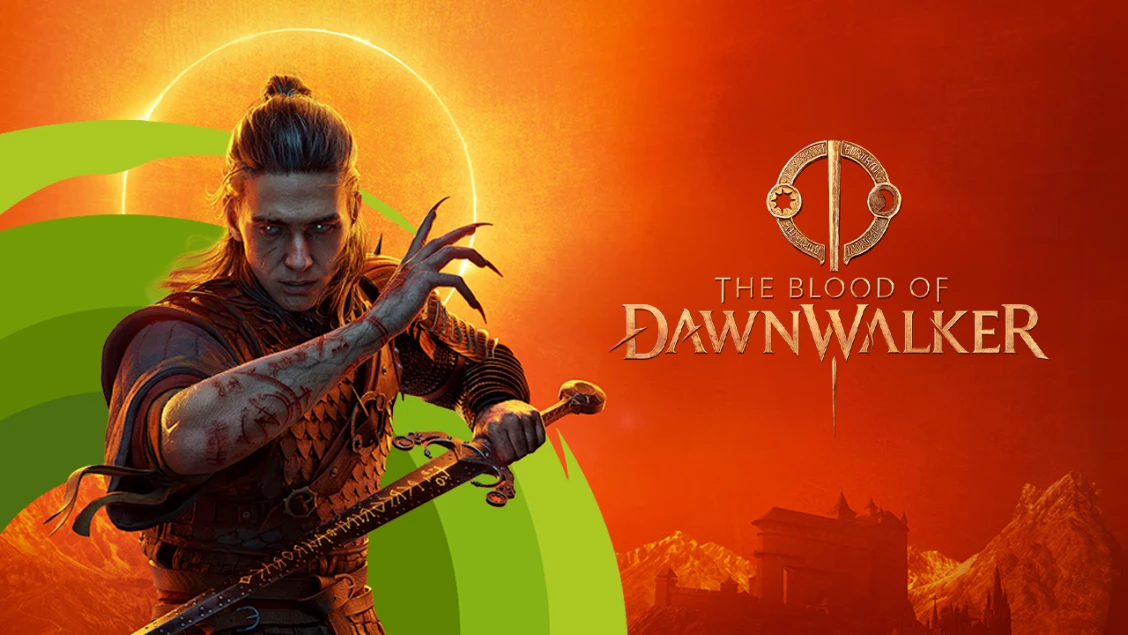
The Blood of Dawnwalker is a spiritual successor to The Witcher 3. It offers a dark story, freedom of choice, and a captivating atmosphere.
What do you find in the article?
This vampire newcomer feels like a spiritual successor to The Witcher trilogy, especially The Witcher 3: Wild Hunt. It’s no surprise, as The Blood of Dawnwalker was developed by a team that includes people who worked on that very game. The Witcher 3 has been one of my all-time favorite games since I first played it back in 2015. What future awaits the Witcher series now that a significant part of its former creative team has left CD Projekt Red remains to be seen. Sometimes it's better to be a fan of specific creators than entire brands—Disney taught me that. But let's get back to Dawnwalker.
A Very Familiar World
So, what exactly is The Blood of Dawnwalker? A first look at the game will feel familiar to anyone who played The Witcher trilogy. The environment, graphics, and atmosphere are similar, and the way the protagonist, Coen, moves through the world without using his special abilities often evokes Geralt. However, Coen himself is completely different. In many ways, he is almost Geralt's opposite. Depending on how you play him, he can have a very strong sense of justice, yet he can also be biting and cruel. Compared to Geralt, though, he’s still a total puppy.
The Time Limit is a Core Mechanic
the developers cite the original Fallout as one of their main inspirations. It dropped you into a vast world, gave you a clear goal, and then largely let you decide how to achieve it. Your task was to find a water chip so your family and friends in the Vault could survive, and you had a limited amount of time to do it.
This brings us to arguably the most controversial element of The Blood of Dawnwalker. At the start of the game, your family is kidnapped, and you are given thirty days and thirty nights to save them. At the same time, you become a Dawnwalker: you aren't a true vampire, but you aren't exactly a normal human either. You’re basically Kyle from South Park. Or Blade. Take your pick.
After the prologue, the entire game opens up. Small clues scattered across the world lead you to larger storylines, but how you pursue the main goal—and even whether you try at all—is mostly up to you. However, the time limit is always present. At first, I didn't like this mechanic because it made me anxious, and some time sinks feel absurd. Why does opening one chest take a whole hour? Yet, when I finished the game, I had completed all the main storylines and most of the question marks on the map—yes, they return from The Witcher 3—and I still had four full days and nights left. The time limit creates pressure, but in reality, it is much less restrictive than it initially seems.
I gradually understood why the passage of time is so important for the game. The day-night cycle doesn't just change the look of the environment; it fundamentally affects how you play as Coen, what he can do, and what options are available to him. My advice is simple: learn to hate the time limit a little less and don't let it discourage you from exploring the world.
Great Stories Built on Freedom
The Blood of Dawnwalker is primarily about the story and characters. The script plays the lead role here; despite the excellent combat system, this is not a soulslike game. That is precisely why it is so hard to talk about it without spoiling anything.
Although the individual stories feel self-contained, they are very cleverly interconnected. You can finish one storyline, start another a few hours later, and discover information that puts previous events in a completely new light. The game rarely explains anything directly. You won't find long sequences that force the player to walk slowly and listen to exposition (God of War Ragnarök, I'm looking at you). Instead, I often stopped voluntarily to listen to conversations around me because they were genuinely interesting.
The stories also feel very believable, at least as much as is possible in a fantasy setting. They tell tales of people who are easy to understand and who are dealing with loss, fear, injustice, and heartbreak. There may be vampires, witches, demons, and even a werewolf, yet the people at the center of these stories feel real.
I especially liked the game's central moral dilemma. The vampires who have seized power may be a scourge for Coen and his family, but they aren't necessarily bad for everyone living under their rule. They heal the sick, removed corrupt church officials, and got rid of debauched nobility. The story takes place in early 14th-century Europe, in the shadow of the Black Death, and the vampires protect the Vale Sangora valley from the plague. Their rule is cruel, but its consequences are not exclusively negative. Nothing here is simply black and white.
No Hand-Holding
It is important to emphasize that The Blood of Dawnwalker does not hold your hand at all. You have to figure out what works, where to go, and which dangers you can face. Very early on, I ran into a boss when I was under-leveled and had terrible gear. However, thanks to patience and gradually understanding the combat system, I eventually managed to defeat him. The victory brought me real satisfaction—exactly the kind of experience we see less and less in modern games.
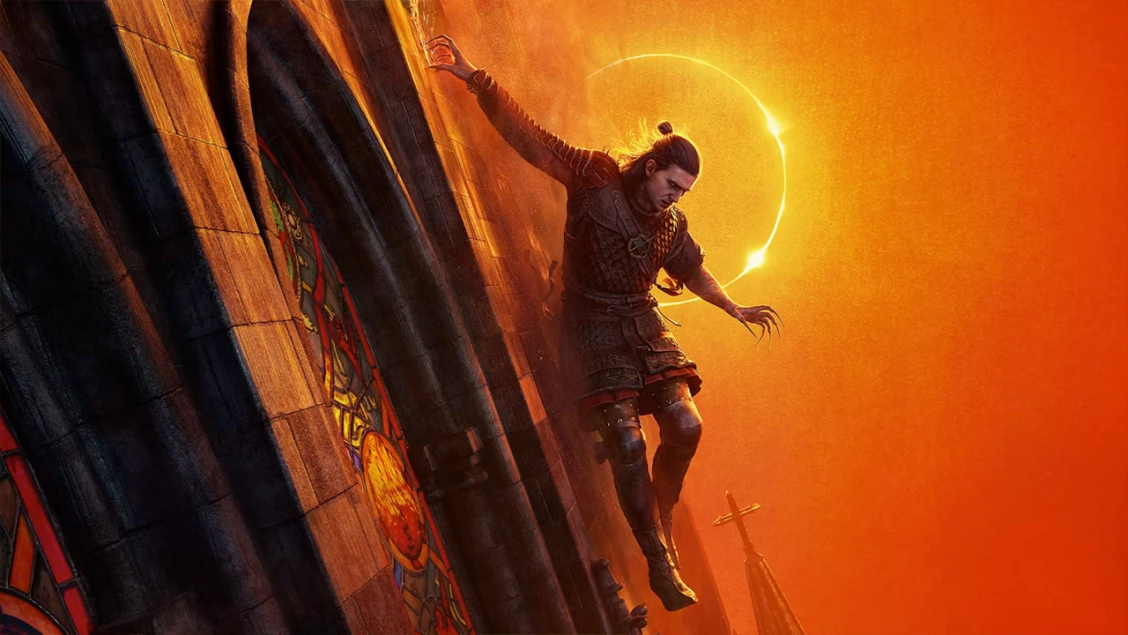
The game draws inspiration not only from The Witcher but also from several other titles. For example, directional attacks and parries strongly resemble Kingdom Come: Deliverance. However, The Blood of Dawnwalker is played from a third-person perspective, so unlike KCD, I could actually see what I was doing. I gradually fell in love with this system. The sharp 'clink' of a perfectly timed parry is immensely satisfying, and the fluid rhythm of sword combat made me specialize in mastering this weapon.
Swordsmanship is only one of three specialization trees; the other two are witchcraft and vampirism. I fully developed swordsmanship and vampirism, which led to some fantastically brutal encounters.
The art style reminded me of Diablo IV at times, especially the grotesque hellish monsters, ominous spells, and moments of body horror in the style of Hellraiser.
The Court system is reminiscent of the Cult of Kosmos interface from Assassin's Creed Odyssey: you gradually reveal the map of relationships between the main vampires and the structure of their influence. I've always enjoyed similar systems, and it's a welcome addition here.

collective of authors


A Terrible Technical State
I could talk about The Blood of Dawnwalker for a long time. To me, it is an absolute gem. Its biggest weakness, however, is its technical state. The game runs on Unreal Engine 5, which I have started to consider the curse of modern gaming, as I haven't encountered a single title on this engine that ran without issues. The performance was terrible in this case as well. While the game remained playable and I managed to finish it, it ran very poorly the entire time.
Even so, the technical issues couldn't overshadow everything the game achieved. I'm already looking forward to playing it again—though this time, I might wait for a few updates first.
Verdict
I would rate The Blood of Dawnwalker 10 out of 10. For me, it is an absolutely legendary game. Everyone who liked The Witcher, enjoys vampires and medieval European folklore, or simply seeks out well-written stories should play it. I can't wait to see what comes next.
Want to see our articles on Google more often? Add imago to your preferred sources.

Fenrys
Author profile and more articles
I'm a cosplayer and gamer with plenty to say about my favorite worlds. I'm mostly drawn to characters from Final Fantasy, FromSoftware games, and some forgotten Star Wars titles and series.
You might also like
World of Warcraft: Forever is launching. What it brings and how it differs
WoW Forever expands the original Azeroth: over 1,000 quests, new zones, the Skyborne race, and level 60 forever. Comparison with Retail and Classic and plans for 2027. full article...
4. 11. 2026 Karel Krajča 8 min
Underkeep: A Czech dungeon crawler from the creators of Jets'n'Guns
Underkeep from the Prague studio Rake in Grass launches on November 5. A turn-based dungeon crawler with a party of four heroes, pixel art, and Czech language support. Who is behind it? full article...
23. 10. 2026 Karel Krajča 5 min
The Mountain from Game of Thrones joins Legacy of Valor
Hafthór Björnsson, The Mountain from Game of Thrones, is acting in the Czech RPG Legacy of Valor. Find out what the game is, what the studio will show at PGA 2026, and where to buy merch. full article...
16. 10. 2026 Redakce 4 min