


Milan Žáček - Translator and Publisher
Milan Žáček is one of the leading Czech translators of speculative fiction. He has nearly 200 books under his belt. He is a friendly guy who never misses a chance to talk about his lifelong passion – literature. He is the owner of the Carcosa publishing house, where he focuses primarily on horror and bizarro fiction. What is the life of a translator like here? Why did he venture into the waters of self-employment, and what exactly is bizarro? Roman Bílek asked him about these things and more.

Milan Žáček is one of the leading Czech translators of speculative fiction. He has around 150 books under his belt. He is a friendly guy who never misses a chance to talk about his lifelong passion – literature. He is the owner of the Carcosa publishing house, where he focuses primarily on horror and bizarro fiction. What is the life of a translator like here? Why did he venture into the waters of self-employment, and what exactly is bizarro? Roman Bílek asked him about these things and more.
To start with a traditional question: How did you get into translating, and did you know from the beginning that you wanted to make a living from it?
I studied translation. I didn't know for sure that I wanted to make a living from it, but I had long since consciously embarked on this path, and surprisingly, nothing has led me astray yet, even though I've dabbled in other jobs.
Can a beginner translator choose what they want to translate, or do they simply have to fulfill assignments even if they don't care for them? Everyone knows you as a translator of speculative fiction, but have you ever had to translate, say, an encyclopedia of cacti or something similar?
A beginner translator usually takes what they can get, at least from what I've heard and know from my own experience, provided it's not something completely outside your scope. I wouldn't have taken on a cactus encyclopedia, though, because I don't understand that specific field at all, not even in Czech. I started out translating books on euthanasia, self-help manuals, and poetry—things where I more or less knew what I was doing… and only over time did I find my world and stick to it. That process took several years. At the beginning, I might not have even known exactly what I wanted to do and what I enjoyed most, so I accepted challenges and tried to find myself.
Has your position as a translator with clients/publishers changed over the years?
I suppose so. I have more freedom in my choices, and most importantly, I have my own field that I specialize in—horror and dark fantasy in general. Within that, I receive offers, and I also get to test the role of a client myself.
Have you ever tried other translation disciplines, like simultaneous interpreting?
I have. It was actually part of my university studies, but it's not my cup of tea. I made a living as an interpreter for about a year a long time ago, but I prefer translating much more. And specifically, simultaneous interpreting is a different world; I don't have the knack for it.
Why do you translate speculative fiction specifically? How did you get into it? And is there a financial difference between translating speculative fiction and, say, non-fiction or world literature?
I enjoy speculative fiction. That's probably the most important factor now. I can't imagine translating something I'd have to fight with after twenty years, something that's grueling for me, especially when it's very hard to make a living from translation alone. I'd rather quit. I arrived at speculative fiction during my search. But even within it, I evolved from sci-fi and fantasy to horror; that surprises me, and I still look forward to it every day, which is my salvation. I was translating world literature until recently, but not non-fiction for a long time (except for non-fiction about horror, like King's book Danse macabre)… the pay didn't differ significantly in my case, but I don't know how it is for others. However, I can imagine that if someone is an expert in a field and translates non-fiction, where more research is required and unique knowledge is applied, and they have an accommodating publisher, they might be at different levels.
Viktor Janiš once told me that a translator is a writer, that they can turn an average text into an above-average one using their skills. How do you see it? Can you turn a mediocre foreign author into a "star" through translation? And do you know any authors who are, for example, much more popular here than in the world or their home country?
A text should work the same way in the target language as it does in the source. If something is average in the original, it should be average in the translation, whatever we imagine by that mediocrity. The tendency to "improve" is quite tricky. An ordinary, dull text shouldn't be shifted and turned into something else; that smacks of rewriting to me, and I would consider it an undesirable intervention. The translator shouldn't be polishing and refining to offer something else. The fact that someone becomes a "star" and is more famous abroad doesn't necessarily mean it's an "improved" translation, but rather that they fell on more fertile ground, that foreigners "understand them better," or that circumstances simply aligned, making a book more famous in translation than in the original. I can't think of such authors in the Czech environment right now, although they certainly exist. I know that, for example, Graham Masterton or Jonathan Carroll have cult status in Poland; they are known at home, but they don't have that same status.
And conversely, when you were translating something, did you ever feel that a certain passage just wasn't right, that it lost its tempo, flow, and actually shouldn't have been there at all? And what do you do then?
Yes, I have that feeling, but I don't see it as a reason to switch to a higher level of creativity and improve it. It's just there, so I try to convey it as it is. And that something shouldn't be there? I certainly won't throw it out; that would smack of arbitrariness and editing the text to my own image. A translator is a creative worker, but they are also a servant. They should simply convey what is in the original, even if they don't like it.
The general image of a translator is probably an eccentric who is buried in books all day, afraid of daylight, etc. How do you, as an insider, look at this "definition"? What is the reality, and what does your typical workday look like?
The reality is practically as you say: my typical workday is that I'm buried in books, mumbling to myself like an eccentric, and dreading daylight. That's why I like working at night.
Could it be said that a translator, thanks to their profession, is a person with a large vocabulary who could easily crush anyone at Scrabble?
Yes, that could be said. From the constant communion with words, the vocabulary inevitably swells and mutates in all sorts of ways; sometimes I can't even get anything normal out of my mouth. They could tell you stories at home. I can't judge Scrabble, but I'd play to see where I stand.
Do you read just for yourself, or are you already so deformed that with every foreign book, you immediately think about the translation and whether it would be worth publishing? What do you actually read in your free time, and which authors or genres do you like?
I try not to be deformed… but yes, I do think about whether this or that would be worth publishing. However, I forbid myself from spontaneous translating when reading foreign books; I'd get stuck immediately. On one hand, I read original Czech authors so I don't lose touch with the language, and then all sorts of foreign genre fiction so I don't lose touch. But there isn't that much free time.
At the beginning of the new century, the literary movement New Weird was very popular, and you had almost a monopoly on its translation. What does it look like now, and which authors, in your opinion, have broken free from it and are continuing on a wave of popularity? Which of these authors interested you the most?
New Weird has somehow faded away. China Miéville writes less and less, and when he does, it's short things or politics. Steph Swainston has gone quiet; Ian R. MacLeod and Hal Duncan aren't very visible; K. J. Bishop, author of The Etched City, hasn't published anything in ten years. Jeff VanderMeer is visible, trying different things in the realm of speculative fiction. China Miéville interested me the most; I've translated the most of his work and got to know him best. Nine years have passed since his last regular novel, The Last Days of New Paris. Two of his novellas from 2016 remain to be published in Czech… but who knows what will happen next.
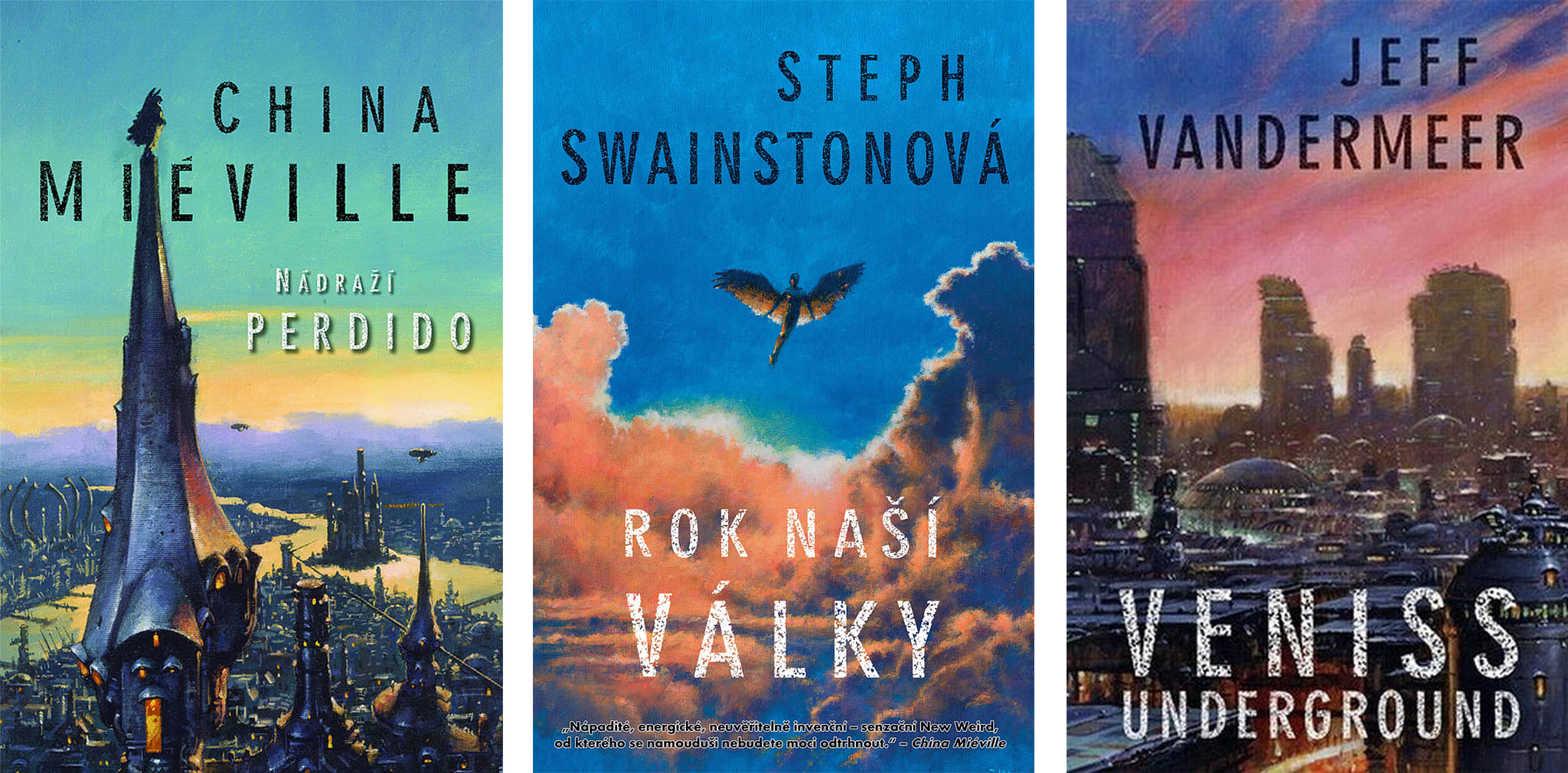
In your publishing house Carcosa, you also translate and publish bizarro, which is another direction full of oddities alongside New Weird… do you enjoy it? Did these "literary flights of fancy" find their way to you, or did you find them? Do you enjoy pondering texts full of neologisms, craziness, and flowery language?
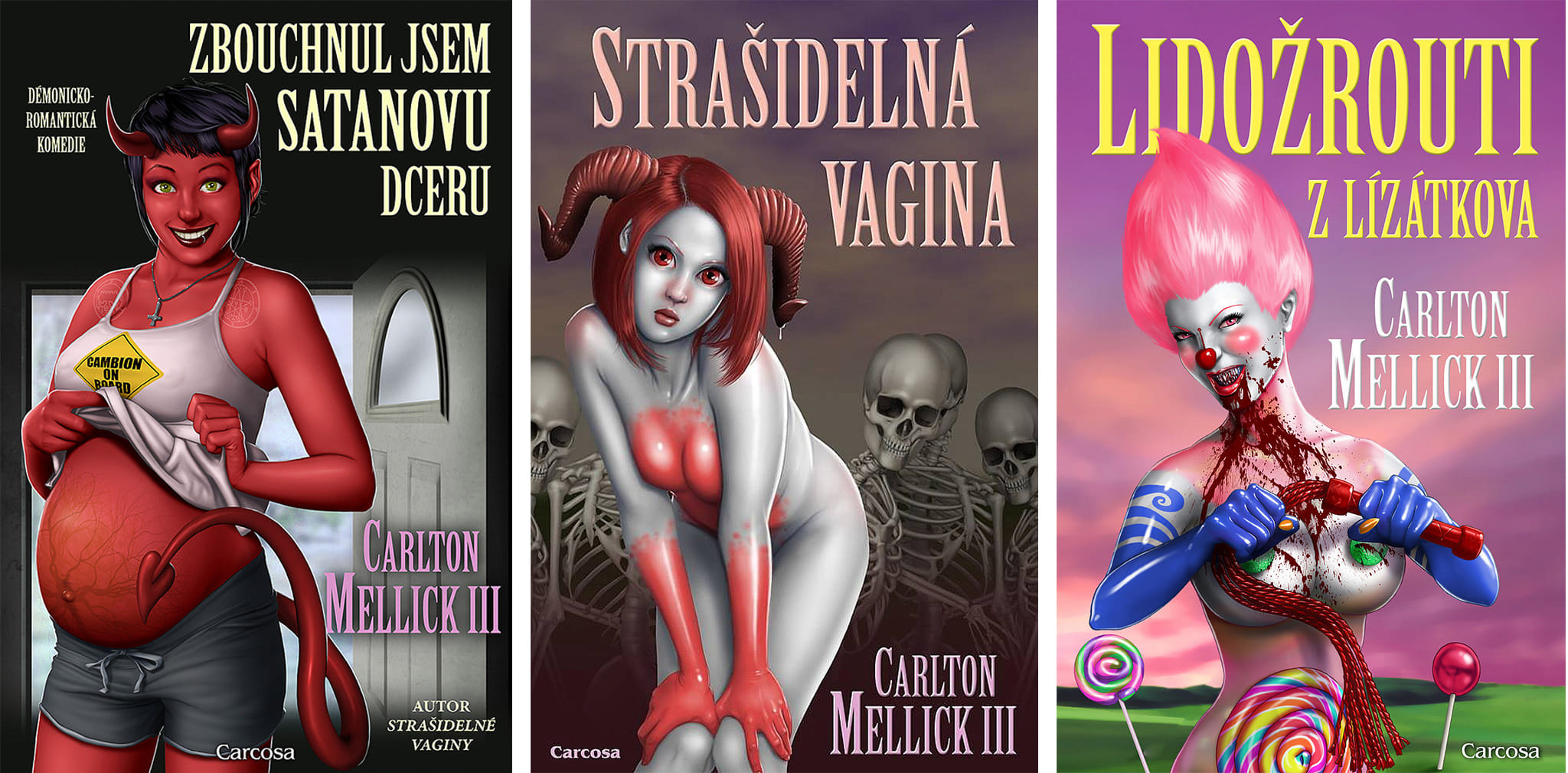
Yes, I enjoy bizarro. It's like a punchier, crazier New Weird. Moreover, bizarro is a subgenre of shorter forms. I enjoy that you don't know what's coming, what will happen in the book; in this regard, it's adventure literature. After forty, I seemed to have matured into it, but it has to be bizarro that has a head and a tail, that holds together and isn't just a pile of crazy ideas without rhyme or reason—that exists too. I'm still trying to find an author we could publish alongside Mellick; but it's not that simple; he is a genius in his crazy field.
Are you already at the stage where you can choose what and for whom you will translate, or are you just "refreshing your palate" in your own publishing house Carcosa?
More or less, I'm there. All the books I translated this year and last year are in my field. In Carcosa, I'm also fulfilling my dreams; I can publish Halloween things, Lovecraftian things, and even short stories that have a hard time elsewhere.
Carcosa specializes in horror literature. How did the publishing house come into being, what led you to found it, and what is your relationship with horror?
Carcosa was born out of several needs… to have some new impulse for translating, so it wouldn't just be translating a book, handing it in, and going to the next one in a few hours. Now there's the aspect of selection, the aspect of watching how it's doing, the aspect of business, experimenting, responsibility, introducing new things and authors. The founding of the publishing house was a family decision; we are a family business. At Carcosa, I can never speak in the singular because I myself would never have managed such a project, and I admire publishing houses that pride themselves on being built on one person. My relationship with horror is, of course, positive; it's hard to describe such a complex thing in a few lines… but let's say I found myself in it, and I'm happy that I can work in this field, that my hobby is my livelihood.
How do you choose the books you publish in Carcosa? Is it based on personal taste, the fact that the titles won some award abroad, sales abroad, the "author's name," or something else entirely?
It's all of that… there is an effort for balance, to have a bit of everything in the portfolio, and of course, to have more well-known, proven things (when it comes to translations). The author's name is important because we are still moving in a sphere that was neglected here for many years, and although the situation in horror has improved a lot in recent years, there are still white, unmapped spots. My personal taste plays a role, yes, freshness, originality; I like surprises… And when I think about it, foreign awards don't seem very important to me. Maybe because books adorned with awards have disappointed me more than once.
You founded Carcosa, Jakub Němeček Gnóm, Roman Tilcer recently Medusa—can we understand this in a broader sense as a kind of translator's revolt? Did you gather experience and are now setting out to show publishers how you think it should be done?
I can't speak for everyone, but from my perspective, I wouldn't call it a revolt. Maybe we're trying it because it's simply possible these days—having a publishing house isn't that complicated. It's happening all over Europe and America. We cooperate with small family publishers in the USA, Britain, or Poland, and they have been operating like this for a long time. When you specialize in something, it seems easier to have everything under one roof, under control, to consult in a narrow circle of one or two heads than to be part of a large company, have managers around you, watch spreadsheets, and meet performance requirements. And it's also a capitalization of experience and ideas.
Many small publishing houses have appeared in recent years; how do you perceive their influence and position in the book market in general? What should be the core of a small publishing house?
It's interesting that we all popped up around the same time. We probably don't have much influence, and the position should ideally be like a pike in a pond. The core should probably be easy identifiability and specialization. I can't imagine that we would have a wide range of books, something for everyone, from grandmother to granddaughter. Within the genre, yes, but it will always be a clear specialization. If only because we are somewhat oriented in one field; elsewhere, I would be shooting in the dark.
How have the ills of the times, such as the pandemic or war, manifested in your publishing and translation work? Do you feel it clearly within your profession?
It's much harder to focus as a translator when so many vital things are happening around you. The pandemic had an impact on the functioning of the publishing house—all those closed shops, broken supply chains, material shortages, more complicated planning of when to publish what when the world is closed. But this is already improving, and it can be managed somehow.
You are generally considered one of the greatest experts on horror literature here; how do you feel in this position, and does it work, for example, that "if Žáček recommends it," it can't be bad?
Oh dear, I don't really feel like an expert. I don't do much specific recommending; I just share some insights publicly and try to follow what's happening, maybe put things into context. After all, recommending horror is quite complicated. It's a genre based on emotions—distress, horror, terror, shock, disgust—and everyone has this set up differently. I try as little as possible to say that something will scare someone, that it's the scariest book you've read, because in most cases, the other side will object that it's boring. It doesn't work for me to talk about something unequivocally as horror, because that creates an expectation of an experience and a desire to get another dose of something with which I have a previous strong feeling—we're back to those emotions—which then for some reason may not arrive, and suddenly the book is bad or insufficient. I wouldn't label books as horror at all; something dark, distressing, maybe chilling, yes, to give an idea of where to classify the work, but horror evokes dangerous expectations…
There is much more horror literature being published now than in the past; do you think literary horror is experiencing a boom here, or is it more that it's being "pushed" and published more by those who love it?
It's definitely experiencing a boom, here and in the world. I've been writing overviews of what's being published in this genre here for several years, and the numbers are relentless; production is rising by tens of percent. It's being pushed by small publishers, but also by the big ones. Never in the history of Czech literature has so much dark-themed fiction been published as in the last two or three years.
How is Carcosa doing during its existence, which titles sell best, what subgenres of horror has the readership taken a liking to, and what are you planning for the future?
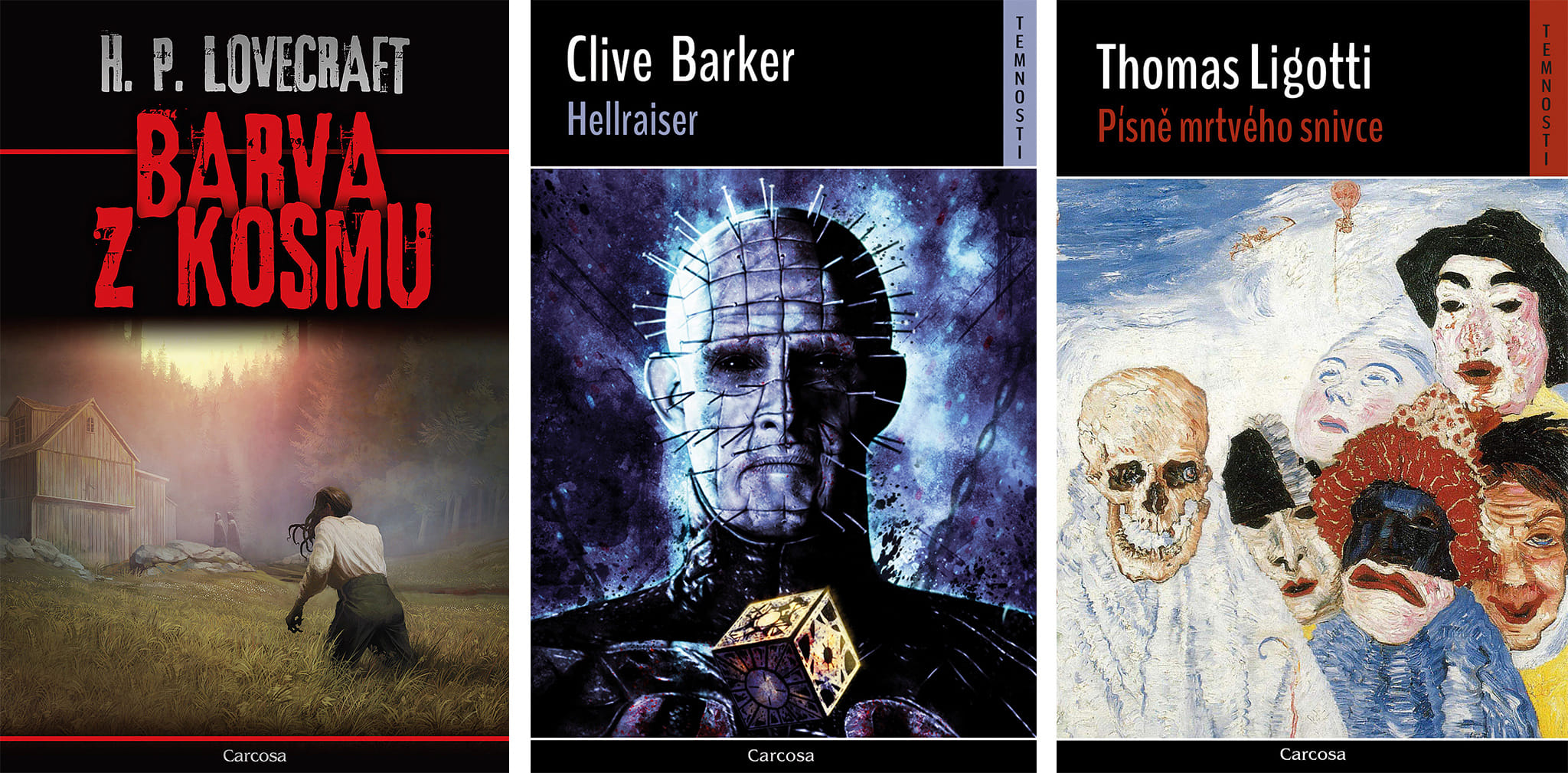
Lovecraft and things connected to him sell best, as do slashers (Mark E. Pocha) and bizarro, i.e., Carlton Mellick III. We intend to continue with all of this. We would like to publish more weird fiction, post-Lovecraftian things, Ligotti, contemporary weird—in this regard, we are preparing short stories by S. T. Joshi and a novella by Nicole Cushing. We want to do more Edward Lee, Clive Barker, other American bizarro authors… in the autumn, we are planning Czech bizarro, an anthology of loose, unbridled speculative fiction. There are a million plans—we're just hitting our limits and are now pondering how to manage all this so we don't publish 3-4 books a year, but maybe one a month.
In conclusion, reveal what you are currently working on and what awaits you in the near future, whether it's assignments or work for Carcosa? And also give us some reading tips so we can at least slightly uncover your personal taste, and tell us what has interested you the most lately.
I am currently translating short stories by the famous English author Ramsey Campbell; it's an assignment for the Fobos publishing house, a cross-section of his work—non-gory, distressing, imaginative dark fantasy. For Carcosa, I have had Edward Lee's Succubi in progress for a long time, an erotic horror from the nineties, a thing that pays a debt and fills a hole—an example of an important book by a fundamental author that wasn't published here in its time. Lately, I've been reading newer and older folk horror; in this direction, I was interested in Hungry Hill by A. M. Hurley or Red Earth by Adam Nevill. I read contemporary and older anthologies, yearbooks of the best of the genre, I read weird and am constantly under its spell, occasionally some Czech manuscript, and I'm trying out horror for young adults.
author Roman Bílek
Roman Bílek
Autor článků na imago.cz
You might also like
Book Review: Sladký příběh – A Dark Fairy Tale of Bizarro Fiction
Do you dream of reaching the end of the rainbow? In Sladký příběh, a childhood dream turns into a dark reality. Find out in our review why this slim book will consume you. full article...
25. 8. 2026 Tereza Nesvadbová 3 min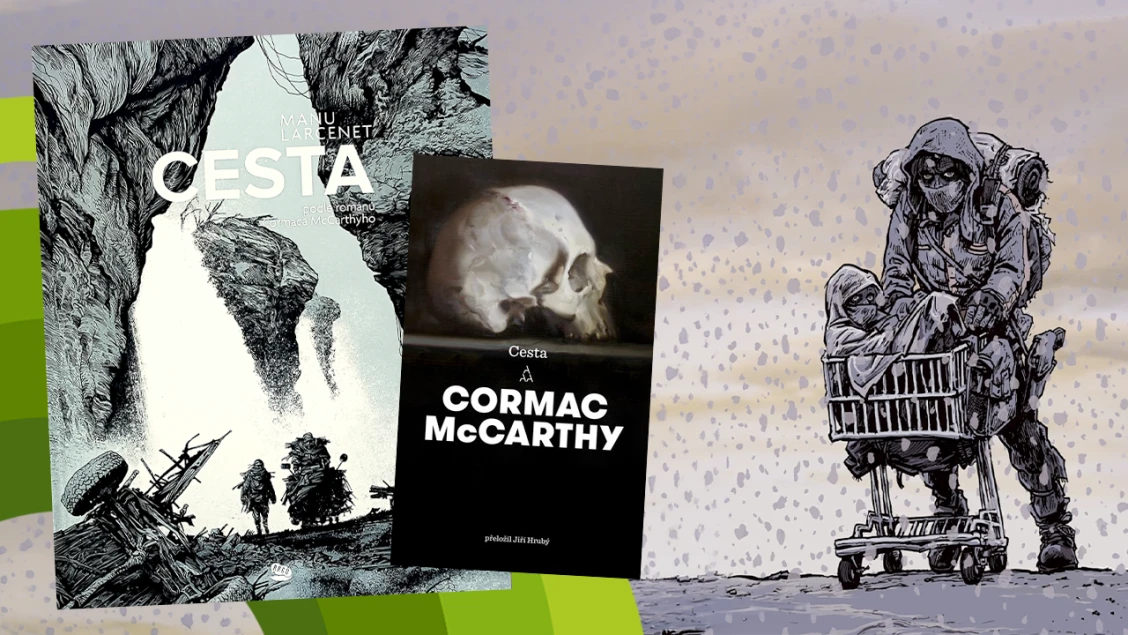
The Road Anniversary: What Did Cormac McCarthy Leave Behind?
Cormac McCarthy's novel The Road celebrates a major anniversary. Remember this post-apo cult classic through the legendary book, film, and the new comic by Lercenet! full article...
1. 7. 2026 Jana Mrkvicová 5 min
How hard is it to publish a book?
Do you want to publish your own book but don't know where to start? Learn about the options from classic publishing to self-publishing and find out how to succeed in the competition. full article...
15. 6. 2026 Michal Dlouhý 9 min