


Jiří Stárek and the Fobos Publishing House
The Fobos brand is part of the Knihy Dobrovský group. It focuses on sci-fi, fantasy, and horror. We interviewed Jiří Stárek from the Fobos imprint.

The Fobos brand is part of the Knihy Dobrovský group. It focuses primarily on adventure literature, sci-fi, fantasy, and horror. We interviewed Jiří Stárek, who, in addition to handling foreign rights at Dobrovský, is in charge of the Fobos imprint.
To start with a trivial question: Why was the Fobos imprint created, what is its primary focus, and who is your target audience?
A few years ago, my colleagues and I decided it would be a good idea to divide our titles into several genre brands or imprints, if you will. The primary reason was clear – to make it easier for readers to navigate our production. However, our colleagues in the marketing department also welcomed the creation of these brands, as this division has made their work easier as well.

As for Fobos, its focus was firmly set from the very beginning. We wanted an imprint dedicated to both international and Czech speculative fiction – that is, science fiction, fantasy, and horror. Our imprint is primarily intended for fans of these genres. Over time, however, many people who were previously unacquainted with fantastic literature have found their way to us, which we are very happy about.
Why the name Fobos? Is this divine son supposed to lead you into war in the book market?
We in the editorial office are pacifists, even if it is “only” about the book market. 😊 The name was the result of a short office brainstorming session with a colleague. We wanted to come up with a simple, punchy name that would unite all three core genres. Fobos means “fear” in Ancient Greek, so we have the horror genre covered. Fobos is also a figure in Greek mythology, which can to some extent (with a bit of a stretch and without wanting to offend anyone) be considered a kind of fantasy. And last but not least, it is also the name of one of the moons of Mars, which allows us to “check off” science fiction as well.
Fobos falls under the Dobrovský brand, which has had Stephen King, the world's most famous and best-selling horror author, in its portfolio for many years. So, I am curious how it happened that an imprint specializing in horror, among other things, was born after all these years?
I have to disappoint you here. Even though I personally would love to, we unfortunately do not publish Stephen King (or his son Joe Hill); that is done by the Beta publishing house.
What is the organizational position of Fobos within the Dobrovský structure, who takes care of the imprint, and is the primary goal to gain new readers for the brand?
As I mentioned, Fobos is one of our twelve genre brands. It is completely equal to the others – whether it is the crime/thriller imprint Vendeta or Kontrast, where we publish world fiction. My colleagues and I in the editorial office share all the imprints; each of us handles and solves different things for them – from selecting titles and arranging licenses to commissioning translations, editing, and proofreading, all the way to graphics and printing. Logically, however, each of us has a favorite, a passion project. For me personally, it is Fobos, because I grew up on horror literature and it is still the best way for me to unwind, even if that might sound strange.
Gaining new readers is one of the goals, but I wouldn't say it's the main one. We primarily want to publish quality speculative fiction that has been missing from the market for some reason and to bring joy to everyone who buys books from Fobos.
Literary horror has certainly seen a boom here in recent years, with small publishing houses like Carcosa, Golden Dog, or Gnóm emerging, which focus on horror and publish remarkable foreign authors. What does a book giant like Dobrovský intend to offer readers of horror literature to grab their attention? Do you reach for more commercially oriented production, titles labeled as bestsellers abroad, or do you follow sales achieved globally? Where is the actual key to saying, “this is exactly what we will publish”?
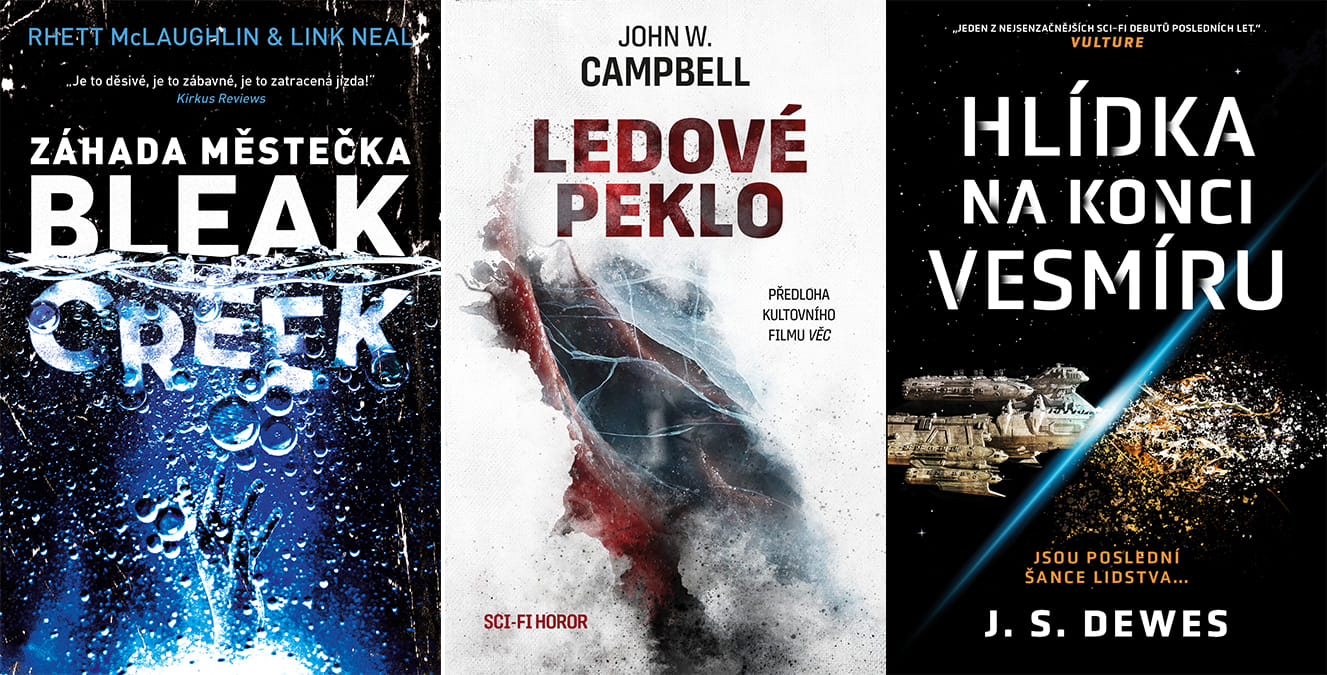
Personally, when selecting new titles, I try not to look at whether a book is a bestseller or what kind of marketing support it has in its country of origin. I reach for texts that catch my interest regardless of their age or commercial focus; the story and reader feedback are primary. As a result, we publish not only international bestsellers but also slightly more demanding genre works (e.g., John Langan or Stephen Graham Jones, whom we are preparing for next year) or classics (The House on the Borderland, The Thing, Psycho) that have either not been published in Czech for a long time or at all.
Who selects the individual titles, and how far in advance is your editorial plan filled?
I identify ninety percent of the titles myself; the rest are recommendations from colleagues, friends, and readers. As for the editorial plan, we try to have a clear picture about three-quarters of a year in advance, which means, for example, that we already know what will be published in June 2023.
It seems to me that the largest part of the books you have published so far are horror novels, but you are slowly starting in other subgenres of speculative fiction as well. Is there a concept behind this, or could it happen in the future that horror will give way to more commercially interesting genres?
The reason is simple. We want to present readers with significant works of world and Czech speculative fiction that we believe are missing from the Czech market, and we don't care if it's horror, sci-fi, or fantasy. That is why we recently published a classic of classics called The Shadow of the Torturer, which was last published here in the nineties and for whose sequels Czech readers were waiting in vain, or Simmons's Ilium. However, horror is the flagship of Fobos, and I am convinced that it will remain so, as the feedback is excellent.
In your offer, if I count correctly, there are twelve books by the Australian writer Darcy Coates. Is she your flagship, the “Stephen King of Fobos”? And why was the choice made for her? Did she break sales records from the beginning, or what is behind it?
I stumbled upon Darcy Coates more or less by accident in the depths of the internet when I was starting at Dobrovský and looking for new interesting authors for us. The author already had a number of books behind her, and almost all of them were well-received by readers, so we gave it a try. I admit that the result pleasantly surprised all of us, and you are right that, at least in terms of sales, Darcy Coates is now our Stephen King.
Recently, more female authors of dark literature have appeared in your portfolio. Is this a current trend? Is there more interest in female authors now, or did they simply not get an opportunity before? How do women, figuratively speaking, refresh horror and speculative fiction in general?
Not only in dark literature, but in other genres as well, female writers are in the majority, at least as far as our production is concerned. I admit that I haven't thought about it much, so I can't even explain it. I think readers also don't care at all whether a book was written by a male or female author; the story, style, imagination, etc., are always essential. That is probably why I can't even answer the question of how women refresh horror. I don't observe any gender differences when reading speculative fiction myself. 😊
Another book that caught my attention is Tender Is the Flesh by Agustina Bazterrica, mainly because of the great cover, which caught my eye at first glance, and I would declare it the cover of the year. And I don't think I'm alone in that. Although I haven't read it yet, it really tempts me. Is it true that a cover can sell regardless of the content (by which I am not belittling any)? What is your experience in general, and what kind of response do you have to this book?
On behalf of my colleagues in the editorial office and our great graphic designer Adéla, thank you for the compliment!
Despite the hackneyed phrase “don't judge a book by its cover,” the cover is very important for sales. I wouldn't say that a book stands or falls with a nice or controversial cover, but without it, it is often difficult to reach readers. Whether we like it or not, they often go by first impressions. It is therefore true that it can sometimes significantly support sales, but at the same time, I think that if a book lacks some elementary quality, nothing will help it. Simply put, you can't get blood from a stone. 😊
This cover is the work of Adéla Korbelářová. Is it worth it to commission a new cover for the domestic edition, or do you more often resort to taking the original cover? What decides that, and what is your overall experience with this?
Whenever we create an editorial plan for the next half-year, we decide for each title individually whether it is worth it to acquire a foreign cover or whether it would be better if we try to think up and create a “better” one, meaning more attractive for the Czech audience. Sometimes the original cover is so great that it would be a sin not to use it. Other times, however, we see at first glance that it wouldn't work with the original, and we put our heads together to come up with something we will be satisfied with. I think that currently, the ratio is about fifty-fifty.
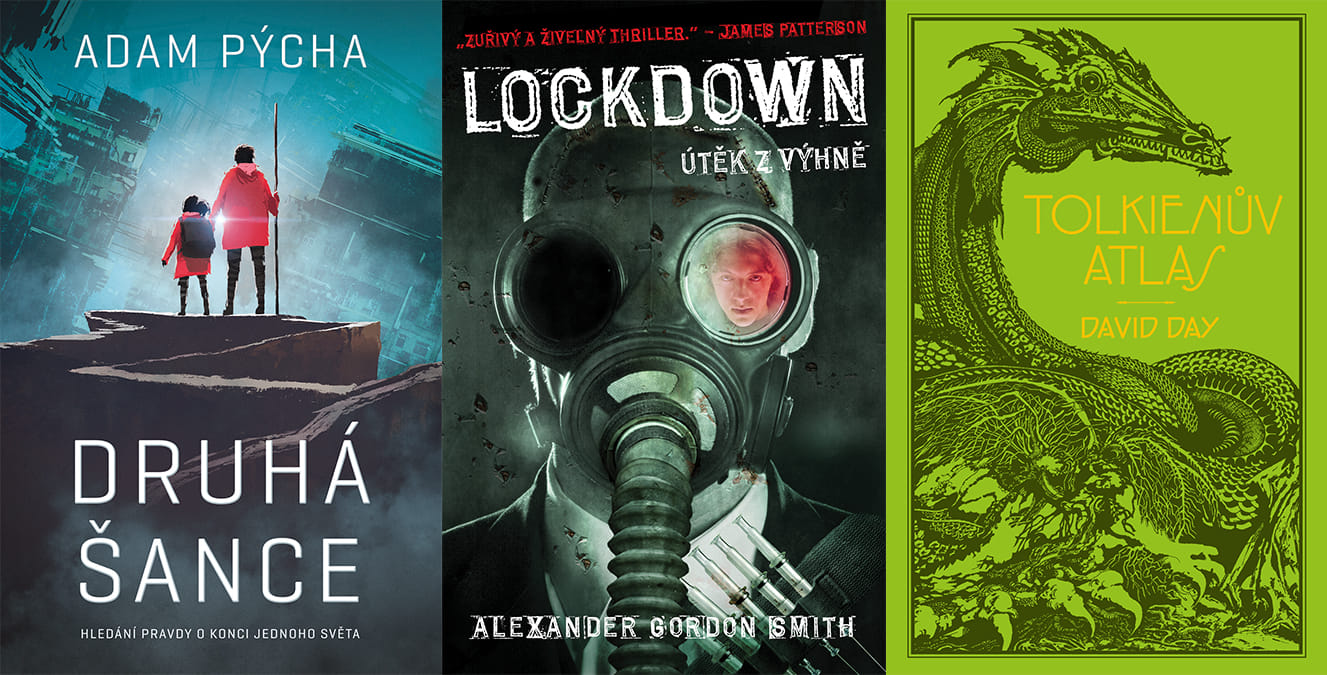
Do you have an author in your production who surprised you significantly from a sales perspective, or conversely, someone from whom you expected a lot in this regard, but who didn't sell according to your expectations? You publish a lot of horror, but does it sell generally as you expected, or do other genres have the upper hand?
For example, Darcy Coates was a surprise because we didn't expect such success, or John Langan, whose style is not very digestible for many people. Likewise, in recent months, we were pleasantly surprised by the success of the aforementioned Agustina Bazterrica and her Tender Is the Flesh, because it is not exactly light reading, but readers – perhaps also thanks to the cover – found their way to the book. A disappointment for me personally was, for example, Shadowland by Peter Straub. A quality novel by a cult author, moreover in a great translation by Petr Kotrle, but sales were weak. Perhaps the fact that Fobos didn't have such a reader base at that time was also to blame.
Otherwise, we can't complain. Horror is one of our most popular genres among readers, and we are proud of it!
The last book I read from you is The Thing by John W. Campbell, which is the basis for the cult film The Thing. At the same time, it is also an “archival piece.” Do you plan to continue diving into the waters of classic horror and speculative fiction?
Definitely yes! One of our goals is to bring genre classics to the market that have been neglected so far… or that haven't been published here for a long time. We are even preparing a smaller project within Fobos, but I'll keep that to myself for now. 😊 In any case, for next year, we are preparing, for example, a new edition of The Exorcist, the first Czech edition of the famous novel The Body Snatchers, whose film adaptations from 1956 and 1978 I love, or the horror classic Burnt Offerings by Robert Marasco. And I'm sure I've forgotten a lot of things…
Speaking of which, a new edition of the interwar novel *The House of a Thousand Floors* by Jan Weiss was also published under the Fobos brand. Is there interest in this pioneering domestic speculative fiction, and are you planning anything else in a similar vein?
Unfortunately, we don't see much interest, and that is also why we are not planning any other similar books for now. We chose *The House* also because we were sorry that it hadn't been published for more than twenty years, which is inexcusable for such a classic.
Books by domestic authors have started to appear in Fobos. Is this another path you want to take?
That's right. In August, we published the great horror novel Pravá bluesová kočka (The True Blues Cat) by Dominik Fiala in Fobos, and we plan to continue collaborating with Czech authors in the future. So, if any of the readers of this interview have a great horror, fantasy, or sci-fi story in their drawer, we would be very happy to evaluate the text. 😊
What other subgenres do you plan to target? I was interested in the alternative history *NSA: National Security Agency*, so I would appreciate something else from this rank, or is it leaning more towards publishing various books linked to the world of J.R.R. Tolkien, which you also offer?
Ghost stories have proven successful for us, and we will definitely continue with those. Likewise, we will continue to focus on “reviving” lesser-known works. Otherwise, I wouldn't say that we will focus on specific subgenres. As I mentioned above, the essential thing will be whether we like the book or not.
The last author I would like to ask about specifically is Dan Simmons. His opus *Ilium* is about to be released; are you also planning the second book of the *Olympos* series or perhaps something else?
Yes, Olympos should be released in April of next year. I would rather keep other plans regarding Dan Simmons to myself for now, so I don't reveal something I don't want to.
With Simmons, I always found it interesting that his individual books have been published here by “almost every publishing house.” What is the problem in this regard? Are rights purchased individually, does the author have no interest in “his own Czech publishing brand,” or what causes the fact that no one has yet attempted a complete edition of his work in a unified design?
I'm not sure what the current situation is, but until a few years ago, it was caused by the fact that the author's portfolio was for some reason divided among several agencies, and therefore, for example, Hyperion could be published by Argo, Summer of Night and The Winter Ghost by us, and A Winter Haunting by Mystery Press. That is why it was not possible for one publisher to release Simmons's complete work – because of that division, it was not possible to have an option on all the other books. I don't know what the situation is now.
It seems to me that the Fobos brand is increasing the production of published titles year by year. Do you plan to continue like this, or are there any limits you won't go beyond?
I think we are currently at the maximum of what we can handle in terms of personnel, so I don't expect us to further increase the number of books published. I would rather focus now on further improving the quality of production and an even more careful selection of titles.
And finally, a hackneyed question: What can readers look forward to in the near and distant future?
Everything, of course! No, I will be more specific after all. My number one for the first half of next year is the new Robert McCammon and his magnum opus Boy's Life, which in many ways reminded me of the best works of Stephen King (especially *It* or the novella *The Body*). Growing up in an American small town in the early sixties, an apparent idyll that soon falls into ruins, mystery, hidden danger.
I am also immensely looking forward to the short story collection Dreadful Consequences by Ramsey Campbell, which the author compiled specifically for us, to the second volume of The Book of the New Sun called The Claw of the Conciliator, to the slightly more commercial but excellent horror or thriller Hidden Pictures by Jason Rekulak, or to the first Czech editions of classics such as the aforementioned Invasion of the Body Snatchers or Koontz's early novel Shattered.
And from the more distant future, I can't wait for the highly-rated horror She Has a Broken Thing Where Her Heart Should Be by J. D. Barker or the excellent debut sci-fi The Measure by Nikki Erlick.
author: Roman Bílek
Roman Bílek
Autor článků na imago.cz
You might also like

Mysteries of the City of Kalus: An Interview with the Author of a Massive RPG Campaign
What is it like to write a massive RPG campaign? An interview with Sparkle about the Mysteries of the City of Kalus, the transition from classic to postmodern fantasy, and inspiration from real life. full article...
Interview 15. 12. 2025 Karel Krajča 5 min
Interview: Michal Dlouhý on his debut novel, The Divided City
An interview with Michal Dlouhý about his debut, The Divided City. How the book was created, what inspired him, and why the wizard loses his power. full article...
Interview 4. 11. 2025 Karel Krajča 5 min
The second Dračí Hlídka gamebook: An interview with the author
The Ztracené město Galadu gamebook is darker, more sophisticated, and more personal – and the author also reveals plans for its successor. full article...
Interview 30. 7. 2025 Karel Krajča 8 min