


The Aesthetics and Symbolism of Plate Armor
An unconventional talk by historian Martin Klecán about the decoration of plate armor in the Middle Ages and the early modern period, about symbolism and the PR significance of armor with specific examples from museums.
My name is Martin Klecán, I work as a museum historian at the Strakonice Museum, and among other things, I focus on medieval warfare and equipment. I love connecting this topic with pop culture because so many things—whether material or ideological—have seeped into the modern era. Conversely, some aspects of medieval entertainment aren't far from today's concept of culture. If you look closely, a knightly tournament has surprisingly much in common with a modern con.
The following lines deal mainly with the aesthetic side of armor and its decoration. They weren't written as a manual saying, "this is how it's done and this is how it must look." I wrote this article simply because it might be useful to someone someday. Whether you're a living history enthusiast, designing a character for a game, or just interested in the topic. It's not a set of rules, but ideally a source of information and inspiration, as well as a bit of insight into how the owner or maker thought about the armor.
If the article catches your interest and you want to ask me something, you can find me online under the nickname Hrafna, or on Instagram as @hrafmart.
Armor as a Work of Art
The main function of armor was always to keep the wearer alive or at least prevent severe injuries. And although this dictated the form of the armor most, the aesthetic side gradually grew in importance—all the more as technology improved. There isn't much to decorate on a chainmail shirt, but plate armor is a different story.
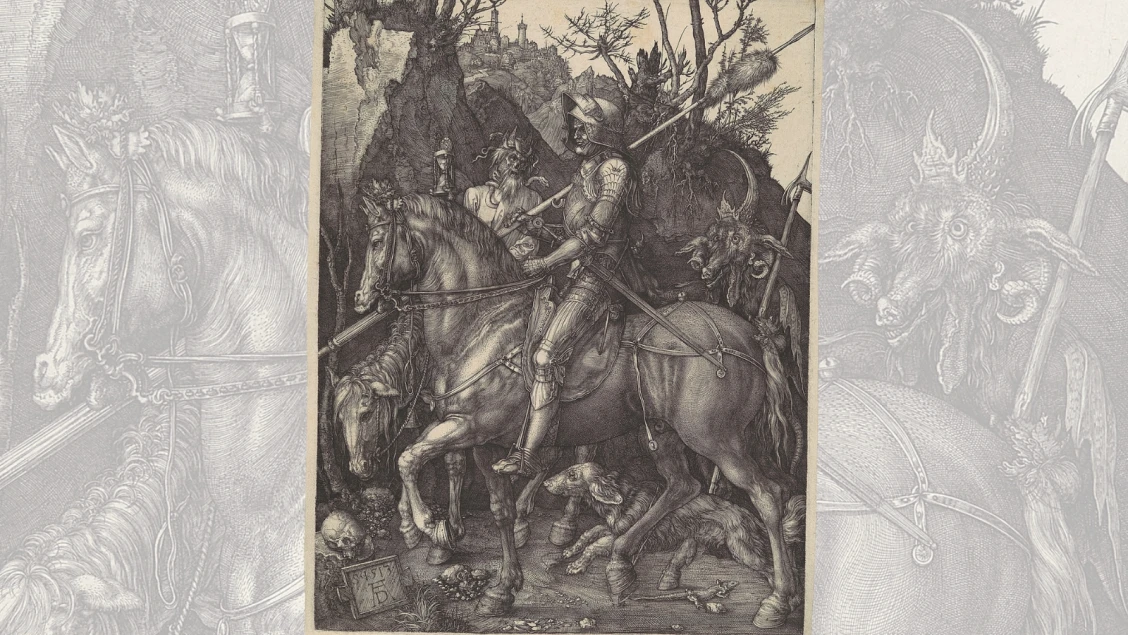
The technology of decoration itself also improved—armorers gradually discovered ways not only to polish and engrave metal but also to etch and coat it with other metals. They began collaborating with goldsmiths and artists. We have preserved sketches of weapons and design proposals from many artists who earned extra money this way. Albrecht Dürer, for example, devoted himself to armor and weapons in great detail in his work.
Albrecht Dürer's painting titled Knight, Death and the Devil, where you can clearly see his detailed focus on the knight's armor.
Lavishly decorated armor didn't just serve as an advertisement for the wearer's wealth; it communicated many other meanings. So, let's set aside the protective aspect for a moment and look together at how armor spoke and what it said about its owner.
Shape and Silhouette
Armor wasn't just a canvas or a "coat rack for decorations"; it often achieved the quality of a sculpture in its own right. As fashion and clothing changed over time, emphasizing different body attributes and characteristics, the silhouette of the armor transformed as well. While maximum protection for the wearer was the priority, meaning changes had their limits, this didn't stop armorers from imbuing steel with unique shapes, emphasizing certain physical characteristics of the owner, or adopting morphology from various art forms.
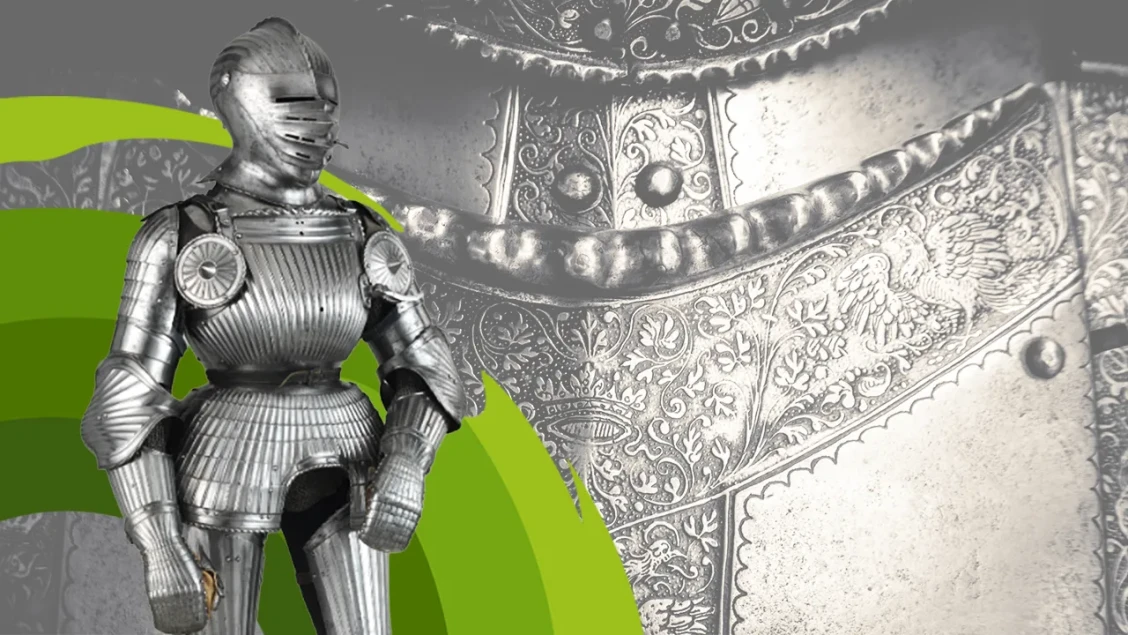
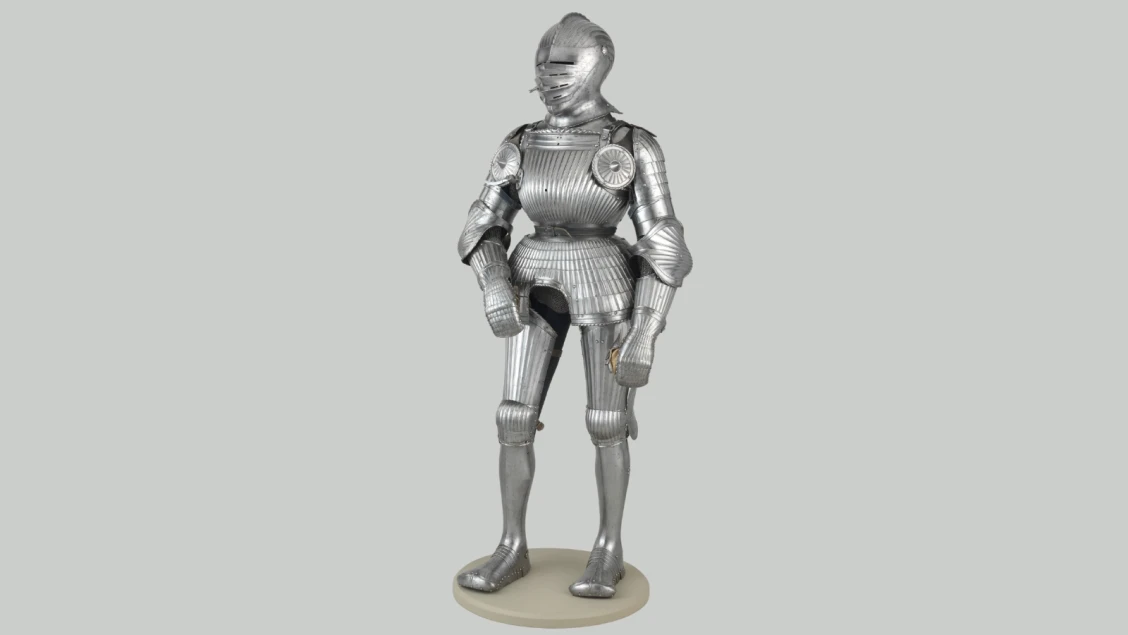
During the Renaissance, fluting became widespread, especially on German armor. These were grooves that ran across the plates, providing structural strength. They also had an aesthetic function; they guided the viewer's eye, much like a well-thought-out composition in a painting. At the same time, there is a parallel with classical columns, where fluting was also heavily used. This similarity will surprise few, especially knowing how much the Renaissance was inspired by antiquity in many respects.
Fluted German armor from the Metropolitan Museum of Art, NY, dated c. 1525.
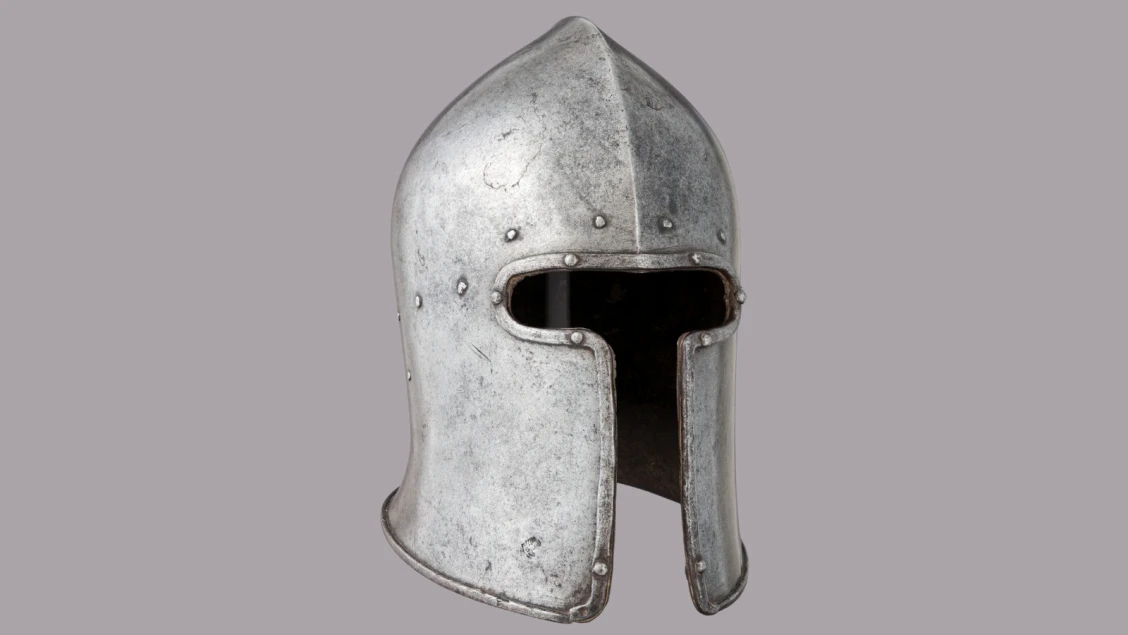
We don't have to go far to find much more literal inspiration from antiquity. In Italy, a type of helmet called the barbuta developed, which practically copied the iconic look of the Corinthian helmet—especially with its T-shaped visor. Given that helmet design was a constant battle between maximum face protection and minimal restriction of vision and breathing, it is quite surprising that this rather practical design was revived only in Italy and only for a short time.
Barbuta-style helmet from the Metropolitan Museum of Art, NY, dated c. 1460.
Armor often copied the shapes of civilian clothing as well. A shining example is English armor from the time of Elizabeth I. The ideal shape of the male body had broad shoulders, relatively wide hips, and elegant legs. In civilian clothing, stockings and, to use modern terminology, puffed shorts became popular; shoulder pads were a must. The shape of the armor tried to adapt to this, and it must be said, successfully. Technology had advanced significantly by then, and the royal workshop in Greenwich, which was considered the English peak, knew how to take full advantage of it.
A curious fashion trend that can be observed in both fabric and metal versions was the so-called codpiece. Essentially, it was a piece of clothing emphasizing the wearer's masculinity. One might sarcastically note that the metal version of this component perhaps made more sense in the end.
However, we also encounter cases where not just the overall silhouette was translated into steel, but practically the entire outfit. From the end of the 15th century, a large part of the Holy Roman Empire's army consisted of so-called landsknechts. These were mercenaries who were famous not only for their combat performance but also for their very extravagant fashion. Their trademark was puffed doublets with balloon sleeves and long slashes, along with similarly styled trousers.
Several armors have been preserved that truly capture the shapes of puffed fabric, such as this one from the Kunsthistorisches Museum, dated to 1523.
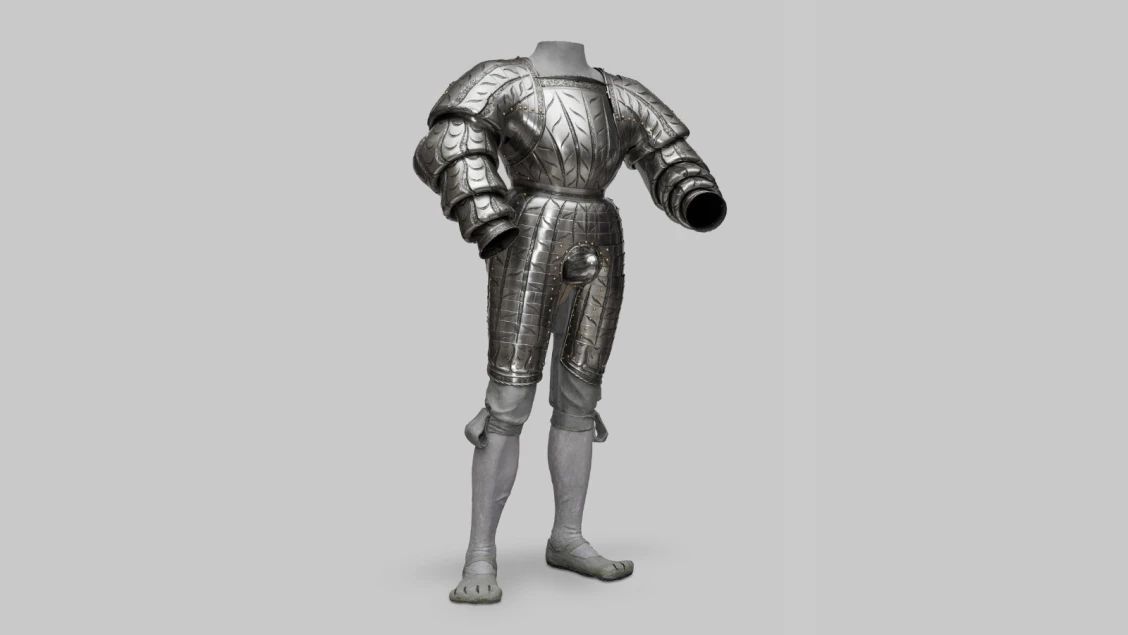
Armorers went into such detail that, upon careful examination, one can find fine patterns on the metal surface imitating decorative stitches in fabric.
Although the layer of sheet metal was sometimes the only thing separating the owner from a terrifying injury or death, it didn't mean everything had to be subordinated to a single purpose. Armor makers knew well that they could gild armor from top to bottom, but if the basic shape didn't meet the high aesthetic standards of the time, it would be of no use.
An aristocrat simply wanted to look good, and after all, the armorer and his entire workshop wanted to show off too. An elegant and original shape of the whole was therefore the first and perhaps most important building block. It certainly cannot be said that armorers let themselves be bound by conventions.
Surface Finish and Painted Armor
The aesthetic side of armor started with its surface finish. Polishing was relatively time-consuming and not necessary to ensure the strength of the armor. Skipping this step could bring significant savings. At the other end of the scale was a mirror finish, which could be achieved through hours of persistent work. The knight thus signaled that he could afford to pay not only for exclusive craftsmanship but also for the people who would take care of his armor. On such a polished breastplate, every scratch or speck of rust was very visible, and the necessity of constant maintenance thus signaled the wearer's status.
One possible surface treatment was blackening (or bluing). Essentially, this was controlled oxidation—usually by heat (today the same result can be achieved chemically). It could also be combined with polishing—if an already polished surface was blackened this way, it retained its shine. Besides the aesthetic effect, it also had a practical advantage—the surface was protected against corrosion. However, even blackening required maintenance; combat scars were quite prominent on it.
Extensive possibilities to show off wealth while distinguishing oneself from others were also provided by other types of armor. Before European metallurgy moved to producing large pieces of steel from which it was possible to reliably create cuirasses and other large pieces of armor, brigandines gained great popularity. This was a type of doublet whose interior was made of a number of smaller metal plates riveted to an outer fabric layer and overlapping each other. The technology was good enough that brigandines coexisted with classic plate armor for a long time.
Left: Italian brigandine, around 1400 (Metropolitan Museum of Art, NY) Right: Blackened (or blued) armor richly decorated with gold, originally belonging to George Clifford, turn of the 16th and 17th centuries.
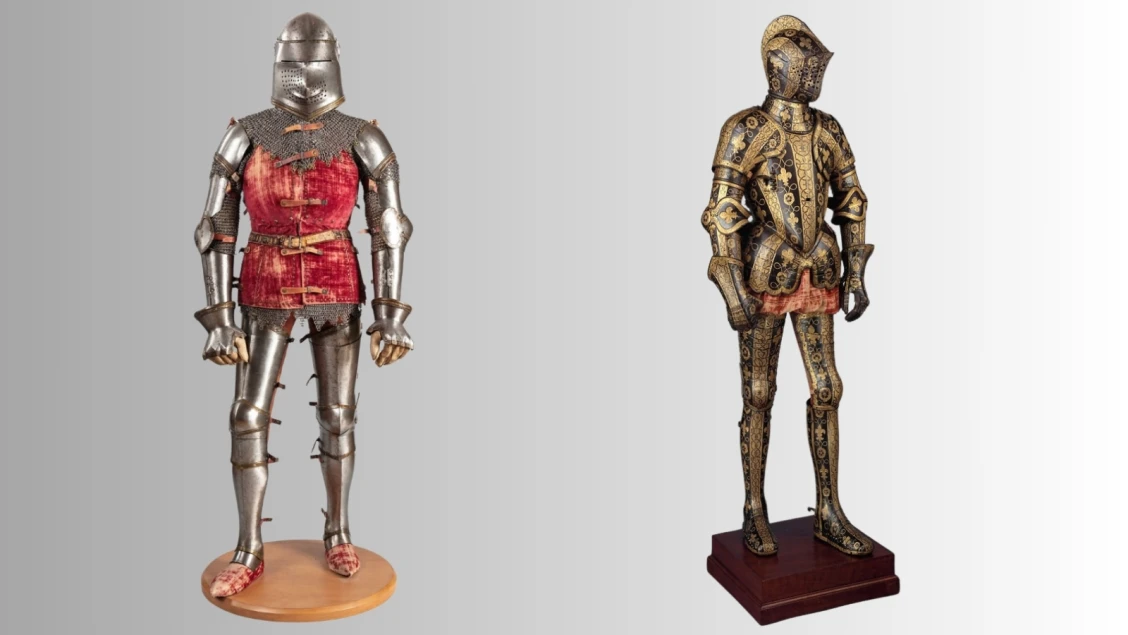
It was precisely the outer fabric layer that provided a large space where the owner could express himself. Starting with the quality of the fabric (the most expensive examples were made of silk), through the colors and patterns of the fabrics, to the artistic rendering of the rivet heads.
The desire for a distinctive look was not characteristic only of nobles, but probably also of ordinary soldiers. A painted sallet has been preserved, for example, which is decorated with the face of some kind of toothy monster. It was evidently an attempt to intimidate the opponent, but at the same time, it is a beautiful proof that people have had a need to customize their equipment to their own taste since time immemorial. This need has nothing to do with the owner's financial means. If someone couldn't afford expensive polishing or other visual luxuries, they got some paint, and then it was just a matter of skill.
Painted sallet, 15th century (Wallace Collection).
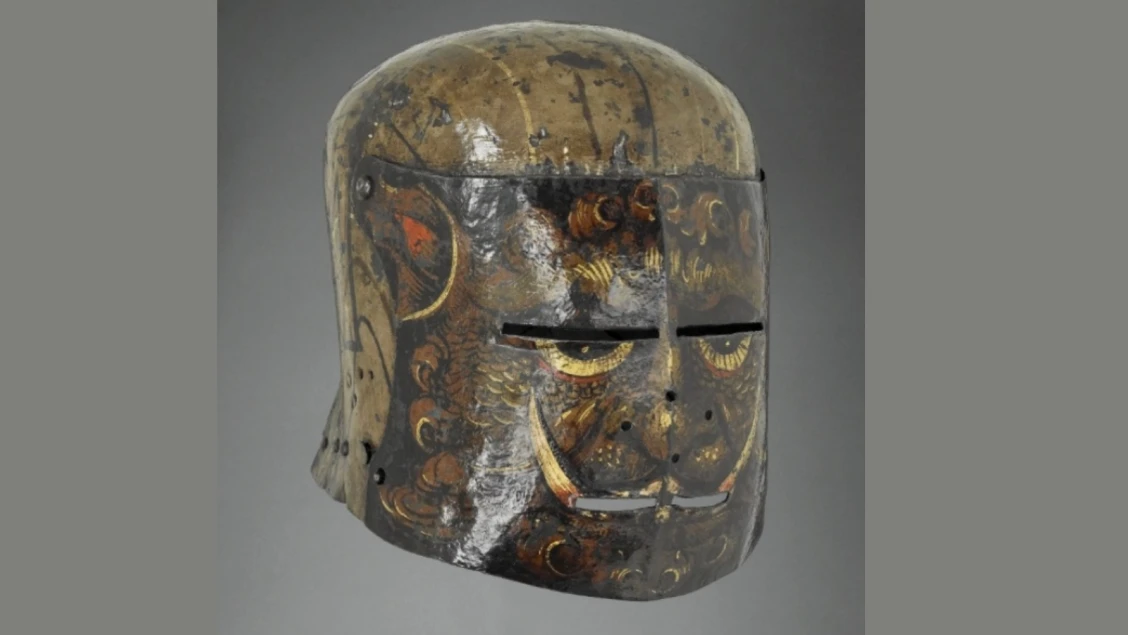
It is speculated that more painted armors may have existed in history and that we lost them during the Victorian era. English aristocrats of that time had their own idea of what armor should look like, and if it differed from these ideas, they simply modified it, which included removing the original colors. We know about this Victorian practice; what we don't know is how many paintings fell victim to it. Determining how common these color modifications were is therefore very difficult.
People in the Middle Ages loved decorations and colors of all kinds; even the cheapest leather goods were decorated with, for example, stamped patterns. The quality of the stamping naturally grew with the price—the lower the price, the more inconsistent it was—patterns lost regularity, and the depth of the stamping differed almost every centimeter. We know that, for example, castle interiors were full of all colors (bare walls are usually the result of 19th-century heritage conservation), but that is again in the context of the aristocracy. However, finds of decorated leather goods of poor quality tell us quite clearly that every free surface sooner or later became a canvas for someone. With this knowledge, it cannot be ruled out that colorful painting also decorated the armor of poorer soldiers.
Self-Presentation and PR
The visual design of armor could also serve as a PR tool. A perfect example is the armor of Holy Roman Emperor Maximilian I. During his life, he had many complete armors and parts of them made, some for himself, some for family members, others as diplomatic gifts.
The oldest preserved armor is the one Maximilian had made just after his marriage to Mary of Burgundy. He arrived at the Burgundian court as a foreigner and without assets, in the shadow of a looming French invasion. To gain the favor of the Burgundian nobility, he needed not only to repel the French but also to use the opportunity to present himself as the best of the best.
This new armor (likely paid for with his wife's money, although Maximilian regularly left behind high debts), very expensive and precisely crafted to the smallest detail, was meant to contribute to this and enhance his image as a savior. At that moment, it literally served as his superhero suit. At the same time, it bore the clear signature of German armorers—Maximilian didn't try to hide his origin; on the contrary, he clearly said: "Yes, I am a foreigner, but I know exactly what I am doing. I am your best hope, so listen and I will lead you to victory." Only in later years did he have other armor made in the style of the local nobility. Symbolically, he was growing into his acquired domain.
In connection with Maximilian, his personal emblem—the pomegranate—also appears, not only in paintings but also as a motif etched into some of his armors. According to Johannes Stabius, it symbolized inner qualities that are hidden at first glance but manifest day after day. When Maximilian became Holy Roman Emperor, the pomegranate could be interpreted as a certain metaphor for his empire—many different states, each with its own qualities, all united into one whole. But the apple was not Maximilian's heraldic sign; it was an emblem he chose for himself and used as a kind of metaphorical expression of his attitudes and beliefs. The pomegranate also has religious connotations, symbolizing the wounds of Christ. We observe the popularity of religious motifs in almost all contexts, so it is certainly no surprise in armor either.
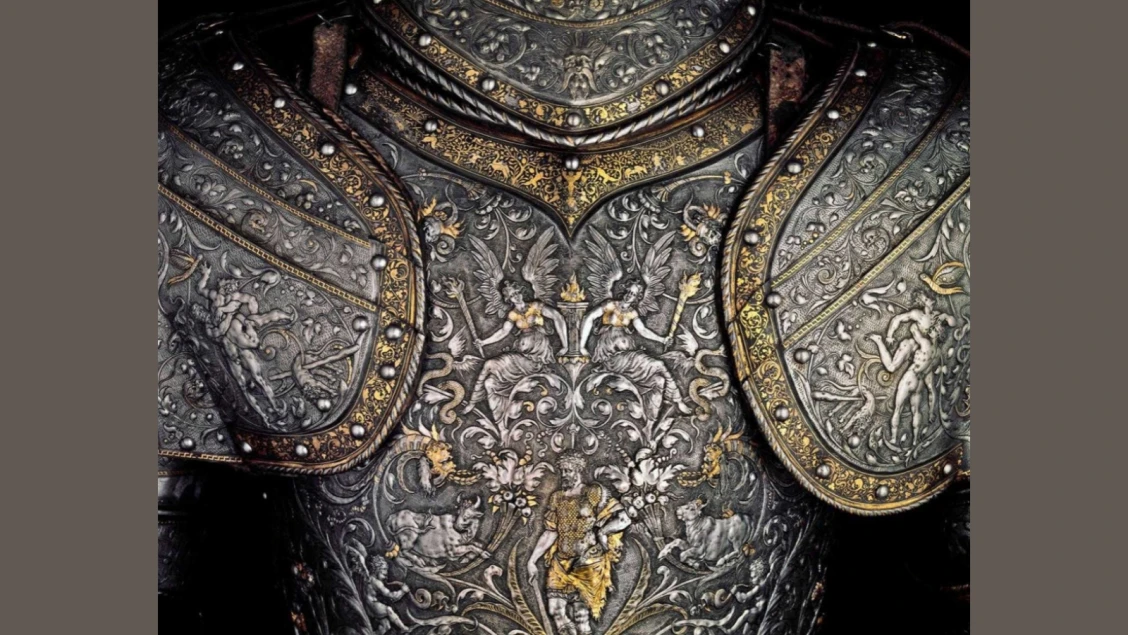
And Maximilian I was far from the only one who created his public image through armor while presenting his ideals. On the famous "Hercules Armor," his namesake and also Holy Roman Emperor Maximilian II had the Greek hero Heracles immortalized performing his twelve labors. He wasn't just obviously showing off his wealth (although that certainly played a role). The administration of the Holy Roman Empire was a demanding task in itself, and with this armor, Maximilian symbolically compared himself and Heracles as a pair of heroes performing the most demanding tasks. At the same time, he showed his own cultural outlook and education.
"Hercules" armor of Emperor Maximilian II, dated to 1555 (Kunsthistorisches Museum Wien)
A final tidbit: Emperors didn't necessarily just enjoy expensive and complex decorations. For example, Charles V liked stripes, which can be seen not only in portraits but also on some armors.
We're not done yet! If you enjoyed the talk about the aesthetic significance of armor, you can look forward to the sequel. In the second part, we will look at armor decorations in the context of the tournament and whether armor could also serve as an intimidation tool.
Martin Klecán
Autor článků na imago.cz
You might also like
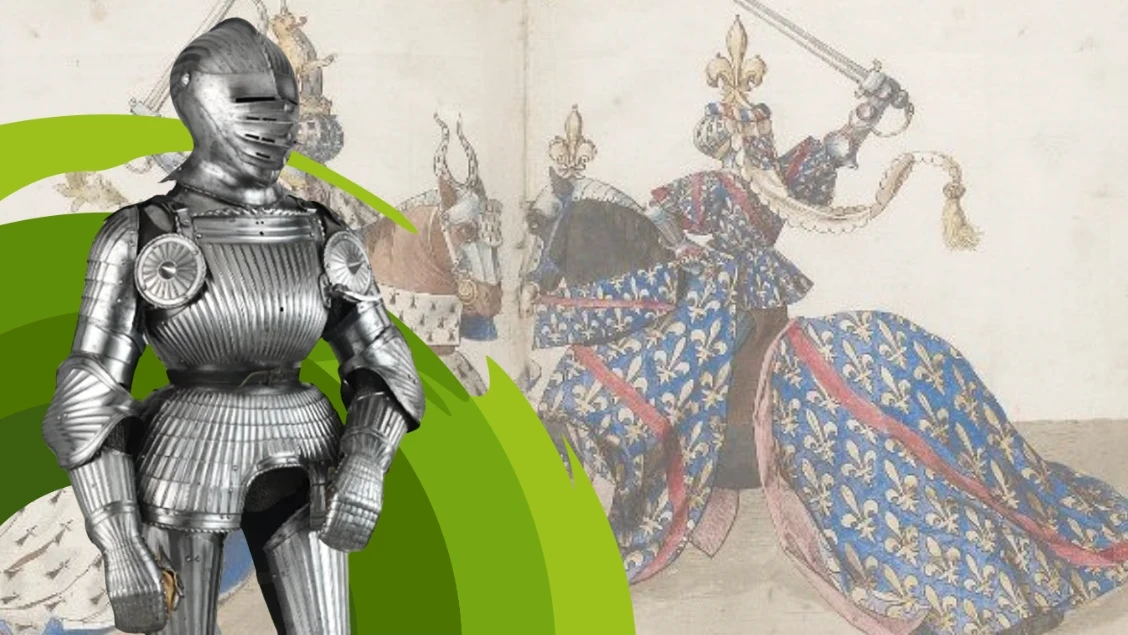
The Meaning and Methods of Tournament Armor Decoration
Peek into the world of noble PR and knightly alter egos at tournaments. Find out why armor didn't have to look scary and why perfect symmetry left craftsmen of the time cold. Inspiration for living history fans and game developers. full article...
27. 6. 2026 Martin Klecán 11 min
Non Sancti Olomouc: Medieval Cuisine Full of Flavor
About medieval cuisine with the Non Sancti Olomouc group, which focuses on traditional craft demonstrations, and a tip for the book Gastronomy of the Czech Middle Ages. full article...
Non-fiction journalism 16. 6. 2025 Kristýna Totová 4 min