


Roman Tilcer and the Medusa Publishing House
Medusa is an independent publisher focusing on fantasy, horror, and "weird" literature. Roman Bílek sat down for an interview with the head of Medusa, Roman Tilcer.

Medusa Publishing is a new independent publisher focusing on fantasy, horror, and other "weird" literature. Although they don't have many books under their belt yet, they have already managed to make an impression. They aren't afraid of titles that ask uncomfortable questions about the dark sides of human sexuality. Roman Bílek sat down for an interview with the head of Medusa—translator and now publisher Roman Tilcer.
Let's start from the beginning. Was translation always the clear choice for you, or did you want to be a garbage collector or an astronaut when you were a kid?
Yes, astronaut and garbage collector both fit. I also considered being a bank robber, but unfortunately, we aren't in the Wild West. In the end, I studied to be a teacher for the second stage of elementary school, specifically Czech and family education (now called health education).
How did that lead to translation as a career? Did you start with shorter texts, or did you jump straight into the deep end?
It started about twenty years ago on a discussion forum when a fellow enthusiast and I decided to create new translations of Howard's Conan the Barbarian, because Jan Kantůrek's translations were unavailable at the time (and besides, Kantůrek worked with texts edited by Howard's successors and didn't translate everything found in Howard's estate). We naively thought we would publish the work ourselves or sell it to someone. I translated a few short stories at a snail's pace before I realized it was going nowhere. But I was hooked on translating, so I tried to find other opportunities.
When Jeff Noon's Vurt was published by Návrat in 2004, it blew me away so much that I immediately started translating the loose sequel Pollen—without even asking the publisher if they wanted to release it or if someone else was already working on it. They were. Just like Vurt, it was translated by Tomáš Richtr, naturally better and faster than me. But I was an incorrigible nutcase with no idea how the book business worked, so I didn't hesitate and started working on the next loose sequel, or rather prequel, Automated Alice. I translated the whole novel, and then it turned out Návrat wasn't interested. I tried to place it elsewhere, again without success. So I jumped into something else—Elric of Melniboné, because only two volumes of this essential fantasy series by Michael Moorcock had been published here, and I wanted Czech readers to know the whole thing.
I didn't place Elric back then either (though I am working on a new edition right now). I approached various publishers, eventually even without offering specific titles, but no one wanted my work. Finally, I sent an excerpt from Automated Alice to the Jiří Levý Competition, organized annually by the Obec překladatelů (Translators' Association), and I won third prize. That was in 2008. I tried approaching publishers one more time, and Martin Šust, then employed at Laser, decided to give me a chance. He tested me on a few shorter texts, and we subsequently established a long-term collaboration.
(And a small technical note: literary translators are usually not employees. They generally work as freelancers. But it can be done without that too.)
What was the first book you translated, and how do you view your work with the benefit of hindsight?
The first book I translated entirely on my own (and got paid for) was the short story collection Elak of Atlantis by Henry Kuttner. Today, I would definitely handle some things differently—at the very least, the poems Kuttner quoted needed it badly. And I definitely threw in some awkward subordinate clauses. I can't evaluate it better now; I'd have to read it again. But it probably wasn't a total disaster—I know there are people who liked that translation (greetings to Boris Hokr). I remember that book fondly because it was the first and last time I didn't have to worry about a deadline and enjoyed it completely stress-free.
Did you start straight with fantasy, or do you have experience with other genres? Were you a "fantasy fan" from the start, or did you get into this type of literature thanks to translation jobs?
I've been devouring fantasy since childhood, so I wanted to translate it too. I gained more experience with other genres only after Laser, under the leadership of Tomáš Jirkovský, had to shut down. I translated several detective stories before returning to my beloved fantasy at Perseus and Host. And then Laser rose from the dead and started serving me sequels to series we hadn't managed to finish before, so I can enjoy it to the fullest again.
Do you think someone can become a book translator if they didn't fall in love with reading at some point? Do you know any colleagues who just do it "robotically" as a job without being particularly interested in literature?
Anything is probably possible, but I don't know anyone like that. Literary translation is hard work; you spend a lot of time on it, and the fees aren't high (compared to so-called commercial translations, they are downright ridiculous). It's a job for the passionate. If you don't love it, you won't last.
I know you're a big fan of R. E. Howard. Who are your other "favorites" without whom you'd feel deprived if you hadn't found your way to them?
I've already mentioned the main ones—Michael Moorcock, Jeff Noon. Then maybe Lewis Carroll, Roger Zelazny. From the darker side, H. P. Lovecraft, Thomas Ligotti. Outside of fantasy, Vladimir Nabokov, Ladislav Fuks, Henry Rollins, W. S. Burroughs, Eric Paul… Tricky question! You have no idea how long I edited this answer so the list wouldn't reach unbearable proportions.
The general image of a translator is an antisocial weirdo who sits in books until they ruin their eyesight. How are you doing? And how do you relax from all those books, sentences, words, and letters?
I am exactly that antisocial weirdo. After working on a translation, I like to relax with a good book! To spice it up, I read a comic book now and then. Lately, I've been translating late into the night because my daughters keep me busy during the day—which means after work, I usually just collapse into bed and don't read anymore. I compensate by listening to audiobooks while walking the dog or running.
I started running so I wouldn't completely wither away in my translator's chair. It's my biggest relaxation now because I either listen to a short story or put on some music and turn off my brain.
I also like to sing—usually while cooking, cleaning, or doing some other activity.
Not long ago, you founded your own publishing house, Medusa. What led you to it, and how would you characterize the direction you intend to take as a publisher?
I wanted to make books a long time ago, but I wasn't in a hurry; I lacked the necessary impulse. That came with the pandemic. It looked like the end of the world for a while, so I told myself there was no point in putting it off anymore. Besides, everyone was learning to bake bread and such, and I wanted to learn something new too! No, seriously, there was also the fact that when bookstores closed, money stopped flowing through the book world, and many translators had their projects suspended or canceled because there wouldn't be money for fees. I didn't want to wait until it happened to me, so I embarked on this madness.
As for the direction—I like weird books that break away from traditional templates, texts that aren't cookie-cutter but bring something new and fresh. I want to bring gems to our market that wouldn't have a chance at mainstream publishers and, without the help of an enthusiast, would likely never reach us because they are too idiosyncratic and lack that bestseller potential.
Regarding genre focus, I don't like labeling, which is why I naturally lean toward weird fiction. It takes what it needs from horror, fantasy, and sci-fi and knows how to connect it beautifully. Moreover, these texts are often not "just" entertaining but also possess literary qualities that non-genre readers usually look for. However, I wouldn't want to limit myself only to the "weird." I have fairy-tale fantasy, bizarre or decadent works, detective stories, adventure stories, and completely non-genre things in my sights. I'm just proceeding at a snail's pace because I do publishing in my free time, and I don't have much of that, so my esteemed readership will have to wait a while for any branching out.
Since you only have two titles in your portfolio so far, introduce them briefly.
The first one released was Grass by American author Anya Martin. It's the story of a woman whose ex-husband dies—a man she spent many years with but who later became a domestic abuser. And because there is no one else to take care of his final affairs, she takes it on. We meet her at a moment when she thought she had closed this unpleasant chapter of her life. But as it turns out, the problem wasn't so much solved as it was repressed, and she has to start processing her trauma all over again. She locks herself at home, and to relieve stress, she smokes grass—and then strange things start to happen, because she apparently didn't return from the morgue, where she went to identify her ex, quite alone.
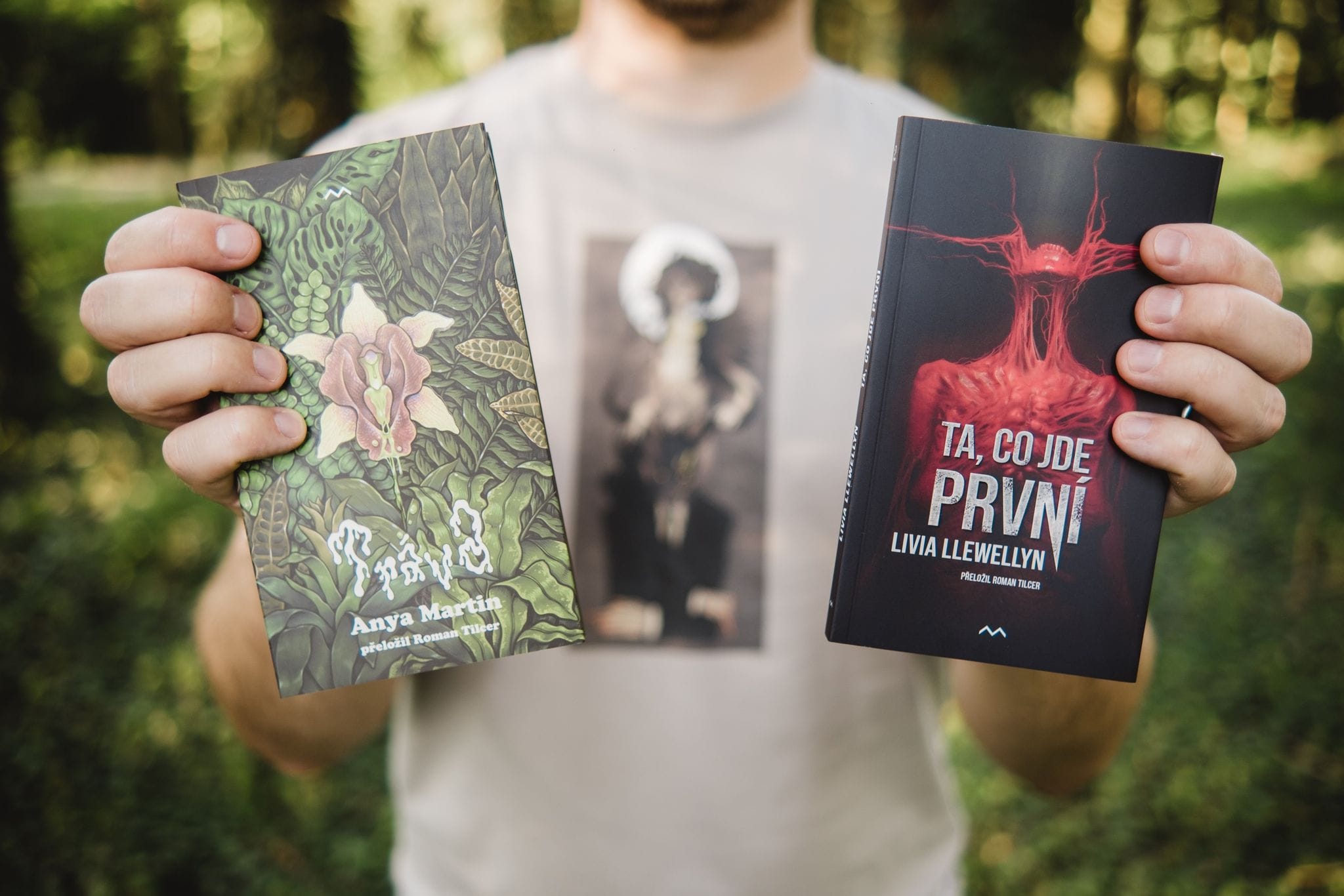
The second piece is, ironically, The One Who Goes First by another American author, Livia Llewellyn. It tells the story of a frustrated employee at a publishing house who has had enough of her soul-crushing job. To make matters worse, she lives in a dirty industrial megalopolis in a world that has been infiltrated by Lovecraftian entities. And she has her last day at work ahead of her, perhaps her last day ever, because the Ministry of Maternity has decided it's time to take the city's connection to mysterious myths to the next level. Our anti-heroine, however, is tougher than she might seem.
Both books are novellas in pocket format. Is this a direction you intend to stick to, or do you plan on releasing big tomes? Why did you actually start with this small format?
I like these shorter texts; I'm not much for fluff, and I like it when there isn't a word too many in a story. I'm probably a bit scarred by the fact that I don't have as much time to read as I'd like—all the more reason I appreciate well-written short stories and novellas. I would also say that the novella format is absolutely ideal for the themes I want to focus on.
As for physical dimensions, I really wanted the books to fit in a pocket. I don't go anywhere without a book; I take something to read wherever I go, and a pocket-sized book is always more user-friendly than one that requires luggage.
I don't rule out thick volumes in the future, but I'm not actively seeking them out either. My main goal is for the book to simply be good.
Both books are by female authors. Do you plan to specialize in women's literature? Why did you choose women? Do you think their way of thinking and writing is something that's missing here? What fascinates you about it?
Within weird fiction, for example, women are a breath of fresh air that breathes new life into the genre. Anya Martin is one of those who know how to fully utilize the means of the weird, not to evoke the now well-known horror on the macro-scale of the vast universe, but in the microcosm of intimate relationships.
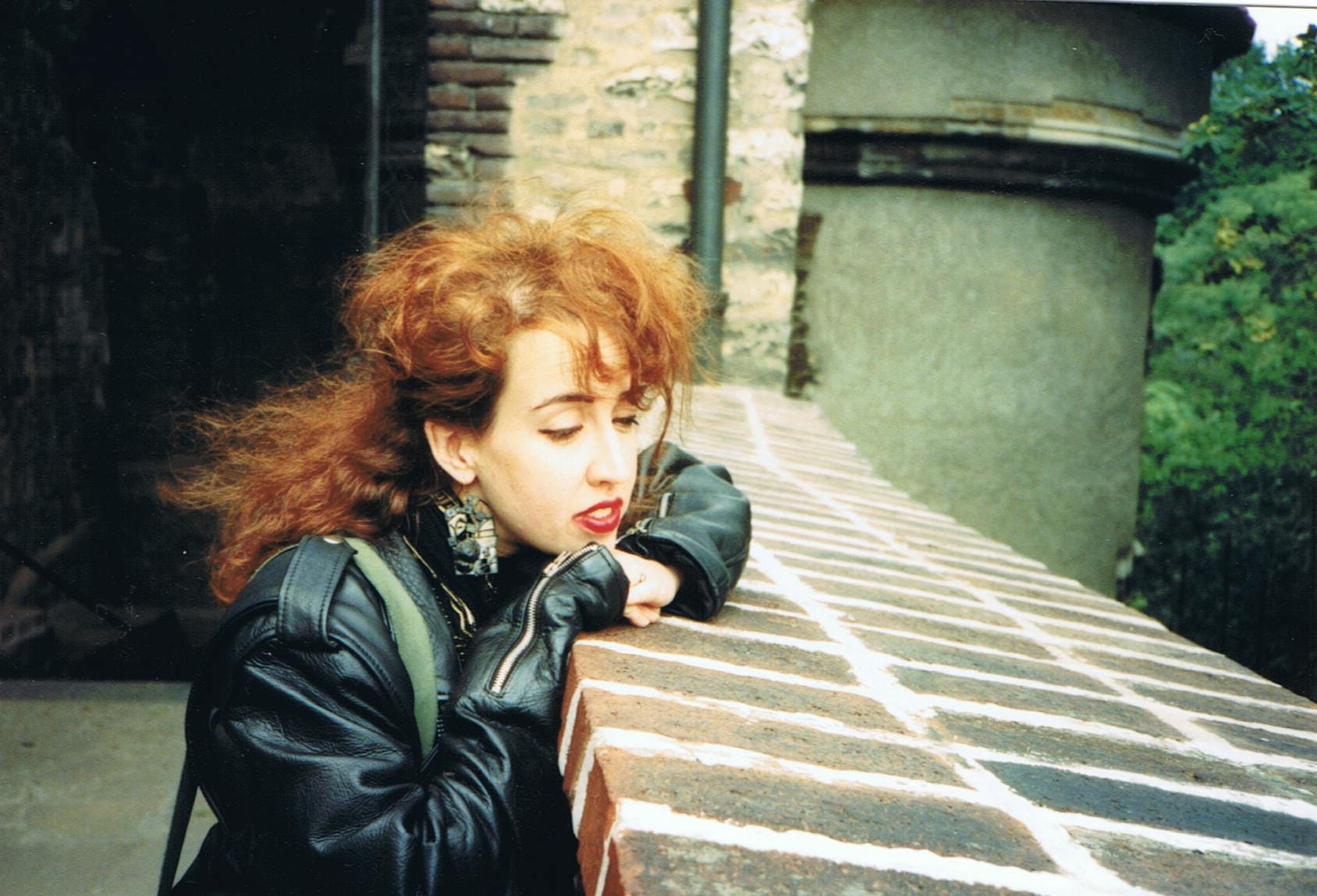 Anya Martin
Livia Llewellyn is a female answer to Lovecraft—that really interests me. Lovecraft seemed to want nothing to do with women and avoided them in his work. And Llewellyn can easily write a full-blooded Lovecraftian story with all the trimmings, but she puts a woman in the lead role, and the sources of fear for her are often female—stemming, for example, from our reproductive biology. When you set something like that in the world of the Cthulhu Mythos, unprecedented horrors await you.
As I say, a breath of fresh air instead of endlessly rehashing the same old things. And I also wanted Medusa (at least for now, in its main edition) to focus on stories of victims. Here, women have a sad advantage over men—I would like to focus my attention on, for example, the darker sides of human sexuality.
But to be clear, I have nothing against men, and I will undoubtedly publish some male author eventually. I'm even eyeing some non-binary individuals, while we're at it.
In both books, I was struck by the musical playlist provided directly by the authors, which presents recordings that created a creative atmosphere and mood for them while writing. How did you come up with this remarkable idea, and do you intend to continue it? Did you listen to the playlists, and did any music you hadn't known before catch your attention?
For the first book, Grass, the idea to add a playlist came from Anya Martin herself. We were talking about how I wanted to supplement her novella with some bonus text because I think it's truly exceptional. I wanted to emphasize this uniqueness (which, by the way, is one of the reasons I published Grass separately and not in a collection where it would be one text among many—I wanted readers to focus fully on it and have nothing distract their attention), so we agreed to approach another excellent author, Gwendolyn Kiste, to see if she would write a foreword for us.
Anya subsequently came up with the idea of writing an afterword for the Czech edition as well, in which she explains how the novella was created and how personal and inspired by real events it is. And later, she thought of adding a soundtrack, and I was thrilled by the idea because Anya is, among other things, a music journalist; she loves music and has a great overview of it. I finally received the playlist when I had the translation more or less finished, but I listened to it while I was doing the editorial work, and I gradually fell in love with the vast majority of the tracks. Sometimes I play the soundtrack just like that, as a sort of compilation album.
Livia Llewellyn mentioned in a podcast that she creates playlists for everything she writes—that couldn't be ignored. Just like in the case of Grass, I didn't know many of the tracks, and I grew very fond of most of them.
The question is whether to continue with the playlists for other books. I'll probably only try to do it within this edition (Edition M), which should become a sort of showcase for Medusa. Or rather, I will always ask the author what they think. In the case of authors who are no longer with us, there probably won't be a playlist.
How do you personally perceive the position and contribution of small publishing houses in our book market? And what kind of feedback are you getting on the titles you've published?
Small publishers are important for maintaining a diverse book offering. Especially nowadays, when Covid swept through the market and now the consequences of Putin's aggression are adding to it. Publishers with many employees and operating premises have to tighten their belts. The instinct for self-preservation tells them to play it safe and choose more appealing books that are guaranteed to sell more. It doesn't hit me that hard; I don't print in such large quantities, so I can survive without major harm and continue publishing books for readers with minority tastes. I have no illusions about my reach, but I'm contributing my bit to the mill so that there is something to choose from here and readers can reach for something other than bestsellers written to order for the market.
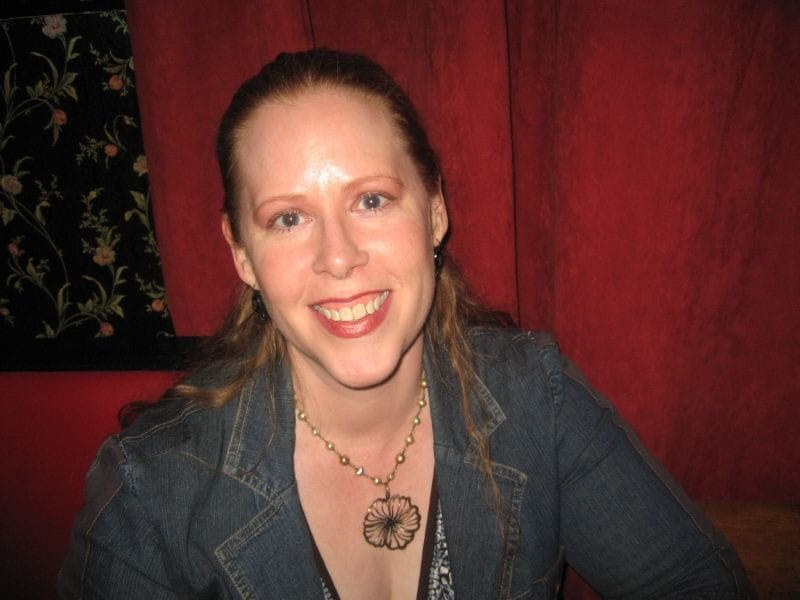 Livia Llewellyn
The feedback on my books is mostly good so far. Quite a few reviews have been published; you can find them, for example, on Databáze knih. The only negative reactions are along the lines of "the book was short, I want more." We'll see when I publish some bigger crazy stuff!
How do you choose what to publish? What is the deciding factor for you personally?
I like it when books bring something that hasn't been here before. At the same time, I go after texts that are either well-pointed or have certain aesthetic qualities. Ideally both. There are plenty of great books I'd like to translate, but when I narrow the selection down to those that make sense given my time and financial possibilities, I end up choosing from texts that hit me so hard that I simply have to publish them. You could say I publish what I would want to read myself, and I try to get it to like-minded people.
What translations are you currently working on, and what can we look forward to under the Medusa banner?
I am currently translating The Fortress of the Pearl by Michael Moorcock, the second novel featuring Elric of Melniboné, which the Mystery Press publishing house will release in an omnibus. Wait for it! For me, it will be a dream come true.
As for Medusa—I probably won't please you much, but the negotiations for the rights to the next book are dragging on terribly. Moreover, for a billion different reasons, I haven't been able to translate as fast as I'd like lately, so you'll have to wait a while for the next Medusa book.
But so I don't starve the readers completely, I'm preparing a translation of a certain extreme short story by Livia Llewellyn for a magazine (and an extensive interview with her will be published in the same issue), and for another, an award-winning short story by Gwendolyn Kiste (we've already published an excellent piece by her on our website All the Ways to Deaden a Girl). You shouldn't miss either, but I won't reveal more yet. If you want to stay in the loop, follow Medusa on social media and also visit www.knihymedusa.cz and sign up for the newsletter!
author: Roman Bílek
photo: Jiří Votava
Roman Bílek
Autor článků na imago.cz
You might also like
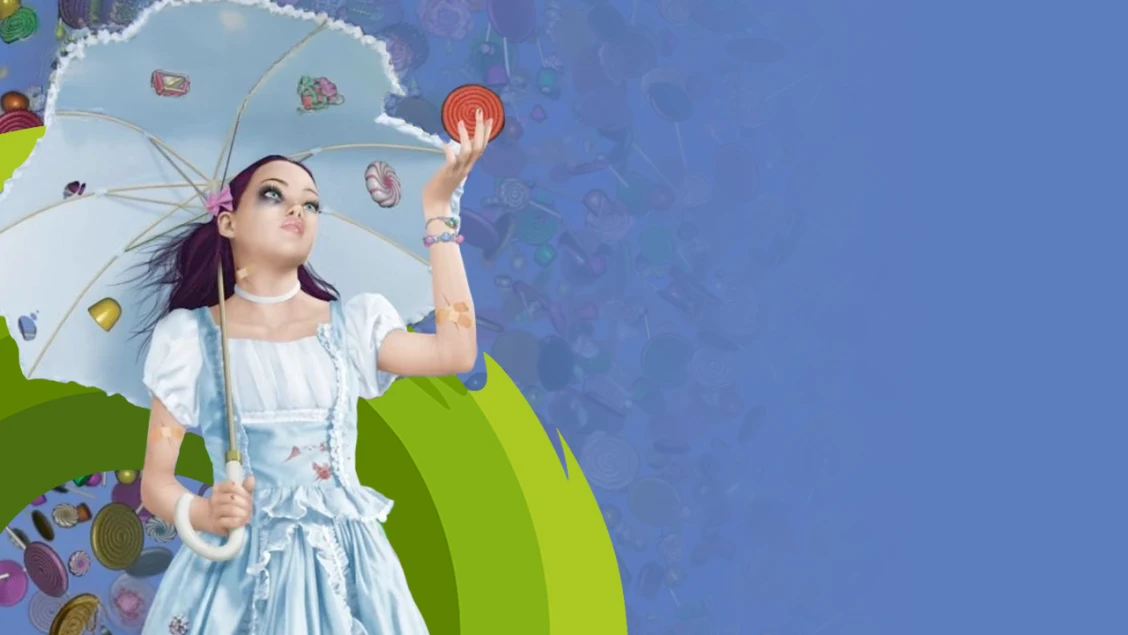
Book Review: Sladký příběh – A Dark Fairy Tale of Bizarro Fiction
Do you dream of reaching the end of the rainbow? In Sladký příběh, a childhood dream turns into a dark reality. Find out in our review why this slim book will consume you. full article...
25. 8. 2026 Tereza Nesvadbová 3 min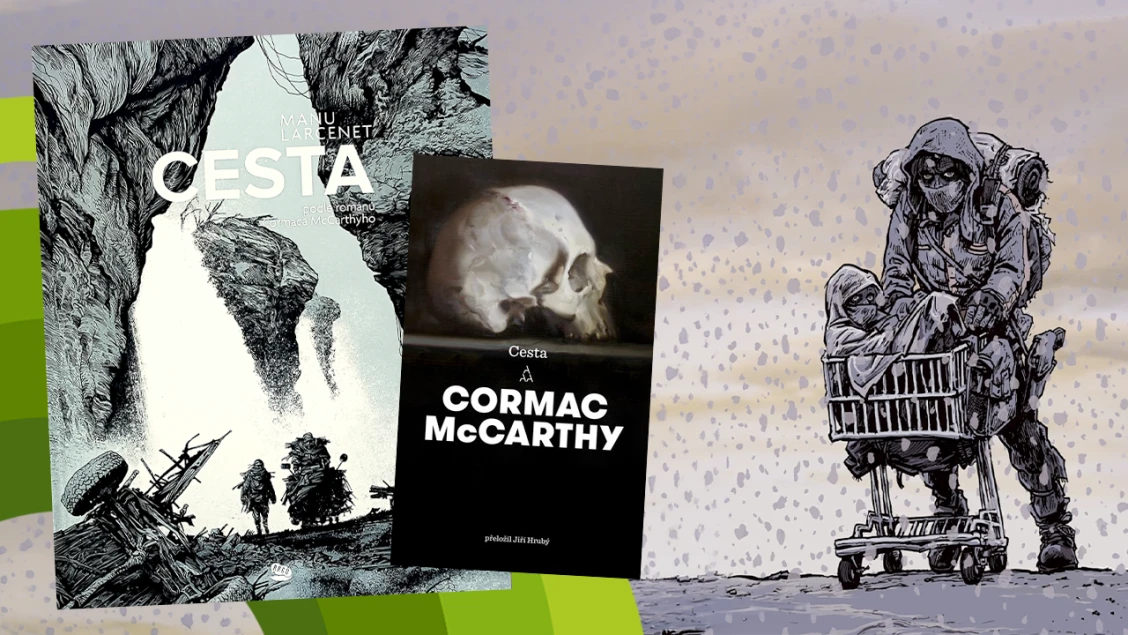
The Road Anniversary: What Did Cormac McCarthy Leave Behind?
Cormac McCarthy's novel The Road celebrates a major anniversary. Remember this post-apo cult classic through the legendary book, film, and the new comic by Lercenet! full article...
1. 7. 2026 Jana Mrkvicová 5 min
How hard is it to publish a book?
Do you want to publish your own book but don't know where to start? Learn about the options from classic publishing to self-publishing and find out how to succeed in the competition. full article...
15. 6. 2026 Michal Dlouhý 9 min