


Returning to Gothic II: A proper old-school RPG
Why Gothic II still works today. A gritty RPG where you aren't the chosen one, but a nobody. A world, factions, and combat that show no mercy.

What do you find in the article?
Gothic as a European old-school RPG
The Gothic series, often called the "Elder Scrolls of Europe," was born in the early 2000s at the German studio Piranha Bytes. The first game captivated me with its atmosphere and difficulty—you start as a nobody, and the world doesn't care about you. This approach still feels refreshing today, especially compared to mainstream titles that had started to bore me. I had only heard about the sequel for a long time, but eventually, I dove into the second installment. I played the base version without the Night of the Raven expansion, known for its high difficulty, and used a mod to balance the game. This is the version I'm writing about.
In the first game, the Nameless Hero is thrown into the Valley, where he learns to survive, joins a faction, and eventually destroys the magical barrier by killing a demon called the Sleeper. However, a collapsing temple prevents his escape. That's where the second game begins. The Nameless Hero is rescued by his ally from the first game—the dark mage Xardas, who is an absolute legend.
Voice acting, atmosphere, and the first hours in Gothic II
I have to mention the voice acting first. If there's one thing most people know about Gothic 2, it's one specific line from Xardas right at the start of the game that is unintentionally absolutely hilarious (clip). Unlike many RPGs, Gothic II is fully voiced, though the quality isn't always high. Most characters sound average, but the dragons sound significantly better—the developers gave them a distinct voice so they wouldn't sound like common villagers. Which is nice.
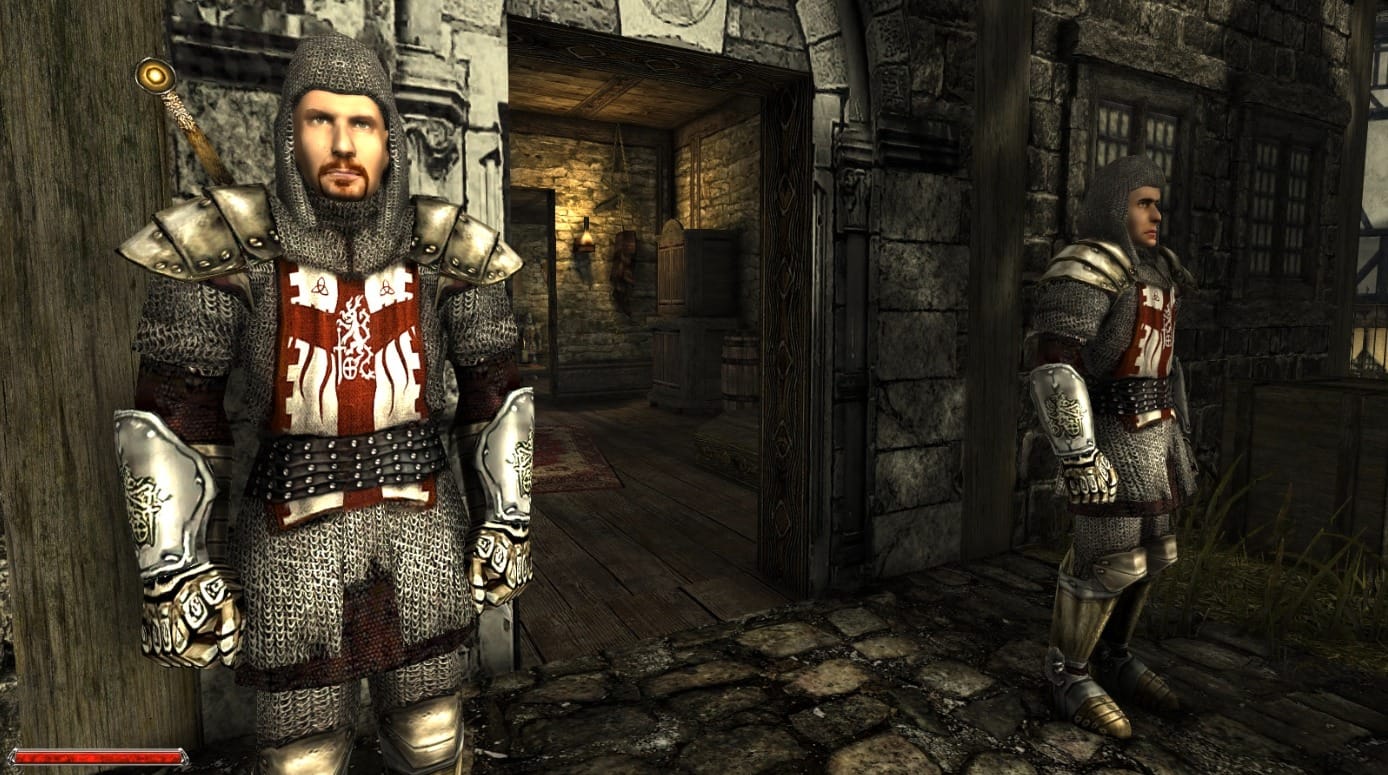
Xardas sends you to the city of Khorinis to retrieve the Eye of Innos—a paladin amulet capable of fighting the darkness. The army of evil is approaching, and so your journey begins. Even without the expansion, Gothic II is very difficult: resources, potions, and money are scarce, and enemies usually outnumber you. It is precisely this challenging progression and character development system that makes the game so appealing.
RPG system, slow progress, and a sense of helplessness
For every level, you gain 10 points that can be invested in strength, dexterity, weapons, or skills like blacksmithing, alchemy, or hunting. The simple system provides a strong sense of growth—every decision, whether to become a better fighter or learn to craft potions and armor, is motivating. That is exactly why Gothic II offers a great RPG experience.
The game requires frequent backtracking between locations, and movement is slow. There is no sprint, and speed boosts are only provided by rare potions, which become more common in later chapters. Teleportation runes make travel much easier later on. You can't get into Khorinis at first—the guards see you as a prisoner or a vagrant without money or clothes. You start from the very bottom, where even a common fly can threaten you.
Factions in Gothic II and choosing your path
The game offers various ways to proceed. Gothic (and games from Piranha Bytes in general) are known for their faction system. Each group has different quests, weapons, armor, and other perks.
- Khorinis Militia, which later allows the player to join the Paladins,
- Mercenaries from the former New Camp of the penal colony, which later allows the player to join the Dragon Hunters,
- Monastery of Fire Mages.
The first option is joining the militia, which requires becoming a citizen of Khorinis. The second faction is the mercenaries from Onar's Farm, led by General Lee. The final faction is the Fire Mages, who entice you with powerful magic but also strict rules. In the end, I chose the mercenaries.
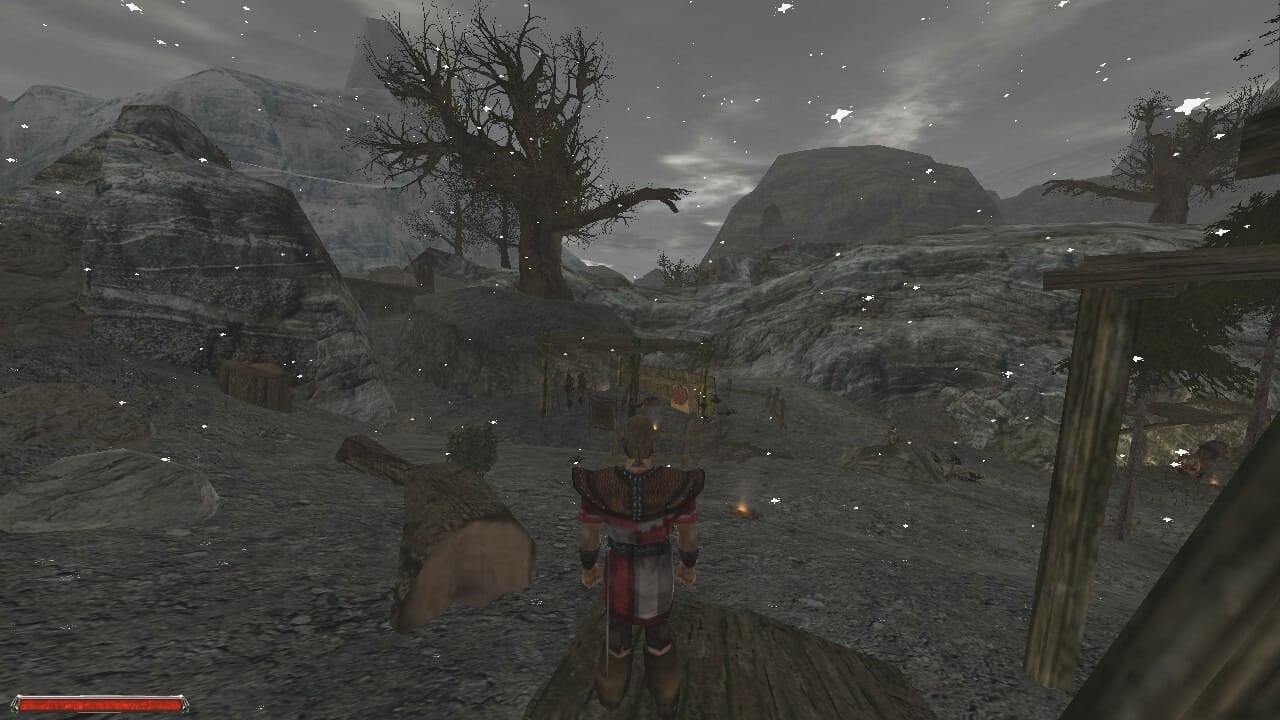
Combat, two-handed weapons, and frustration
The game is a bit clunky. Combat isn't about button mashing, but about a left-right rhythm. Critical hits can be brutal, and even a weak enemy can kill you. Save scumming saved me.
I played with a two-handed weapon, which is considered the hardest playstyle. The easiest is magic, followed by ranged combat, one-handed weapons, and finally two-handed. Still, I stuck to my philosophy: find the biggest sword and swing it all day. Unga bunga.
Finale, dragons, and final verdict
Gradually, I started hunting dragons, and every fight was a lottery on whether the game would crash. The finale significantly ramps up the difficulty—the dark temple is packed with enemies, and the narrow corridors make tactics impossible. The temple design felt like an alien tomb full of symbols and chasms.
In the end, it turns out the master of the army is an undead dragon, supposedly the Sleeper from the first game. In the epilogue, Xardas reappears, becoming the chosen one of Beliar. Gothic II ends. My rating? 6/10. A slightly above-average old-school RPG that isn't for everyone.
author Janko “Rys” Janek

Fenrys
Jsem Rys a jsem cosplayer. Když zrovna netvořím, rád hraju akční RPG a taktické strategie, koukám na filmy nebo seriály. Také rád píšu o věcech, které mě zaujmou.


You might also like
The Blood of Dawnwalker: A Spiritual Successor to The Witcher 3
The Blood of Dawnwalker is a spiritual successor to The Witcher 3. It offers a dark story, freedom of choice, and a captivating atmosphere. full article...
22. 9. 2026 Fenrys 7 min
BlizzCon 2026: Diablo V, StarCraft shooter, and more news
Blizzard revealed their plans at BlizzCon 2026. Read the details about the surprising Diablo V, the new StarCraft shooter, and a special version of World of Warcraft. full article...
14. 9. 2026 Karel Krajča 5 min
Star Wars Zero Company: An experience like no other
Star Wars Zero Company promised tactical battles in the Clone Wars. The result? A good story, but critical bugs that ruin the game. full article...
16. 9. 2026 Fenrys 8 min