


Alan Moore – Mage, Anarchist, and King of Comic Book Writing
If you look at any list of the best comics, there is a near-hundred-percent chance you will find one written by Alan Moore. He is rightfully considered the greatest comic book author of all time.

If you look at any list of the best comics, there is a near-hundred-percent chance you will find one written by Alan Moore. He is rightfully considered the greatest comic book author of all time.
Few have understood comics as well as he does. He elevated the medium to a new level, introducing techniques known from classical literature and cinema. He perfectly grasped the structures of comics, bending them to his precisely calculated intentions. He makes readers devour every panel, searching for the references and meanings that fill every scene. Occultist, vegetarian, anarchist, magician, bearded hermit, king of comic scripts. All of this is the exceptional Alan Moore.
“Alan Moore should not be accepted under any circumstances, as he would corrupt the morals of the other students.” (from a letter by the headmaster of the high school from which Moore was expelled)
He was born on November 18, 1953, in Northampton, Central England, as Allan Oswald Moore. He once called his hometown “industrial grey rubble.” Having started reading everything he could get his hands on at the age of five, it was only a matter of time before he reached comics. It didn't take long. He fell in love with comic strips and classic American superheroes—The Flash, Batman, or The Fantastic Four.
Like many other writers from working-class backgrounds, it was an escape from a grey reality that offered no room for imagination. However, his own work at the time focused solely on poetry. This only contributed to the general impression that he was simply different. He came from a neighborhood inhabited only by the poor and the working class. He had distorted ideas about social hierarchy, and it could be said that in his early youth, he had no idea how the world worked. He despised classical morality and education.
He didn't want to be anyone who could be considered an elite intellectual. At school, he purposefully tried to be one of the worst students, earning a reputation as a rebel and a troublemaker. Someone whose morals dragged others down. It is no wonder that with such an attitude, he was not exactly a favorite of the teaching staff. He was expelled from school, even with a letter of recommendation from the headmaster himself, which prevented him from studying at other schools or finding meaningful employment. Afterward, he turned to consuming and distributing LSD.
“LSD was an incredible experience. Not that I would recommend it to everyone, but it kind of shattered my idea that reality is a given, fixed thing. The reality around us is one reality, and it is valid, but there are also other, different perspectives where different things have equal importance. That had a big impact on me.” Alan Moore, 2003 (source: Wikipedia)
Such an approach meant only one thing—the end of academic attempts. He was forced to perform the most menial jobs, such as a tanner or a toilet cleaner. When he met and subsequently married his wife Phyllis, he decided, just like that, that he would become a comic book author. Why not, right?
The world of drawn stories had fascinated him for a long time. At first, he devoured the stories themselves, but then he also began to take an interest in the lives and work of the artists and writers. Before that, he published under pseudonyms in various bizarre samizdat magazines.
He also tried his hand at music articles in the well-known magazines Sounds and NME. From this period, his strips Roscoe Moscow or The Star My Degeneration are known, where the Moore-esque ideological foundation, familiar from all his later comics, already appeared.
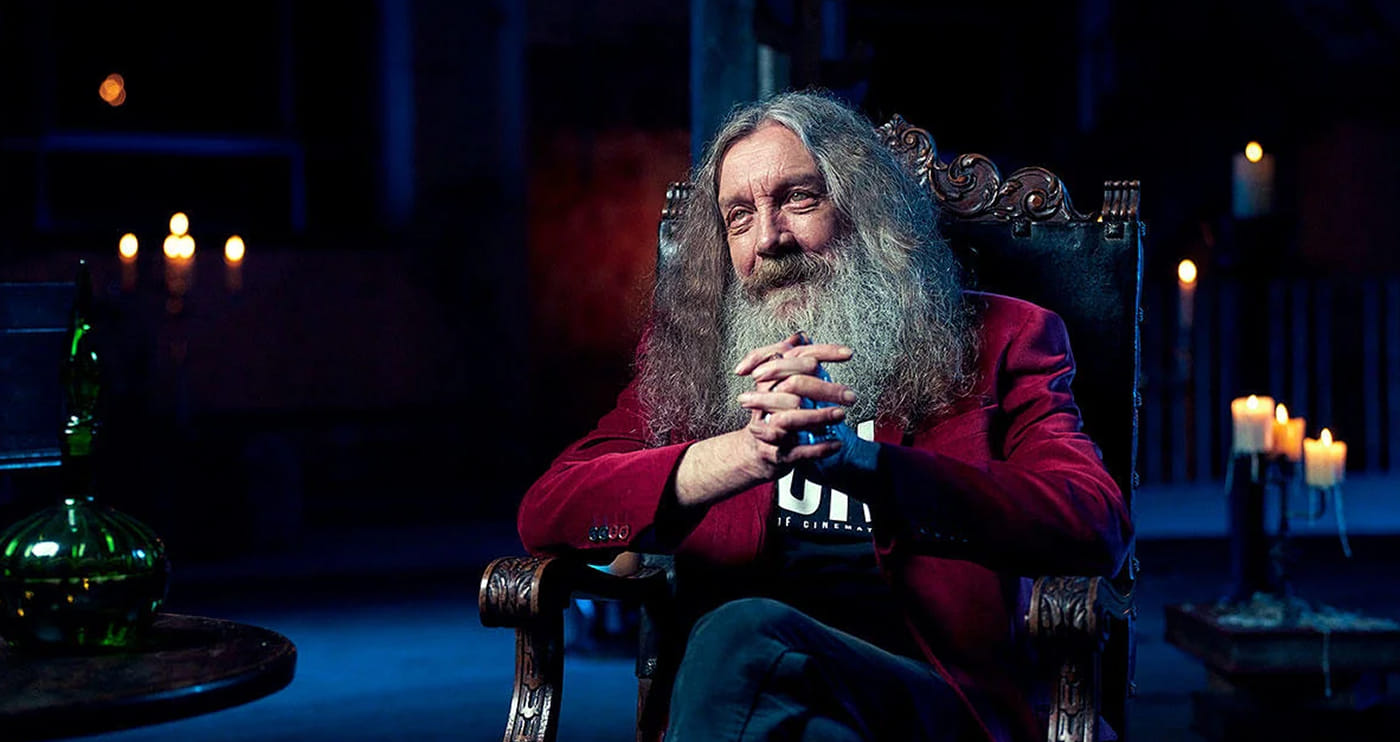
For the Northants Post newspaper, he created a comic strip about a magical cat, Maxwell the Magic Cat. Although he hated it, the regular weekly fee helped the family budget, especially considering his marriage and the later birth of two daughters. He eventually found his way to the strip and grew fond of it. He wrote it until 1986, when he parted ways with the local newspaper on bad terms.
He was bothered by their homophobic approach, which he duly criticized. Moore had been involved in gay rights issues for some time and supported lesbian and gay minorities. In 1988, he published a benefit anthology of comic stories for their foundation called AARGH! (Artists Against Rampant Government Homophobia) under the banner of his own underground publishing house, Mad Love. The comic authors sharply criticized British legislation regarding its approach to sexuality and its publication, whether private or public. For example, Neil Gaiman and Frank Miller contributed to this anthology.
At the end of the seventies, Moore made one of the most crucial decisions of his career, which later proved to be the best—he stopped drawing.
“There is an inverse relationship between fantasy and money.” (Alan Moore)
He began publishing his short stories in the magazines 2000 AD, Marvel UK, and Warrior. He started his career alongside his long-time companion and namesake, Steve Moore. For example, he completely changed the perspective on the comic character Judge Dredd by giving him an unprecedented level of complexity. The editor at 2000 AD at the time was Alan Grant, who called Moore a “fucking good writer.”
Another work from that time was the creator-owned series The Ballad of Halo Jones, which was the first mainstream comic title not portrayed as a woman with large breasts or a victim of chauvinistic men. He was also invited to co-create the anthology Future Shock, which contained short horror-fantasy stories, of which Moore wrote more than fifty at the time. It was clear that his decision to dive into comics was the right one. Marvel UK—as the name clearly implies—is the British (European) branch of the mammoth American Marvel. They presented popular comic heroes in a different national-political spectrum with typical British humor and exaggeration.
One such endeavor was Captain Britain, which paraphrased the name and patriotic message of the popular Marvel hero Captain America. He soon became a popular and, above all, acclaimed creator in Britain. Overseas, they noticed the young writer who was collecting comic awards one after another and decided to lure him into a world where comics have their firm place and have countless more fans.
Moore himself still smiles at this today, because he claims that Americans treat an award-winning creator as someone who has received an Oscar. And yet, at that time, these awards were given by twenty passionate British comic nerds. Nevertheless, he moved overseas, where he restarted Swamp Thing, followed by Watchmen, Batman, Superman, and everything else. The cause was, of course, the tidal wave of British comic writers moving to the USA at a time when local creators had somewhat run out of steam.
He started as a writer for the mammoth comic concern DC Comics, where he resuscitated Swamp Thing, giving it an ecological subtext. A hero created in 1971 by the duo Len Wein and Bernie Wrightson, but who experienced the true flourishing of his identity only under Moore's baton. This series became the foundation of the Vertigo imprint, which aimed to appeal to adult comic readers.
At the beginning of his American journey, he reincarnated well-known comic brands, breathing fresh air into their somewhat rickety lungs. However, this created problems with author rights and officials defending their interests, where authorial freedom and creative needs were not tolerated.
One of these bizarre examples is Marvelman, which is considered a great collector's rarity in its original edition because it had to be renamed Miracleman shortly after. Yet, this comic is generally considered the purest radical reimagining of a forgotten hero from the fifties.
He parted ways with the aforementioned British publisher Warrior—about which Moore claims the local editors treated him like a piece of shit—with the political systolic thriller V for Vendetta.
“If Alan Moore were the Beatles, I would be Gerry and the Pacemakers. Do you remember Gerry and the Pacemakers? No? See…” (Neil Gaiman in an interview for Herocomplex)
His impact on the comic medium was enormous. He brought a new wave, a new style, tore down established principles, and inspired a number of other authors. In his hands, comics lost the “for kids” label and showed that they could be worthy of admiration.
He became one of the few writers whose work we can boldly label as being for adult readers. Partly for those who had outgrown the cheap and banal stories that comic production of that time often brought, but he also managed to reach those who had previously despised comics as such and either considered them something inferior or regarded them as a type of literature intended for rebellious and dreamy children.
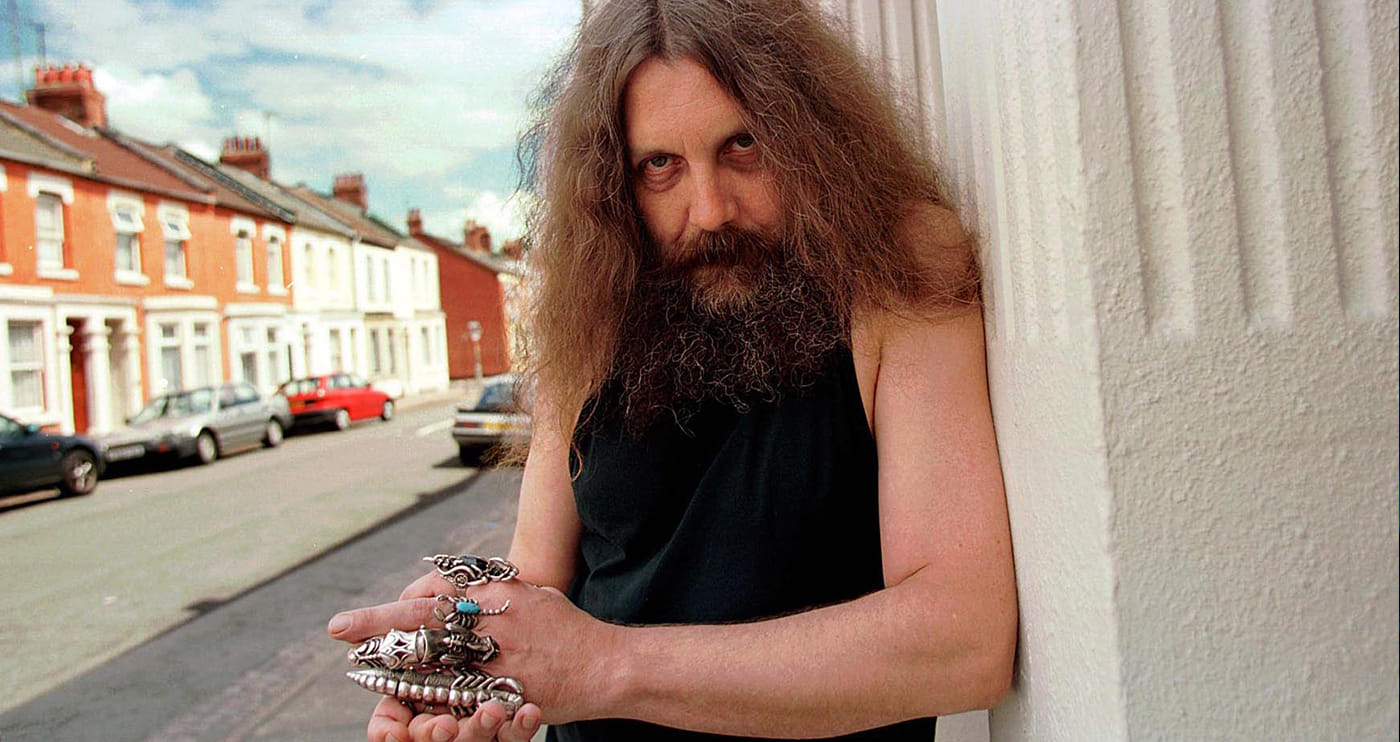
Reading his books is a strange feeling. You feel the mountain of work, the consideration of every detail and connection, you perceive the perfect timing, all those layers and characters, and yet everything reads easily and smoothly. At times, you have to stop and realize again that it is a comic and not a film or a novel. It is a unique experience, full of surprises, which perhaps no other author has managed to imitate. He managed to convince otherwise reserved adults to dive into reading unusual books, especially comics.
“To enter Moore's mind is to enter a world in which the boundaries of genres and historical epochs are super-fluid, where trash mixes with high culture, and where reality and imagination melt as if in a melting pot.” (Aeon magazine)
After having to argue about copyright with publishing giants several times, he founded his own publishing house, which he ironically named America's Best Comics. It was a bit of a dare, but it is quite easy to find a logical reason as well. Alan Moore is an incredible perfectionist. Working with such people is not easy. Collaboration is full of friction, constant redoing, and unnecessary work. Everything must be exactly as he has it figured out in his head. Moreover, Moore is famous for massive background preparation and research on a topic. The bonuses for the graphic novel From Hell speak for themselves. But when everything finally falls into place, the result is worth it.
On the other hand, this is also the reason why Alan Moore's bibliography is not a multi-page opus and the number of his works stays at an unexpectedly low number. For some of his fans—unfortunately!
“Today's novel writing is no longer filled with the consciousness of the real and simultaneously miraculous. Authors have lost their own visions of reality. No William Blake is writing today…” (Alan Moore)
Moore is also one of the few comic writers who is not afraid to project his opinions and political stances into his work. This is most evident in his political opus V for Vendetta, where he projected a joyless Orwellian vision of society; in this case, it is a fascist dystopia against which a somewhat romantic and principled hero fights. How the message of this work was subsequently understood by society is not just declaimed by the hero's “V” mask, which is used, for example, by the Anonymous and Occupy movements. The hero of this work is also generally understood as a symbol of the fight against totalitarianism.
The comic Watchmen is a reflection of England at the time, which was drowning in itself under the grip of the Iron Lady—Margaret Thatcher. A world that tries to gain the status of something better and more stable through prohibitions, orders, commandments, and regulations… but really for everyone? Even in other comics, we find subliminally hidden political messages, as well as other topics of his interest—occultism, magic, paganism, or social probes into today's society.
In this regard, the British documentary film The Mindscape of Alan Moore (2003) seems very apt, in which the author himself talks about his relationship to these topics. He also puts them into context in his work, and the viewer thus gains a much more comprehensive overview of what some of Moore's hidden references are meant to mean.
At a young age, little Alan was influenced not only by the environment in which he grew up but also by his loved ones. An interest in paganism and occultism, which bordered on obsession, was awakened in him, for example, by his eccentric grandmother. Moreover, he became a passionate reader from the age of five and devoured everything he could get his hands on. The local library, where he was a regular visitor, played a substantial role in this.
Even in elementary school, he was the class valedictorian. And we wrote about the problems that came with starting high school above. A boy coming essentially from destitute conditions met classmates from well-situated families here and finally understood class differences in society. This realization left a deep mark on his soul. He lost interest in school, and besides, there were the sixties—a period of loosening morals and drugs. However, he never became a classic junkie, and the flower ideology seemed shallow and naive to him.
“They want the pages to turn themselves, and they don't want to hear about the principle of delayed gratification, which you have to work hard for. So I wrote something so long that it cannot be called a novel at all.” Alan Moore on the book Jerusalem
Alan Moore was never a celebrity in the true sense of the word. While his worldwide popularity is huge, compared to his famous colleagues in the industry, he is seen more as a strange character. He does not attend opulent parties and does not regularly fill the front pages of the tabloid press. Of course, he does not avoid a certain tax on popularity, but compared to others in the field, he is still just a poor relation in this regard.
American popcorn madness is not his world, so after his overseas experience, he moved back to England, not far from where he was born. From there, he also performs most of his work and leaves his house and its surroundings only very rarely.
Moore is not just a comic writer; he began to project his literary talent into prose and poetry as well. In 1996, he published his first novel, Voice of the Fire, which brings the fates of twelve people living in the same place in England over 6,000 years.
Another non-comic work is the extensive poem The Mirror of Love (2004), which discusses girls who are inclined toward girls and boys who like boys. Moore remains faithful to a similar topic in the essay 25,000 Years of Erotic Freedom (2009). What he deals with is evident from the title. The author thus indirectly follows up on the comic Lost Girls, which he created together with his second wife, Melinda Gebbie. Also interesting is the book conceived as an authorial confession, Alan Moore’s Writing for Comics (2003).
In 2016, Alan Moore finished his second novel, which bears the title Jerusalem; it is a book of truly gigantic proportions, on which Moore had been working since 2008, and it contains well over a million words. Due to the complexity of the language and the scope, the possibility of a Czech edition discouraged more than one translator.
He also collaborated on the underground bimonthly Dodgem Logic, which is a (not only) literary collision of all possible things and aesthetically stems from a fascination with the British underground press of past times. At the same time, it is still about topics and attitudes that reflect the same authorial soul that presented its visions in comics like Swamp Thing or Watchmen.
At that time, Alan Moore no longer felt like part of the comic industry. However, he by no means gave up his personal and political stances and social criticism. Even in his anarchism, which, like most political currents, is divided into various sub-currents, he still found pleasure. In Dodgem Logic, for example, he wrote an article on how some ideas could be used in the current social situation.
“I don't think superheroes are good for anything. I think what is alarming is that we have an audience of adults who go to the new Avengers movie and enjoy concepts and characters that were created to entertain a twelve-year-old boy in the fifties.” (Alan Moore)
Fortunately, his separation from comics did not last as long as readers and fans feared. In 2010, he returned and visited waters close to him, the world of H. P. Lovecraft. Among other things, he published two successful shorter series, Neonomicon and Providence. It will probably surprise no one that he managed to perfectly capture the strange mystery and urgency of the Cthulhu mythos. On top of that, he adds his favorite sexual themes, so the pages are often teeming with tentacles and penises.
In general, however, world literature can be glad that Alan Moore did not give up on it. And he even decided to help beginning authors through the BBC Maestro project, where in this paid project, in a series of “lectures,” he gives advice on how to write. Everyone knows that if you have to learn something, it is best to learn from the best. And Alan Moore, at least in the comic world, definitely belongs among the best!
authors: Roman Bílek, Karel Krajča

Karel Krajča
Šéfredaktor, content creator a organizátor festivalu Fantastická Ostrava. Fanoušek fantastiky, videoher, deskových her a popkultury obecně. Příležitostný milovník malování figurek a craftení všeho druhu. Hudební závislák a amatérský znalec fyziky a matematiky.
Roman Bílek
Autor článků na imago.cz
You might also like

Book Review: Sladký příběh – A Dark Fairy Tale of Bizarro Fiction
Do you dream of reaching the end of the rainbow? In Sladký příběh, a childhood dream turns into a dark reality. Find out in our review why this slim book will consume you. full article...
25. 8. 2026 Tereza Nesvadbová 3 min
The Road Anniversary: What Did Cormac McCarthy Leave Behind?
Cormac McCarthy's novel The Road celebrates a major anniversary. Remember this post-apo cult classic through the legendary book, film, and the new comic by Lercenet! full article...
1. 7. 2026 Jana Mrkvicová 5 min
How hard is it to publish a book?
Do you want to publish your own book but don't know where to start? Learn about the options from classic publishing to self-publishing and find out how to succeed in the competition. full article...
15. 6. 2026 Michal Dlouhý 9 min