


Matěj Lehár and the Film Philharmonic
What is it like to conduct a symphony orchestra playing film and video game music? We asked the director of the Film Philharmonic, Matěj Lehár.

Symphonic music is no longer just for a select few. Thanks to films, it has entered pop culture and regularly ranks among the best things you can hear in a concert setting. While game music still has a slightly tougher path, it is gradually making its mark as well. Since 2014, the Film Philharmonic (Filmová filharmonie) has been dedicated to spectacular concert performances of film and video game music. The ensemble, consisting of up to 150 members, consistently strives for the highest quality. We can confirm from our own experience that it is truly something special.
Listening to a large orchestra play your favorite tracks live is an unforgettable experience (you can find music samples in the links throughout the text, editor's note). Especially when it all takes place in the magnificent historical setting of Prague's Rudolfinum. We interviewed the orchestra's director, Matěj Lehár, who, in addition to his management duties, regularly performs with the Film Philharmonic as a French horn player.
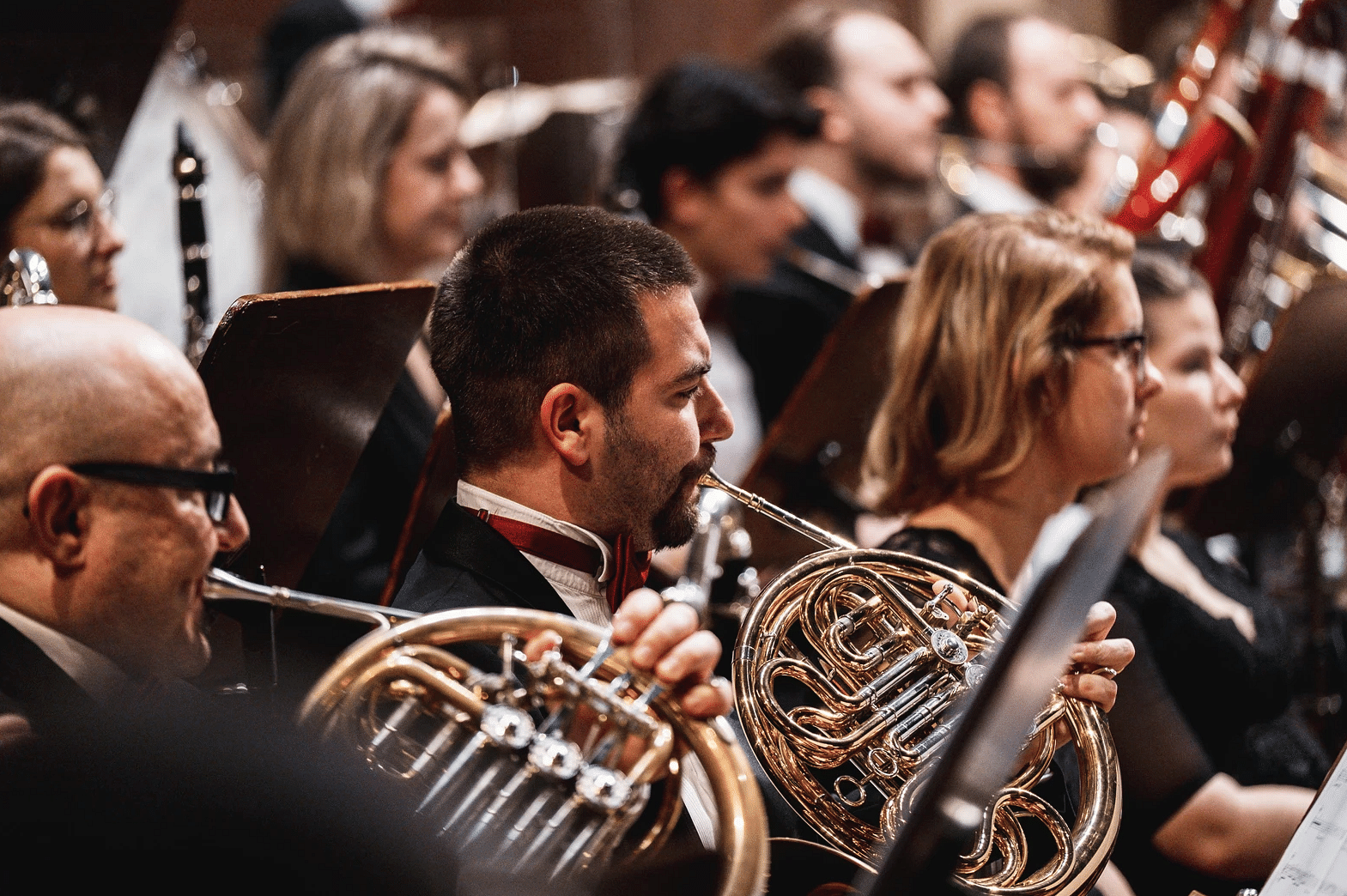
Can you tell us about the very beginnings of the orchestra? How does it happen that a few people decide to start an orchestra together?
Many significant works of cinema utilize the massive sound of a symphony orchestra or beautiful instrumental solos. That is why there are so many musicians who enjoy playing this music. By founding our own orchestra, we can not only play this great music but also show our listeners what we enjoy and what we are good at—all while working with friends with whom we constantly try to push the boundaries of what can be created on stage under the term "symphonic music."
Why film and video game music, actually?
Top-tier film music uses a massive symphony orchestra to create what is now called "epic music." In classical music, we know works like Carmina Burana by Carl Orff; in film music, it might be Ben-Hur by Miklós Rózsa. However, the successors to this massive sound are certainly composers who might be more familiar to us, such as John Williams, James Horner, Jerry Goldsmith, or Hans Zimmer.
Huge amounts of money are invested in the video game industry today, so there are great creators there as well. Game studios also utilize the work of film composers; for example, I would mention Michael Giacchino (Medal of Honor) and Hans Zimmer (Call of Duty).
Ennio Morricone, John Williams, or Howard Shore have proven that film music can achieve artistic quality and world fame. But what about video games? Is there a similarly well-known and successful author there?
Among the award-winning game music composers, I would like to mention Christopher Tin (Grammy for the song Baba Yetu from the game Civilization IV) and Jeremy Soule (MTV VMA for the soundtrack to The Elder Scrolls IV: Oblivion and a BAFTA for the game Harry Potter and the Chamber of Secrets). Another great author is the award-winning Inon Zur, whose music for the game Starfield we will be performing in a month.
How often do works by Czech authors appear in your concerts? Can you highlight any of them?
In recent years, we have been trying to give space to Czech authors who work in a similar style to American studio orchestrators—that is, with a large orchestra. In film production, we premiered the music for the film Restore Point (Bod obnovy) by composer Jan Šléška, and music from the fairy tale Anděl Páně by Miloš Bok was performed at our Christmas concerts. Dominik Svoboda prepared a concert suite for us from Ondřej Brzobohatý's Anděl Páně 2, and his music from the game Arma Reforger will be featured at our upcoming game music concert. In video game music, we collaborate with Czech authors like Vladimír Šimůnek, who created unforgettable tracks for the game Mafia, and of course Jan Valta, for whom we premiered a concert suite for the game Kingdom Come: Deliverance.
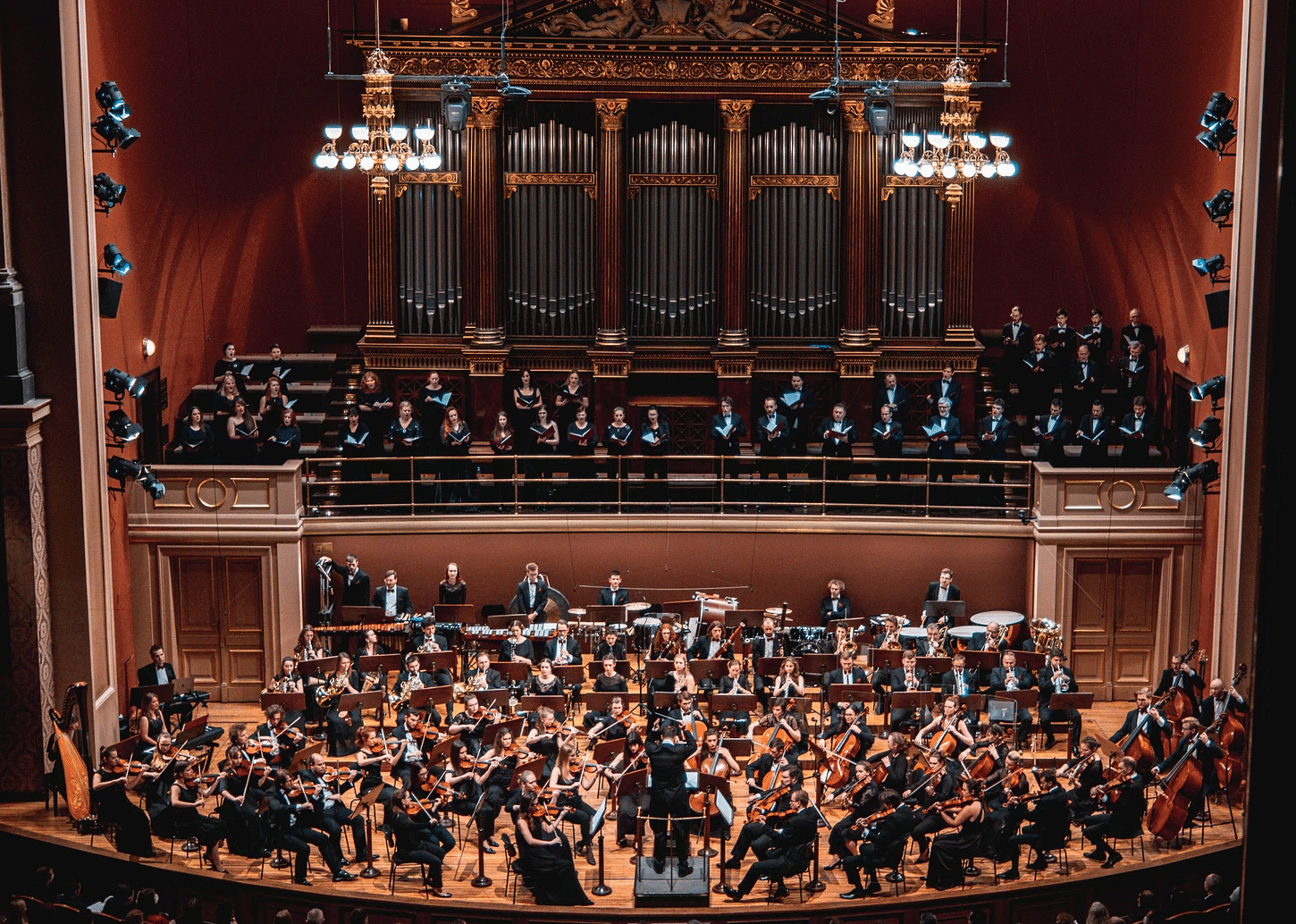
Up to 150 performers appear during your concerts. How difficult is it to get so many people excited about one thing and keep them all in check?
Since we started our first concert in 2014 with a large ensemble (we had 70 members back then), the ranks of collaborating artists have grown significantly. Because the Film Philharmonic has established itself over time as an ensemble that delivers music of the highest quality, it is easier to convince even the top Czech performers to collaborate on my projects. ;) Each instrument section and choir always has its own leader, and of course, there is a conductor who plays an indispensable role in the rehearsals and the final result.
How long before a concert do rehearsals take place? It is probably a naive idea that a professional artist just sits down in front of the sheet music and nails it on the first try.
A professional artist sits down and plays, and most of the audience wouldn't even know the difference—many musical productions around us happen that way. However, we at the Film Philharmonic have chosen a different path: excellent preparation for everyone involved so that they can deliver the best possible performance on stage while still enjoying the concerts. We usually rehearse for 6 sessions (4-hour rehearsals) where the entire large ensemble plays together, but it is expected that every artist has already prepared everything required of them before these rehearsals.
Is there a minimum number of artists required for film music (for example, the Imperial March from Star Wars) to sound good?
There is no minimum number; at smaller events, we play in an 8-member ensemble, for example, but it is different from the sound of a symphony orchestra—what the composer intended cannot be there. An orchestra is full of different colors, and when you don't have many of the instruments, those colors are simply missing.
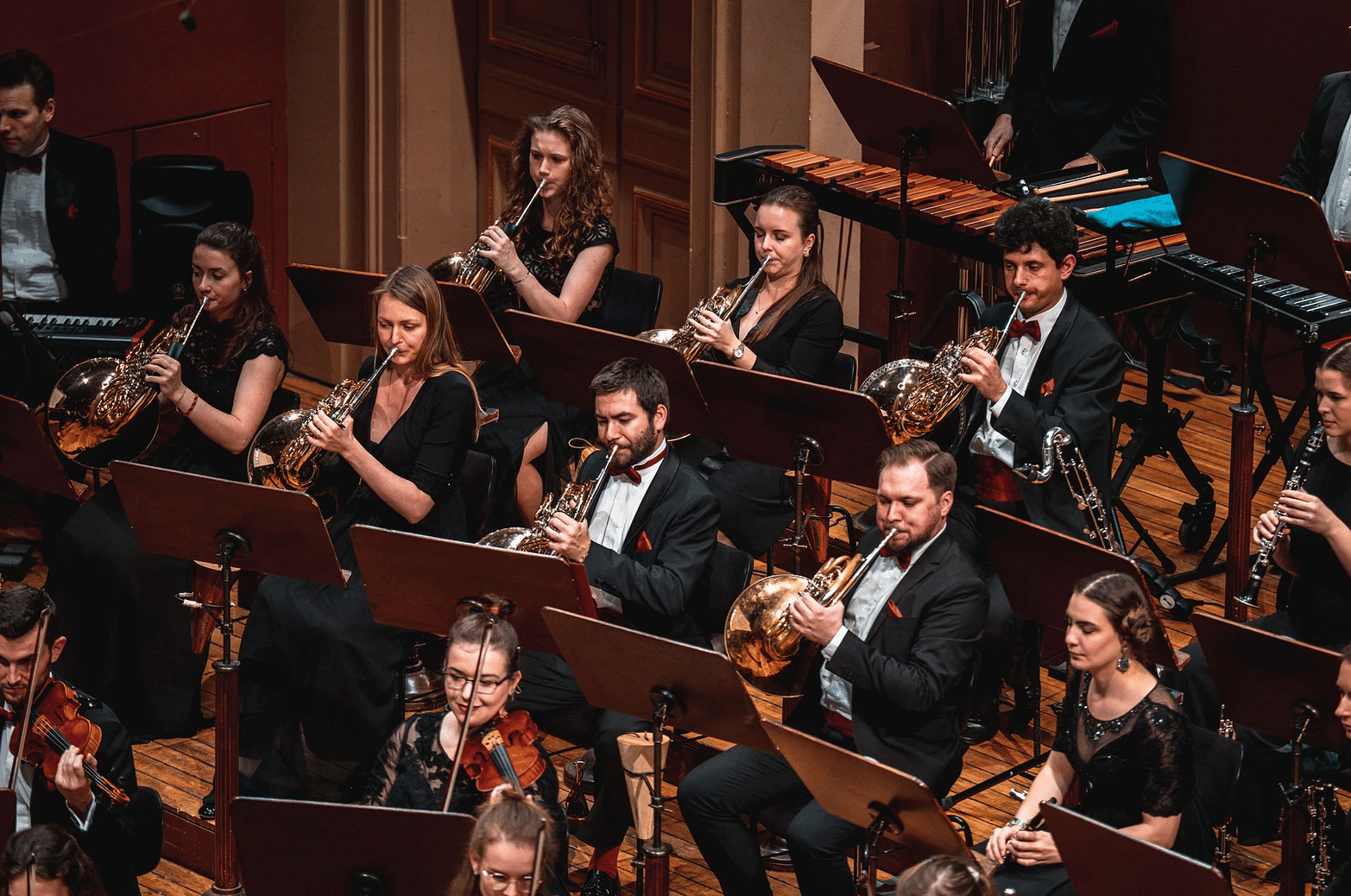
How difficult is it to secure the rights and sheet music for a specific piece? How does the selection of tracks take place?
Playing film music is complicated. The easiest way, of course, is if the concert music is published by a publishing house and the tracks can be bought. This way, we have many tracks by John Williams, Alan Silvestri, and Michael Giacchino in our archive. For other composers, it is a matter of agreement directly with them or with the libraries that rent out the scores for individual concerts for a significant fee. And then there is the fee for "live" performance in front of an audience. These amounts reach hundreds of thousands of crowns for a single concert. Selecting tracks for individual concerts is a long-term creative process; I try to choose not only mainstream main themes but also other interesting pieces. We care a lot about the overall impression of the entire concert, so it feels like a story that the listeners will remember for a long time.
According to some, the tracks played at film/game music concerts should never be 100% copies of the original. Does it happen that at a concert I feel like there is a small detail in a track I know very well that is different? Is that true? Are the scores provided for such concerts different from the original?
Even the composers themselves write several versions of one theme for a film; a track might not appear in the film in its entirety and is then recorded for the soundtrack in a complete form, which can again differ slightly from what is heard in the film. At the same time, scores for concert use are issued by the composers or publishers themselves, which can then differ in difficulty or arrangement for a smaller number of voices. We try to include sheet music that is as similar as possible to the "original," whether it is the soundtrack or the film/game version. So, if we obtain the rights directly from the composer, we get a license to perform the work in the form they provide us.
Is there a piece you would like to add to your repertoire but cannot, for example, due to rights or technical requirements?
At the moment, we are waiting for the approval of rights from Howard Shore to perform his large concert symphony; there, of course, we also run into the requirements for a large concert hall, which is lacking in the Czech Republic.
Does it happen that something goes wrong during a concert? Are there those "Cimrman-esque" moments that irritate an expert but we don't even notice?
Of course, it happens. It is a live performance, and any of the 150 performers can make a mistake :), but the musicians and singers in the choir are at such a level that only a fraction of the listeners can really notice it. Moreover, through our preparation, we do our best to ensure such situations do not happen.
Prague's Rudolfinum is your home turf, but do you play elsewhere? Where else can fans of film and game music listen to you?
In recent years, we have anchored ourselves in the Rudolfinum, as our projects are so extensive that we cannot transport the number of musicians to other Czech halls to the same extent as we used to. That is why we are planning our concerts for the upcoming seasons only there.
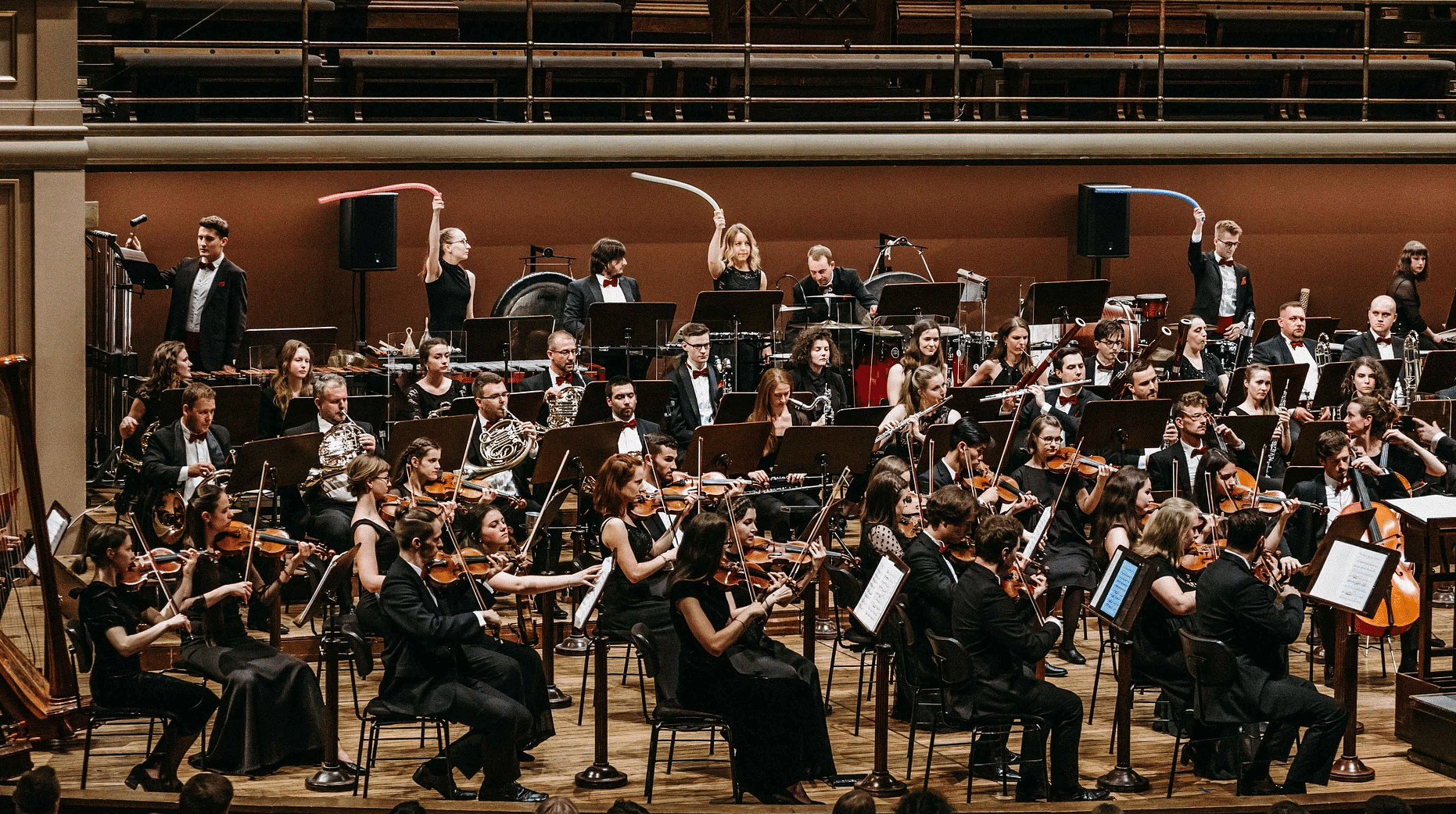
I have always thought that art should not be locked in galleries but should be for everyone. Couldn't the relatively luxurious Rudolfinum and the dress code in some cases be more of a deterrent? Ignoring the fact that despite this, your concerts are regularly sold out.
The Film Philharmonic is, by principle, based on several aspects that we cannot ignore even with modern works. First and foremost, it is an acoustically excellent hall so that the work of so many artists does not go to waste, and the Rudolfinum is undoubtedly that. Furthermore, we understand film or game music as a successor to or part of "classical" music, which also includes the preparation of the listener who wants to enjoy this music. The listener has to tune in to it; then they can better appreciate the work of everyone present. We do not require any extreme dress code, but we expect that people will think about such an event themselves if they are willing to pay a significant amount of money for it. So, from my answer, it is probably clear that I do not think it would deter any of our listeners.
You also offer custom concert organization. How often is this service used, and what can you actually offer a potential client? What is the smallest and largest event you have organized this way?
We have custom concerts to expand our portfolio and increase the visibility of our orchestra. The smallest ensemble is a soloist, and the largest is the one you encounter at our concerts in the Rudolfinum. You will only encounter that largest ensemble in our production today.
What can we look forward to from you this year, and are you preparing any news for future years?
We already know today that we have several thematic concerts that our listeners will encounter in future years—Fantasy, Sci-fi, Christmas. In the future, we will again try to include the very successful Valentine's program, followed immediately by concerts featuring music by significant film composers.
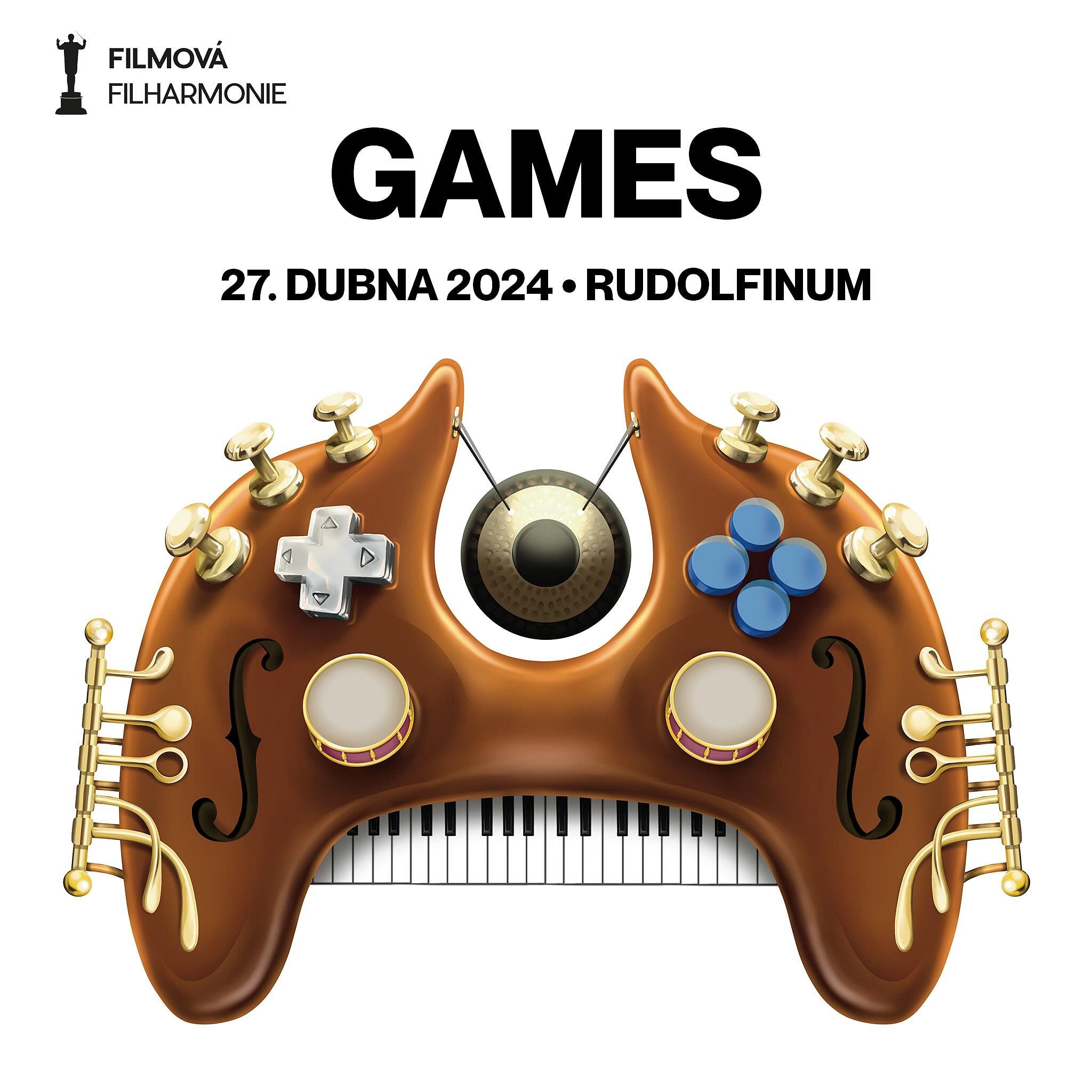
photo Martin Bambušek
author Karel Krajča

Karel Krajča
Šéfredaktor, content creator a organizátor festivalu Fantastická Ostrava. Fanoušek fantastiky, videoher, deskových her a popkultury obecně. Příležitostný milovník malování figurek a craftení všeho druhu. Hudební závislák a amatérský znalec fyziky a matematiky.
You might also like

Interview with the band Tempus: fantasy music inspired by the Middle Ages
An interview with the band Tempus about their unique music, medieval inspiration, unconventional instruments, and 17 years on the Czech music scene. full article...
Interview 14. 11. 2024 Karel Krajča 9 min
Sukuba Ensemble: Game Music by Beautiful People
The band Sukuba Ensemble shares what it's like to play and bring game music to life on stage. Get a behind-the-scenes look at their concerts! 🎶 full article...
Interview 26. 8. 2024 Eva Lassler 10 min