


An interview with Ondřej Neff (not just) about artificial intelligence
We asked Ondřej Neff, writer, publicist, journalist, photographer, and pioneer of the Czech internet, for his opinions and attitudes toward artificial intelligence.

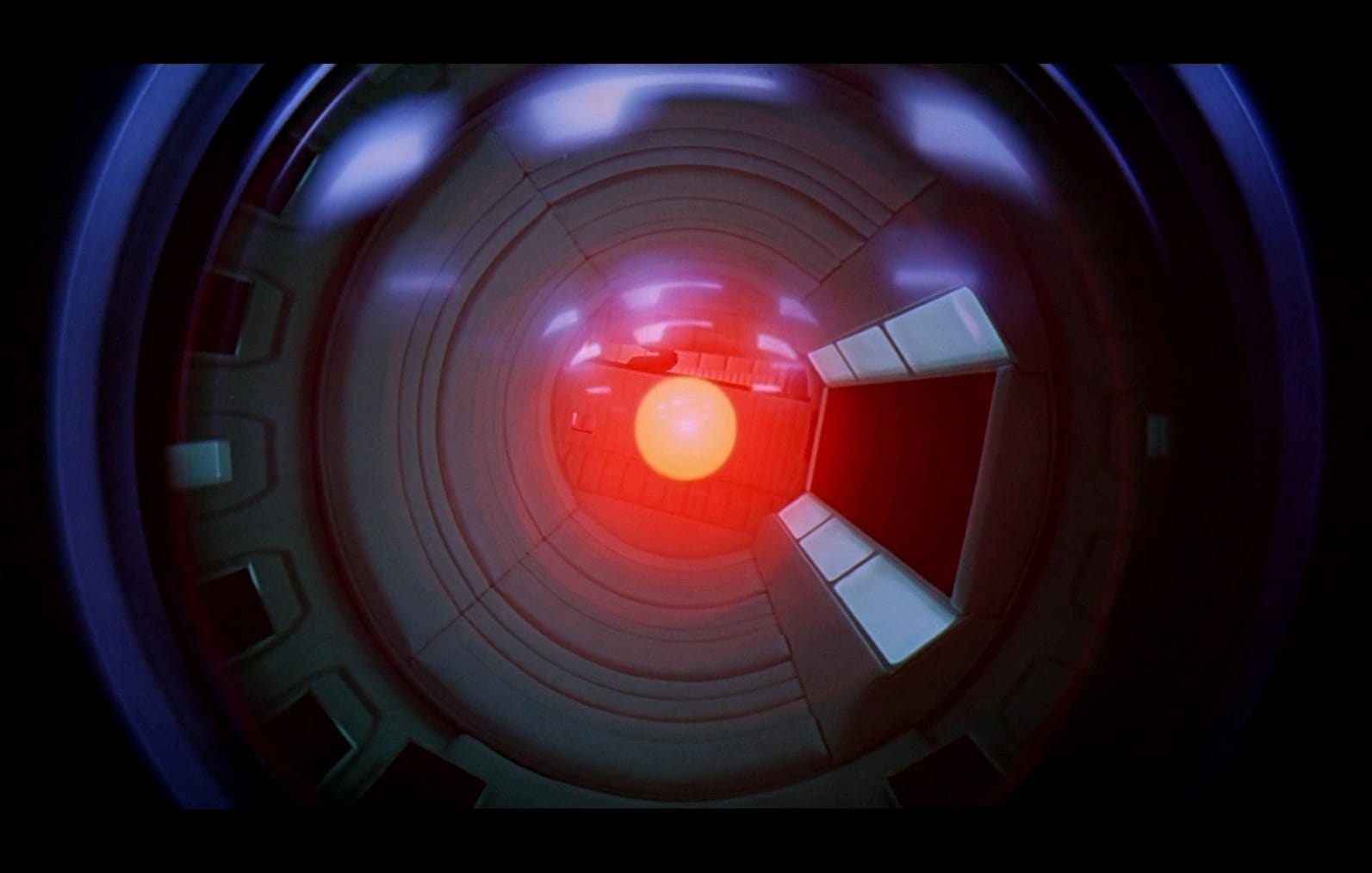
With the boom of computing machines after World War II, the term artificial intelligence (AI) began to emerge. Today, it is a field of computer science that attempts to solve highly complex tasks in context. We, as sci-fi fans, immediately imagine the treacherous HAL 9000 computer refusing to obey or SkyNet protecting humanity by wiping it out just to be safe. It is assumed that one day computers will be so powerful and “smart” that they will learn to think like humans, gain consciousness, and reach the so-called singularity. This is general artificial intelligence, and the more we know about our own brains, the further into the future such a singularity lies. And it is quite possible that it won't end in an apocalypse, or at least that is what the scientific community hopes.
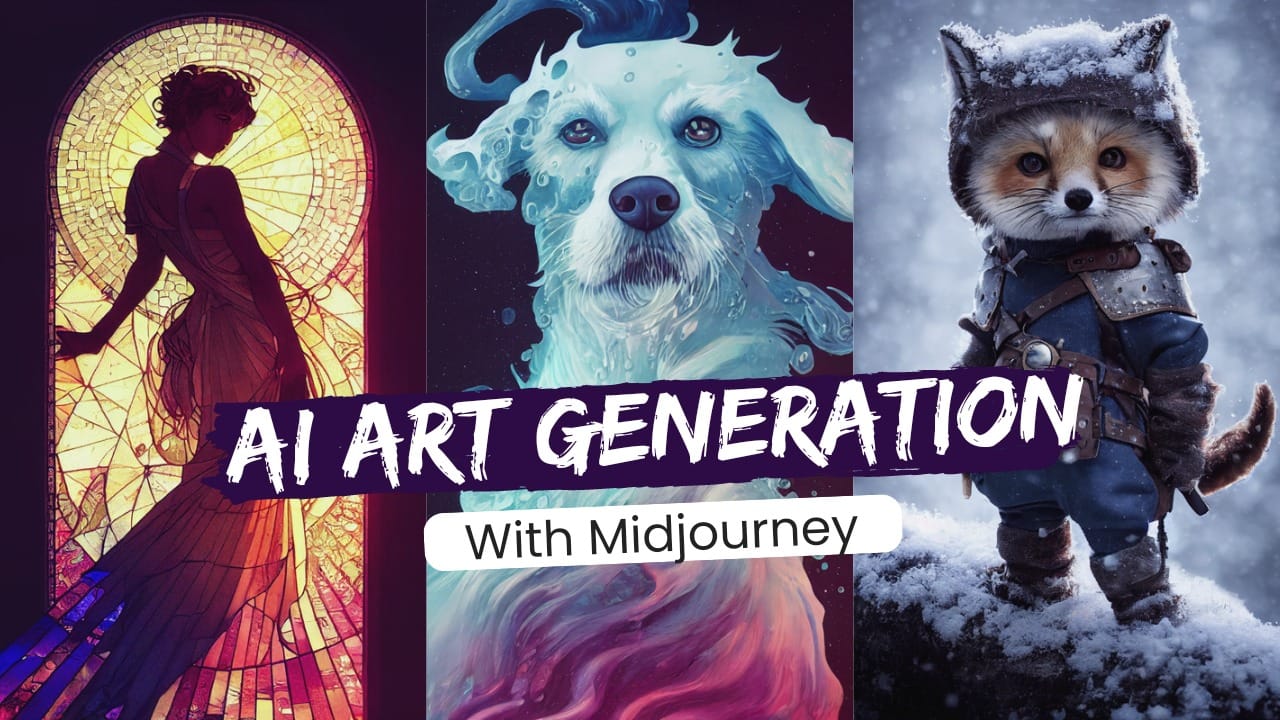
In the meantime, however, there has been a boom in what is called narrow artificial intelligence. It has been worked with for a long time, but it only reached the wider public consciousness in recent months, when it is being talked about almost everywhere. You just need to ask Siri or some other chatbot (led by the OpenAI service) a question, or try generating an image using an app like Midjourney. These are complex programs that work with data so well that they can fool almost anyone and are already significantly changing some fields of human work.
We at imago are also playing with artificial intelligence and getting to know it. We asked Ondřej Neff—writer, publicist, journalist, photographer, and pioneer of the Czech internet—for his opinions and attitudes toward artificial intelligence.
You are among the pioneers and promoters of the internet. How do you think the internet has changed over that time?
There is probably no point in listing things exhaustively. It has the character of an explosion, it reaches into unsuspected areas—and above all, I would like to emphasize that the process is far from over. Just realize that any activity that does not require the immediate touch of a human hand can be performed online. Heart surgery performed over the internet—is it sci-fi or not?
What role do social networks play in these changes?
Thanks to them, the concept of the public has a different content than before, but it is not certain what it actually is. The phenomenon of echo chambers is undeniable. But it is strange that the mass movements of the past—communism, fascism—are, from a technical and communication point of view, the result of printed media and later radio, or possibly film. In contrast, the echo chambers of the age of networks do not tend to merge; they tend to split, and they do not support a hierarchical structure, which is inherent to communism and fascism. Who is the “führer” on Facebook? Such a question makes no sense.
The phenomenon of artificial intelligence began to appear in the 1950s and also became a topic in science fiction literature. How far do you think we are from the technological singularity, i.e., the moment of the “awakening” of machines?
I am skeptical in this regard and I think we haven't even reached the beginning. The ability to analyze and connect growing quantities of data is increasing. True consciousness works on different principles, and I even believe that some principles—the fundamental ones—are still beyond the reach of our knowledge.
From books and movies, it seems that it will be a negative event. SkyNet is a sufficient example. Why do you think that is?
The answer is simple. Drama requires conflict. I can't write a short story about an iron ironing. The story has to be about it burning through the board and causing a fire.
Are you more of an optimist or a pessimist in this regard?
You can never be too careful. However, it is so distant for now that there is no point in being afraid or excited.
In recent months, there has been a boom in narrow artificial intelligences. Assistants, large language models capable of communicating in natural language, and generators of images, articles, or code are spreading. Do you have experience with services like OpenAI or Midjourney?
It is a revolution, just like the full-text Google search engine was twenty years ago. By the way, a spell checker is also a “narrow artificial intelligence”… I don't have OpenAI integrated into my work process yet, but I have no doubt that in a few years I will be up to my ears in it. Even as a writer—I'll give an example from current practice. I have a heroine, a Chinese woman, and I put “Chinese wisdom” into her mouth. I search for them via Google or laboriously invent them—I have no doubt that AI will pour out an inexhaustible amount for me…
These services very quickly began to change established procedures in, for example, e-commerce, copywriting, PPC ads, and advertising in general. You already encounter a chatbot on an e-shop that helps you solve a problem. We are diligently testing these services ourselves and trying to generate product descriptions, for example. Where do you think this will lead?
Everything that makes work easier also causes there to be more work. I have no doubt that this paradox will also manifest itself in the application of AI.
The more data and reactions such an artificial intelligence has, the better it is. It learns from people. However, it turns out that it learns negative things much faster. Microsoft's chatbot became an insulting racist within a day, and Meta's (formerly Facebook) AI started badmouthing its own boss, Mark Zuckerberg. What does that say about us, especially when you look at the common content on social networks?
Negative or positive, those are categories of human reasoning. Let's not have illusions about human nature; it will seep into AI, it is inevitable. It is more concerning when AI is definitively integrated into censorship and surveillance procedures. That will happen, bet on it.
OpenAI and other similar services are based on a huge amount of algorithms and machine learning. But the foundation is training on a large amount of data. Surprisingly, the results of such AI are often free to use and are not burdened by licenses. But where did the original data come from? Do you expect any major legal battles in this regard?
Of course, there will be tugs-of-war. But be careful, in creation, there is a narrow line between inspiration and plagiarism. Kipling invented Mowgli, and Burroughs turned him into Tarzan and made millions. AI text and image outputs are compilations of something previously created, but how to determine the original authorship? Google can already track down an author today, but determining the original source of inspiration will not be easy. The arguments over that will be all the tougher—Getty Images is already screaming about the misuse of their image material. Quite justifiably.
Can you imagine a world where machines do all the work? And what will people do? Isn't there a risk they will become lazy? Can such a society even function?
From the perspective of our ancestors, we are already lazy today; we do nothing. Moreover, technical progress is fast, but not so fast that we don't have time to adapt. Technology will eliminate many activities, while others will emerge. There will always be something to do.
Often in connection with artificial intelligence, it is said that it can hardly replace human creativity. I recently had a part of a gamebook generated. I won't claim it was a feat worthy of a Pulitzer Prize, but I've read worse things. There are already very decent AI story generators for tabletop RPGs like Dungeons & Dragons. I dare say they already have more creativity in them than a whole range of people. Isn't creativity often confused with a random lucky idea? What do you think it boils down to?
True creativity is an extremely rare phenomenon, and many current so-called creations are just derivatives and metamorphoses of previously created works. AI will do it faster. The concept of an “idea” is indeed related to creativity. Of course, it also draws from something that existed before; with a bit of cynicism, I would say that an idea is plagiarism with an undetectable origin. However, there will always be people with ideas. AI will produce for mass consumption, like when Baťa churned out sneakers. But alongside that, there were handmade shoes for connoisseurs. You can recognize that human touch.
When I asked artificial intelligence about you, it first thought you won a bronze medal at the World Ski Championships in giant slalom, but then it was convinced that you are more of a writer. I also asked it to ask you what it is interested in. I will take the liberty of quoting the AI: “Could you tell us something about your relationship with literature and how you became a writer?”
Well, look at that, and I would answer: “Dear AI, I wish I had your worries and Rothschild's money!”
author Karel Krajča
photo Elena Horálková and Karel Krajča

Karel Krajča
Šéfredaktor, content creator a organizátor festivalu Fantastická Ostrava. Fanoušek fantastiky, videoher, deskových her a popkultury obecně. Příležitostný milovník malování figurek a craftení všeho druhu. Hudební závislák a amatérský znalec fyziky a matematiky.
You might also like

Mysteries of the City of Kalus: An Interview with the Author of a Massive RPG Campaign
What is it like to write a massive RPG campaign? An interview with Sparkle about the Mysteries of the City of Kalus, the transition from classic to postmodern fantasy, and inspiration from real life. full article...
Interview 15. 12. 2025 Karel Krajča 5 min
Interview: Michal Dlouhý on his debut novel, The Divided City
An interview with Michal Dlouhý about his debut, The Divided City. How the book was created, what inspired him, and why the wizard loses his power. full article...
Interview 4. 11. 2025 Karel Krajča 5 min
The second Dračí Hlídka gamebook: An interview with the author
The Ztracené město Galadu gamebook is darker, more sophisticated, and more personal – and the author also reveals plans for its successor. full article...
Interview 30. 7. 2025 Karel Krajča 8 min